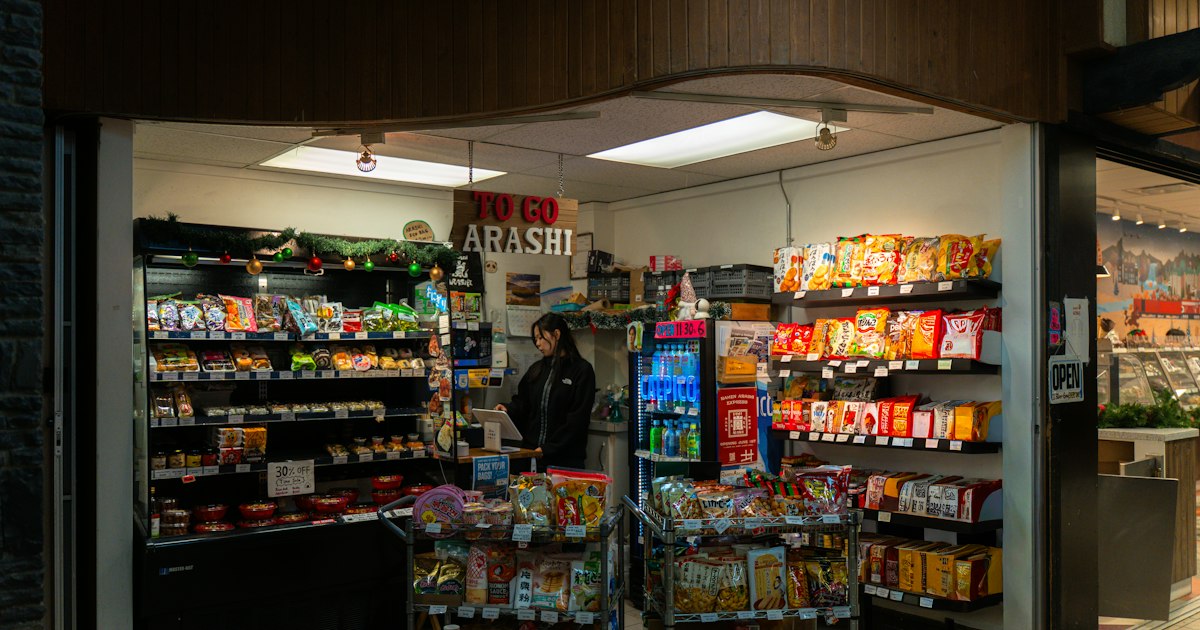
Photo by Josh Marty on Unsplash
Every konbini checkout counter in Japan has them stacked near the register, but Pocky and Pretz are far more interesting than their export versions suggest. Beyond the familiar chocolate box sold worldwide, Japan’s domestic market is flooded with regional exclusives, seasonal limited runs, and adult-targeted flavors that rarely make it onto a plane — let alone a shelf outside the country. Here’s how to shop for them properly, which flavors are actually worth the detour, and what to avoid when you’re packing a suitcase full of them.
Pocky vs. Pretz: Know the Difference
Both are made by Ezaki Glico, an Osaka company whose illuminated “Running Man” sign over the Ebisubashi Bridge in Dotonbori is one of the most photographed landmarks in the city — it’s free to view, lit 24 hours a day, and worth a short detour if you’re in the area at night. Pretz came first, launched in 1964 as a plain, savory biscuit stick. Pocky followed in 1966, taking the same stick and coating it in chocolate. The distinction still matters when you’re shopping: Pretz flavors tend to be savory (Roast, Salad, Tomato, regional ones like cod-roe mentaiko in Kyushu), while Pocky flavors are sweet or chocolate-based. If you only know the strawberry Pocky sold abroad, you’re seeing a small fraction of what’s actually on shelves here.
Where to Buy: Convenience Store, Don Quijote, or Airport
For everyday flavors, any 7-Eleven, Lawson, or FamilyMart will do — they’re open 24 hours, and a standard box runs ¥120–¥160. For volume or novelty sizes (giant single-stick boxes, family packs, discount multi-packs), Don Quijote is the better stop; most urban locations stay open very late or 24 hours, and prices on bulk boxes often beat convenience stores by 20–30%. For regional and prefecture-exclusive flavors, check station omiyage (souvenir) shops and department store basement food halls (depachika) in the city or region the flavor is tied to — these are usually sold in individually wrapped mini-bags inside a gift box, priced ¥500–�¥1,500 depending on box size. Airport shops at Narita, Haneda, and Kansai also stock last-chance exclusive flavors and Pocky Day leftovers, though selection is smaller and prices run slightly higher than in the city.
Regional and Seasonal Flavors Worth Hunting Down
These are the ones that make the hunt worthwhile, since most never get sold outside their home region:
- Kyoto Uji Matcha Pocky — a genuinely bitter, high-quality matcha coating, sold around Kyoto Station and Uji.
- Hokkaido Melon Pocky — white chocolate infused with Yubari melon flavor, found in Sapporo and New Chitose Airport.
- Tokyo Banana Pocky — a collaboration between two of Japan’s biggest omiyage brands, sold mainly in Tokyo station shops.
- Men’s Pocky — a less-sweet, higher-cocoa line aimed at adults, including a Bitter and a seasonal Roasted varieties; a good pick if you find standard Pocky too sugary.
- Mentaiko Pretz — savory cod roe flavor, a Kyushu/Fukuoka specialty and one of the better savory options for travelers who don’t want more chocolate.
Availability shifts constantly — Glico rotates regional and seasonal flavors without much notice, so don’t assume a flavor you read about online is still on shelves. If you spot something unfamiliar in a souvenir aisle, buy it there; you likely won’t see it again once you leave the region.
Pocky Day and Other Timed Releases
November 11th is “Pocky Day” in Japan — the date mimics the look of four Pocky sticks (11/11) — and Glico treats it like a mini-holiday, releasing limited edition boxes and running in-store promotions in the weeks leading up to it. If your trip lands in late October through mid-November, check convenience stores and Don Quijote for Pocky Day exclusives, which usually sell out faster than the regular rotation. Spring brings sakura-themed pink boxes (typically March–April), and winter brings “Melty” formulations in colder regions, where the chocolate is blended to resist melting in cold shipping and storage conditions — the inverse problem of what you’ll deal with bringing them home in summer.
Common Mistakes to Avoid
The biggest mistake is buying only the familiar chocolate box and skipping the savory Pretz aisle entirely — it’s a completely different, less sugary snack worth trying. The second is traveling in Japan’s hot months (June–September) and packing chocolate-coated Pocky loose in a checked bag; it melts, resets, and arrives as a solid clump. If you’re buying in summer, favor Pretz varieties (no chocolate, far more heat-stable) or pack chocolate Pocky in carry-on with some insulation rather than a hot cargo hold. Third, don’t assume regional flavors are restocked constantly — shops sell through limited lots and may not reorder for weeks, so buy on sight rather than planning to “come back later.”
Budget, Mid-Range, and Splurge Picks
On a tight budget, a standard convenience store box (¥120–¥160) or a Don Quijote giant pack (around ¥300–¥500 for a large multi-stick box) covers the classic experience cheaply. Mid-range shoppers should go for a regional gift box from a depachika or station shop (¥700–¥1,200), which usually includes several individually wrapped flavors and is already sized for giving away. For a splurge, look for a seasonal collaboration box — Tokyo Banana Pocky or a department-store exclusive collaboration set — which can run ¥1,500–¥2,500 but functions as both a novelty souvenir and a genuinely good gift for someone back home who’s hard to shop for.
Bringing Them Home
Snack boxes are low-risk items for customs almost everywhere, but if you’re loading up on a large haul alongside other Japanese purchases, it’s worth checking your country’s duty-free limits before you’re at the airport counter — our guide to Japan’s duty-free allowance coming home breaks down what actually counts against your limit. If you get home and realize you missed a discontinued or ultra-limited flavor, Japanese resellers often list unopened boxes on Yahoo Auctions — our Yahoo Auctions buyer’s guide for overseas shoppers walks through how to bid and ship from outside Japan. And if Pocky and Pretz get you curious about Japan’s wider snack culture, pairing a haul with something like warabimochi rounds out a far more interesting souvenir box than chocolate sticks alone.