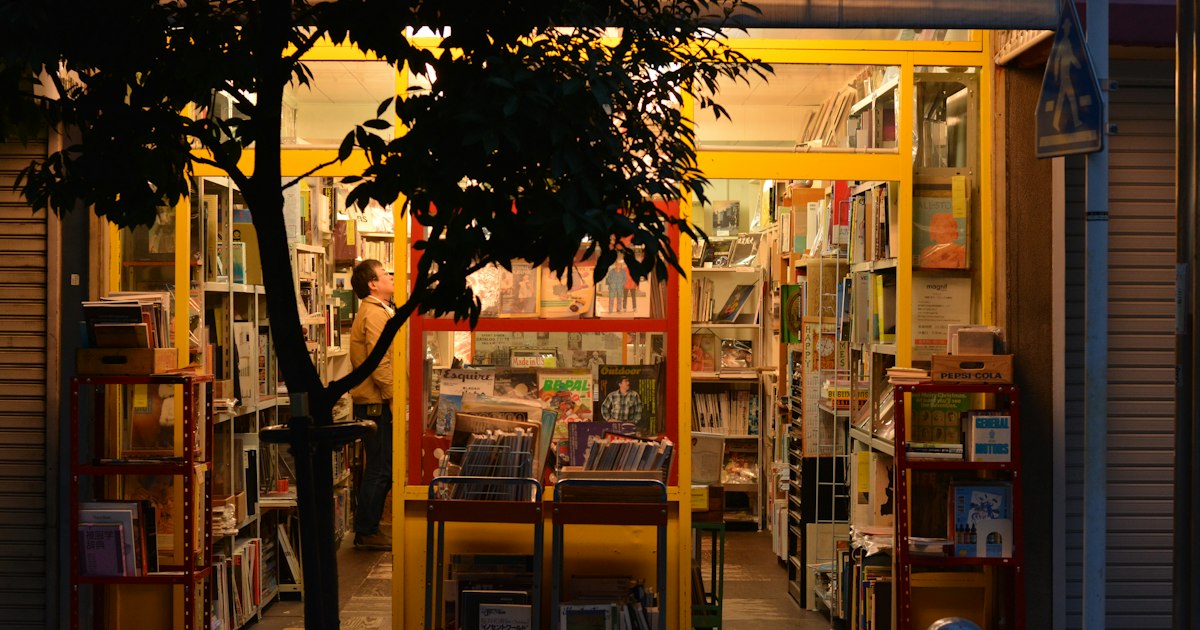
Photo by amandazi photography on Unsplash
Tsutaya Books isn’t just a place to buy a novel — it’s one of the best examples of how Japanese retail blends shopping, reading, coffee, and design into a single slow afternoon. Operated by Culture Convenience Club (CCC), the chain runs everything from ordinary neighborhood video-and-book rental shops to architecturally striking flagship stores that function as part bookstore, part café, part living room. For visitors, the flagships are the draw: curated book walls organized by lifestyle theme rather than genre, in-store bars, and some of the most photogenic retail interiors in Tokyo and beyond.
What Makes Tsutaya Books Different
Most Tsutaya branches are small, convenience-style shops bundled with DVD/CD rental — not worth a detour. The flagship “Tsutaya Books” locations are a different concept entirely, pioneered by the Daikanyama T-SITE store in 2011. Instead of shelving by genre, books are curated by theme (travel, cooking, design, cars, humanities) and mixed with related magazines, stationery, and objects, so a cookbook might sit next to imported olive oil or a chef’s knife. English-language sections exist in the bigger stores, though they’re a small fraction of total stock — this is primarily a browsing and atmosphere experience, not a place to count on finding English fiction.
Daikanyama T-SITE: The Original Flagship
This is the one to prioritize if you only visit one. Daikanyama T-SITE is a cluster of three low-rise pavilions connected by an outdoor “magazine street,” designed by Klein Dytham Architecture, tucked into a quiet, leafy residential pocket of Shibuya-ku. The bookstore section generally opens around 9:00 and closes at 22:00 (hours can shift seasonally, so check before a late visit), and admission is free — you’re welcome to browse for hours without buying anything.
- Getting there: It’s about a 5-6 minute walk from Daikanyama Station on the Tokyu Toyoko Line, or a pleasant 15-20 minute walk from Shibuya Station if you want to see the surrounding boutiques along the way.
- What to do once there: Grab a coffee from the in-store Starbucks (around 450-600 yen for a standard drink), browse the car and travel book sections, and check out Anjin, the second-floor lounge-bar modeled on a private library, where cocktails and light food run roughly 1,000-2,000 yen — a nice spot to sit with a magazine rather than rush through.
- Best timing: Weekday mornings or early afternoons are calmest. Weekends, especially with good weather, bring crowds who come for the garden area and the dog-friendly paths as much as the books.
- Common mistake: Treating it as a quick 20-minute stop. The site is spread across multiple buildings with a camera shop, stationery annex, and pet garden in between — budget at least 90 minutes if you want to see more than the main hall.
Tsutaya Books Ginza Six: Art and Design in the City Center
On the sixth floor of the Ginza Six shopping complex, this location leans harder into art, design, and architecture books, with rotating gallery-style displays and a more polished, gallery-adjacent feel than Daikanyama’s residential calm. It keeps the same hours as Ginza Six overall (roughly 10:30-20:30, with some F&B areas open later), making it an easy add-on to a Ginza shopping day rather than a standalone trip. Because it sits inside a department-store-scale mall, it’s also one of the more reliable Tsutaya locations for tax-free purchasing — Japan’s rule for general goods (which includes books) requires a minimum of 5,000 yen before tax at a single store in one day, passport in hand, so it’s worth consolidating purchases if you’re buying several art books or calendars.
Ginza Six itself is a short walk from Ginza Station, making this a convenient stop if you’re already in the area for department store shopping, similar in spirit to a half-day detour like Gotemba Premium Outlets for those who want a shopping-focused day without a long commute.
Other Notable Locations Worth a Detour
Tsutaya Books has expanded the “lifestyle store” concept beyond Tokyo. Tsutaya Books Kyoto Rakuhoku, near Shugakuin, applies the same curated, slow-browsing format to a residential Kyoto neighborhood with a strong coffee counter. Fukuoka’s Tenjin area and Shonan T-SITE near Fujisawa are other large-format branches worth checking if your itinerary passes nearby — Shonan in particular pairs the bookstore with an outdoor terrace and bicycle shop, leaning into a beach-town, slow-living theme. None of these require advance booking or tickets; they operate like any retail store, just with longer dwell times than most visitors expect.
What’s Actually Worth Buying
Budget option: Japanese stationery and notebooks (300-1,500 yen) make light, easy souvenirs, and the larger stores stock a surprisingly deep selection of pens, washi tape, and notebook brands not widely sold abroad. Mid-range: art books, photography collections, and design magazines (2,000-5,000 yen) are where these stores genuinely outshine a generic bookstore — curation here is tighter than what you’ll find at a standard chain. Splurge: limited-edition art prints, signed photography books, or camera accessories bundled into the stationery sections. If you’re into instant photography, several flagship branches stock Instax film and accessories alongside their camera-book sections — worth a look if you’re building out a kit; see our guide to Instax/Cheki culture for where else to find film in Japan.
Practical Tips and Common Mistakes
Don’t expect a deep English-language fiction section — these stores are built for the Japanese market first, and foreign-language stock is a curated sliver, strongest at Daikanyama and Ginza Six. Don’t assume every Tsutaya storefront you pass is flagship-quality; thousands of small Tsutaya rental shops exist nationwide and look nothing like the ones described here, so confirm you’re heading to “Tsutaya Books” at T-SITE, Ginza Six, or another named flagship rather than a generic branch. Credit cards are accepted at all the major locations, and most have free Wi-Fi, which makes them a comfortable rest stop between other activities. If you’re traveling with young children and need a changing table or nursing space before settling in for a long browse, check our guide to baby-friendly facilities in Japan, since the larger host buildings (Ginza Six especially) have dedicated nursing rooms on other floors.
For travelers who like pairing a cultural browse with something more active, Tsutaya’s “everything under one roof” philosophy has a louder cousin in Round1 Stadium, Japan’s bowling-arcade-karaoke complex chain — a useful contrast if you want to see how differently Japanese retail groups approach the same “one building, many moods” idea.