Photo by Dheerna Matsubara on Unsplash
If you’ve ever eaten real wasabi grated tableside at a good sushi counter, or watched a home cook turn a daikon radish into a fluffy white mound in seconds, you’ve seen an oroshigane (おろし金) at work. It’s the Japanese grater — and unlike the single all-purpose box grater in most Western kitchens, Japan has developed distinct versions in ceramic, copper, and even sharkskin, each built for a specific ingredient and texture. If you’re shopping for kitchen souvenirs that are actually used daily back home, this is one of the best categories to dig into.
What Is an Oroshigane, and Why Does Japan Have So Many Kinds?
“Oroshigane” literally means “grating metal,” though the “metal” part is a bit of a misnomer since many are ceramic. The tool predates the Western box grater by centuries and was refined specifically around Japanese ingredients: daikon radish, fresh wasabi rhizome, ginger, garlic, and yama-imo (mountain yam). Because these ingredients have very different textures and fiber structures, Japanese cooks settled on different grater designs rather than one universal tool. The three you’ll encounter most as a shopper are ceramic, copper, and sharkskin (samegawa) graters.
Ceramic Oroshigane: The Everyday Daikon Grater
This is the one in most Japanese home kitchens — a flat or curved ceramic plate, often glazed white or grey, studded with small raised ridges instead of punched teeth. It’s used mainly for daikon oroshi (grated daikon served with grilled fish or tempura) and for ginger. Ceramic graters are cheap, dishwasher-friendly, and never rust, but they produce a coarser, wetter grate than copper.
A rougher variant called oni-oroshi (“demon grater”) has deliberately large, jagged teeth for a chunky daikon texture used in some regional dishes. Prices for a basic ceramic grater run from around ¥500 to ¥2,000; nicer Seto-yaki or Tokoname-yaki versions with a drip tray or handle run ¥1,500–¥3,500.
Copper Oroshigane: The Chef’s Choice for Wasabi and Ginger
This is the one professionals reach for. A copper oroshigane is a thin sheet of copper (sometimes tin-plated to prevent discoloration) with hundreds of tiny teeth punched by hand or machine from the underside, creating a rasp-like surface. The fine, sharp teeth slice plant cells cleanly rather than crushing them, which matters enormously for wasabi — crushing releases bitterness and lets the aromatic compounds evaporate fast, while clean slicing preserves the sharp, fresh heat and fragrance for longer. The same quality makes copper ideal for grating ginger for tea or marinades.
Handmade copper graters from long-established Tokyo and Kyoto cutlery shops cost roughly ¥3,000–¥8,000 for a small one (about 10–13 cm), and ¥10,000–¥20,000+ for larger, more finely toothed professional models. Machine-punched import-shop versions can be found for ¥2,000–¥4,000 and are a reasonable budget entry point, though the tooth quality is noticeably less refined.
Samegawa Oroshi: The Sharkskin Grater Sushi Chefs Swear By
For fresh wasabi specifically, the gold standard is samegawa oroshi — actual dried sharkskin stretched over a wooden or bamboo paddle. The skin’s natural micro-texture of tiny, uniformly sized denticles grates wasabi into an exceptionally fine, almost creamy paste while minimizing bruising, which is why it’s the tool of choice behind high-end sushi counters. These are smaller and more specialized than copper or ceramic graters — usually just big enough for a wasabi rhizome — and cost around ¥3,000–¥8,000 depending on size and skin quality. They’re a genuinely niche souvenir: buy one only if you plan to grate real fresh wasabi (not the tube paste, which is mostly horseradish and dye and doesn’t reward the extra effort).
Where to Buy One in Japan
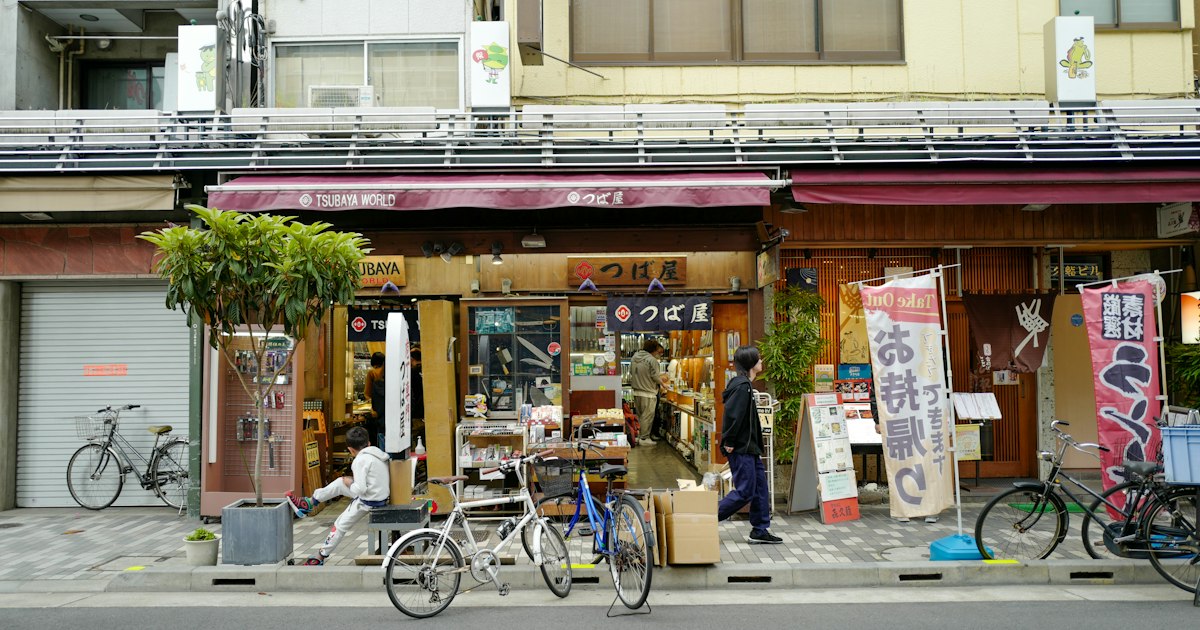
Tokyo’s best hunting ground is Kappabashi (合羽橋), the kitchenware wholesale district between Asakusa and Ueno, lined with shops selling everything from knives to oroshigane in all three materials, often at trade prices. Most shops open around 9:30–10am and close by 5:30–6pm, and many are closed on Sundays, so plan a weekday or Saturday visit if possible — check individual shop signage, since closing days vary store to store. It’s an easy walk from Tawaramachi Station on the Ginza Line.
In Kyoto, Aritsugu, a knife and kitchenware shop inside Nishiki Market that has operated since the 16th century, sells excellent copper oroshigane alongside its famous blades; Nishiki Market itself is open roughly 9am–6pm daily, with some individual stalls closed midweek. In Ginza, Kiya (founded 1792) is another old-guard cutlery shop worth a stop if you’re already sightseeing there. Department store basement kitchenware floors (depachika) in any major city also stock reliable mid-range ceramic and copper options if you’re short on time. If you’re routing a kitchenware-shopping day between cities, it’s worth checking discount ticket shops for cheaper train or bus fares between Tokyo and Kyoto rather than booking full-price tickets.
For other dedicated shopping-street pilgrimages while you’re in a specialty-shopping mindset, the same logic that makes Kappabashi worth a detour also applies to Kojima Jeans Street in Okayama if denim is also on your list.
Common Mistakes When Buying or Using an Oroshigane
- Buying copper for daikon. Copper’s fine teeth are wasted on daikon and will clog quickly with fiber; use ceramic or a oni-oroshi grater for that job instead.
- Grating wasabi in big circles. The traditional technique is small, tight circular motions with light pressure, rotating the wasabi rhizome itself rather than scrubbing it back and forth — this produces a finer, less bitter paste.
- Letting copper sit wet. Untreated copper will develop verdigris (greenish oxidation) if left damp. Rinse and dry it immediately after use; tin-plated versions are more forgiving but still shouldn’t soak.
- Skipping the drip tray question. Many ceramic and copper graters come with or without an attached juice-collecting tray. If you plan to use the liquid (common with daikon oroshi), check this before buying — it’s a meaningful usability difference, not a cosmetic one.
- Assuming bigger is better. A large professional-size copper grater is overkill for home use and harder to clean; a compact 10–13 cm size suits most travelers’ kitchens.
Budget, Mid-Range, and Splurge Picks
Budget (¥500–¥2,000): a basic glazed ceramic grater from any department store or supermarket housewares aisle — perfectly fine for daikon and ginger.
Mid-range (¥3,000–¥6,000): a machine-punched copper oroshigane from a Kappabashi shop, or a small samegawa sharkskin grater if you’re committed to fresh wasabi.
Splurge (¥10,000+): a hand-punched copper grater from an established Tokyo or Kyoto cutlery house like Aritsugu or Kiya — the kind of object that lasts decades and sharpens, visually, into a nice patina rather than wearing out.
Whichever you choose, it packs flat, weighs almost nothing, and does something no souvenir magnet or keychain can: it’ll actually change how a weeknight dinner tastes long after the trip is over.