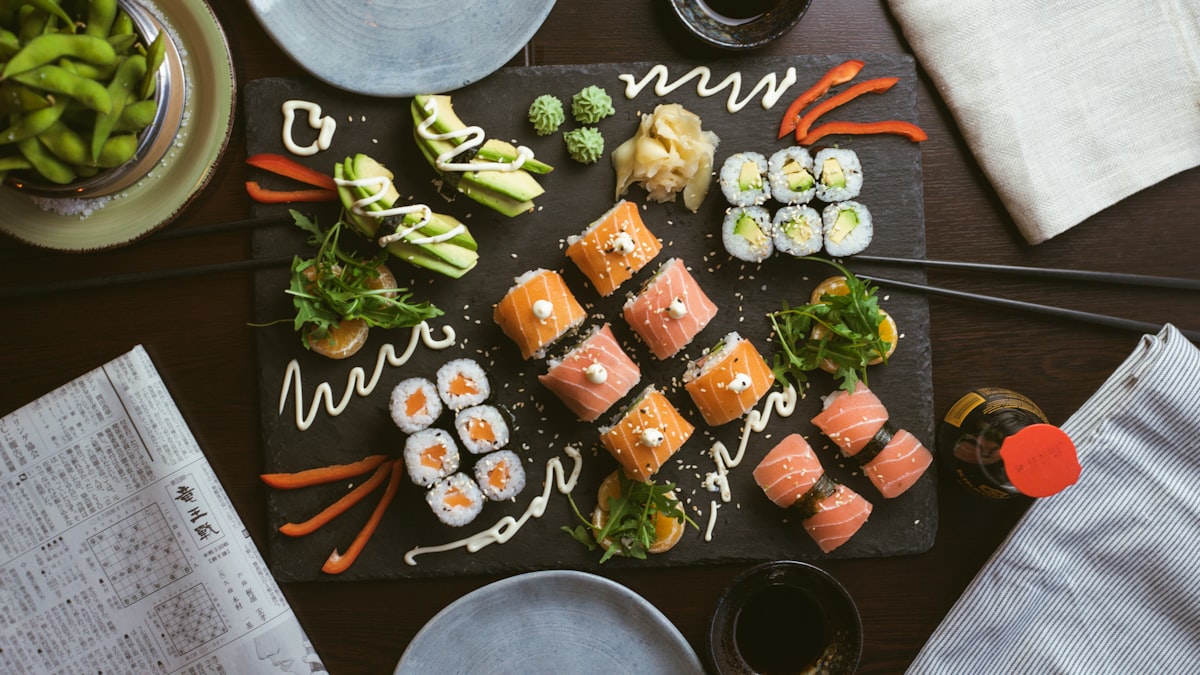
Sushi in Japan is a revelation — fresher, more varied, and often cheaper than back home. But the etiquette and ordering can feel mysterious. Here’s a friendly guide to eating sushi in Japan.
Types of sushi spot
- Kaiten-zushi (conveyor belt) — fun, cheap, and beginner-friendly; grab plates or order on a screen.
- Standing sushi bars — quick and affordable.
- Counter sushi / omakase — the chef serves their choice, piece by piece; a special-occasion experience.
How to eat sushi properly
- Nigiri can be eaten with your hands or chopsticks.
- Dip fish-side (not rice) lightly in soy sauce — too much rice soaks up too much soy.
- Eat in one bite where you can; don’t drown it in soy or wasabi (often already added).
- Ginger (gari) is a palate cleanser between pieces, not a topping.
What to try
- Maguro (tuna), salmon, ebi (shrimp), uni (sea urchin), ikura (salmon roe), tamago (egg).
- Ask for seasonal recommendations at counter spots.
- Fresh market sushi is unbeatable — see our Tsukiji & Toyosu guide.
Etiquette & tips
- At omakase, eat each piece promptly (the chef timed it) and follow their lead.
- There’s no tipping — see our tipping guide.
- Conveyor spots are great with kids and for budgets; see our must-try food guide.
What sushi actually costs
- Kaiten-zushi (conveyor belt) chains price plates by color, typically JPY 110-500 per plate (2 pieces); a filling meal for one runs roughly JPY 1,500-2,500.
- Counter sushi with a set lunch menu can be surprisingly affordable, often JPY 2,000-4,000 for a quality lunch omakase — lunch is consistently the best value time to try a good counter.
- Dinner omakase at a well-regarded shop typically runs JPY 8,000-25,000+ per person; the very top-tier, reservation-only counters can run well beyond that.
Common mistakes to avoid
- Mixing wasabi into your soy sauce dish — at a proper counter, the chef has already added the right amount of wasabi between fish and rice; doing it yourself can be seen as an insult to the balance they intended.
- Letting nigiri sit too long before eating — the rice temperature and texture are part of the point, so eat each piece shortly after it is placed in front of you.
- Booking omakase without checking allergy or seafood-aversion policies in advance — many set menus cannot be modified once the chef has bought the day’s fish.
Budget vs. splurge picks
If you are traveling on a budget, kaiten-zushi chains (Sushiro, Kura Sushi, Hama-zushi) deliver genuinely good fish at fast-food prices and are an easy first sushi meal with kids. For a splurge night, a mid-tier counter omakase booked a few days ahead gives most travelers 90% of the high-end experience for a fraction of the cost of Tokyo’s most famous reservation-only spots.
Sushi for different diets
Vegetarian options exist but are limited — kappa-maki (cucumber roll), natto rolls, and tamago (egg) nigiri are the main choices at most kaiten-zushi chains, and a few upscale spots now offer vegetable-focused omakase with advance notice. Shellfish and fish-roe allergies are worth flagging clearly before an omakase booking, since substitutions mid-course are harder at counter-style restaurants than at a conveyor-belt chain where you simply skip a plate.
A sample first sushi day
Start with a market breakfast at Tsukiji’s outer market, try a mid-tier counter set lunch omakase in the early afternoon when it is quieter and cheaper than dinner service, then round out the trip with a casual, fun kaiten-zushi dinner later in the week — the contrast between the three settings shows off how differently sushi can be served and enjoyed in Japan.