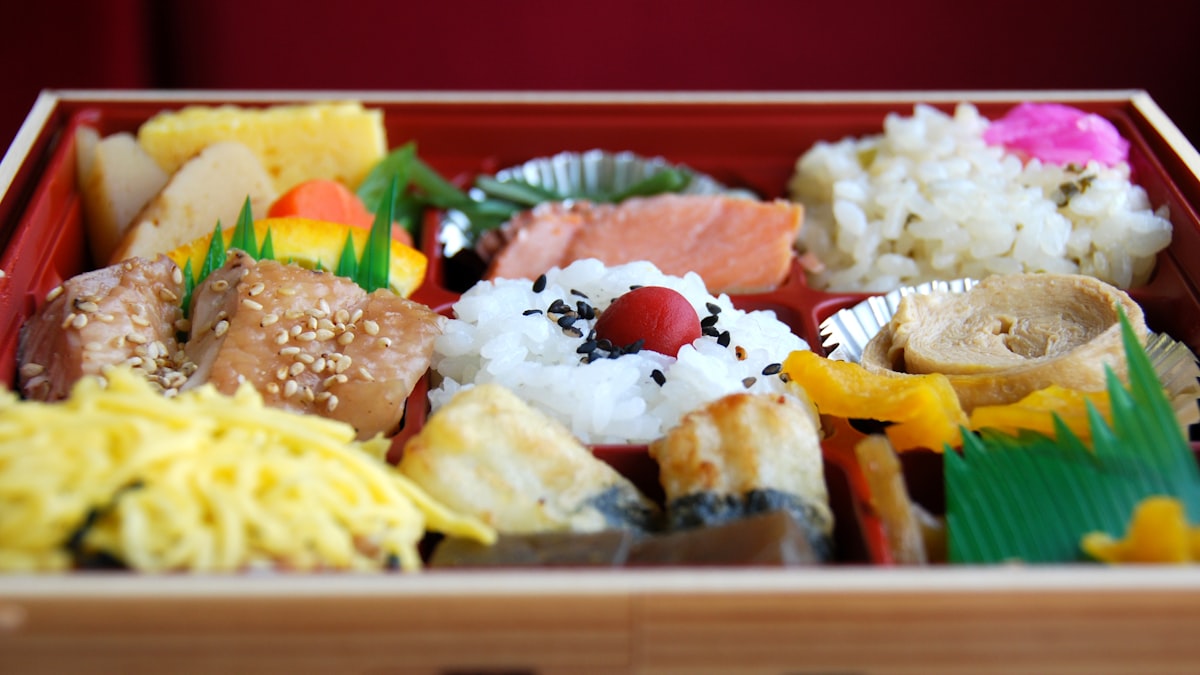
One of the great joys of Japanese train travel is the ekiben — a beautifully packed station bento eaten on the shinkansen. Here’s what they are and how to enjoy this delicious ritual.
What is ekiben?
Ekiben (eki = station, bento = boxed meal) are ready-to-eat lunch boxes sold at train stations and on platforms. They range from simple rice-and-fish boxes to elaborate regional specialties in gorgeous packaging — a meal and a souvenir in one.
Why they’re special
- Regional pride — each area has signature ekiben using local ingredients (crab in Hokkaido, beef in Kobe, eel in Nagoya).
- Designed to travel — tasty at room temperature, tidy to eat on a train.
- Fun packaging — some come in shapes like bullet trains or ceramic pots you keep.
How to enjoy the ritual
- Buy before boarding the shinkansen — big stations have huge ekiben selections.
- Pair with a drink and a green tea; eating on the shinkansen is normal and expected.
- Eating on local commuter trains is less common — save it for long-distance rides.
Where to find the best
- Tokyo Station’s Ekibenya Matsuri — hundreds of ekiben from across Japan under one roof.
- Major shinkansen stations and department-store depachika (see our department store guide).
- Look for “sold today only” and seasonal specials.
Tips
- Carry small change/cash and tidy up your box afterward (see our etiquette guide).
- It’s a highlight of any itinerary with train travel — don’t skip it.
What ekiben typically cost
- Most ekiben run JPY 900-1,800, with elaborate regional specialties (whole crab, wagyu beef, elaborate multi-compartment boxes) reaching JPY 2,500-3,500.
- Budget-friendly options (simple rice-and-fish or curry boxes) start around JPY 700-900 and are widely available even at smaller stations.
- Limited-edition and seasonal boxes sell out fast on weekend mornings — if you have your heart set on a specific famous one, buy it as soon as you reach the station rather than saving it for the platform.
Common mistakes to avoid
- Assuming you can buy one at the last minute — the best-known counters (like Tokyo Station’s Ekibenya Matsuri) can have queues, especially before long weekends; give yourself 15-20 extra minutes.
- Opening a hot ekiben (like a heated beef or pork box) too early — some have a pull-tab self-heating mechanism; read the instructions so it is still hot when you eat it on board.
- Forgetting chopsticks — they usually come with the box, but grab an extra set at the konbini if you are buying from a station stall that does not include them.
Pairing it with the ride
Green tea and canned coffee are the classic ekiben companions and are sold from the same kiosks or a cart that sometimes still passes through the car. If you are on a long Tohoku or Kyushu shinkansen leg, an ekiben roughly an hour into the journey — once the initial city views give way to countryside — is the traditional moment to eat, giving you something to look forward to mid-ride.
Vegetarian, vegan & allergy notes
Most ekiben are built around fish, meat, or both, which makes them a tricky option for vegetarian and vegan travelers. A small number of stations sell vegetable-forward boxes (inari sushi, vegetable curry, or onigiri sets), but they are far less common than meat and seafood versions — check our vegetarian and vegan in Japan guide for backup options if ekiben do not fit your diet, including building your own box from a station’s onigiri and side-dish counters.
Regional ekiben worth seeking out
A few boxes are worth planning around: the Toge no Kamameshi (a kettle-shaped clay pot rice dish from Yokokawa Station you can keep as a souvenir), Kobe’s beef-topped rice boxes, Hokkaido’s crab and salmon roe boxes, and Yokohama’s shumai bento sold at Yokohama Station and on the Tokaido Shinkansen. Many now sell out at their home station well before evening, so shop early if a specific box is the goal.