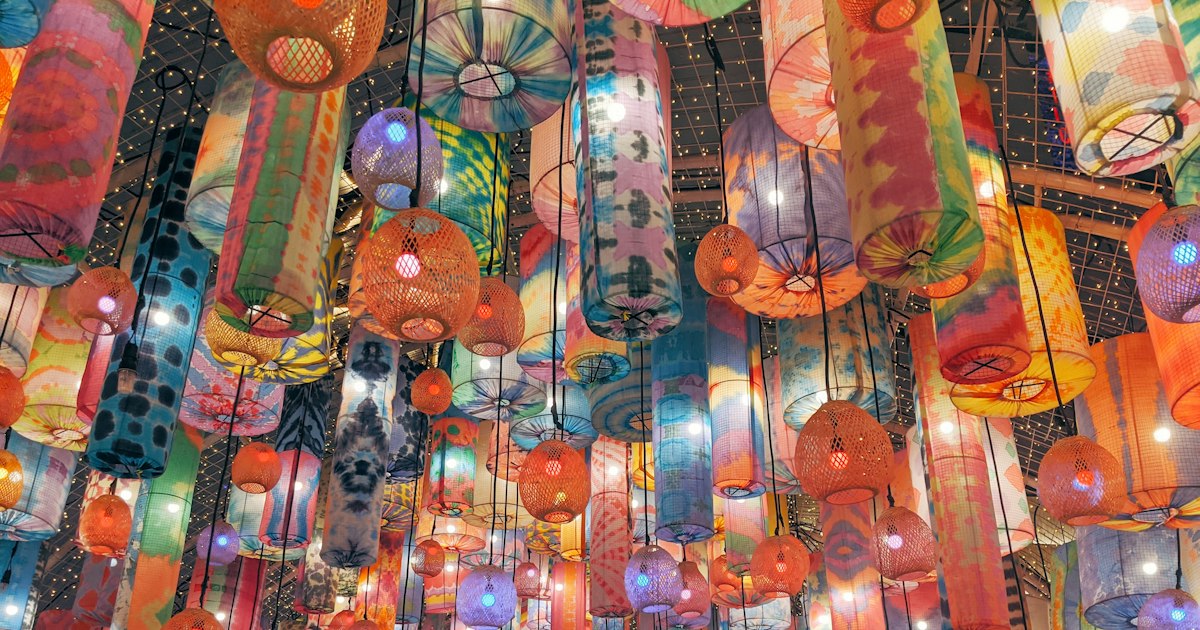
Photo by note thanun on Unsplash
Every August, paper lanterns go up outside houses, families crowd onto trains back to their hometowns, and parks across Japan fill with drumbeats and circling dancers in yukata. This is Obon, Japan’s Buddhist festival honoring the spirits of ancestors — and its public face, the Bon Odori dance, is one of the most accessible, free, and genuinely fun cultural events a visitor can stumble into. Here’s what it actually is, when to catch it, and how to plan a trip around it without getting steamrolled by Japan’s single busiest travel week.
What Obon Actually Celebrates
Obon (お盆) is a Buddhist observance rooted in the belief that ancestral spirits return to visit their living relatives once a year. Families light small fires called mukaebi outside their homes on the first evening to guide spirits in, and visit and clean ancestral graves. On the final night, okuribi fires — or in some regions, floating lanterns set adrift on rivers (toro nagashi) — send the spirits back. It isn’t a solemn, hushed affair like a Western wake; it’s closer to a family reunion with a dance party attached, which is exactly where Bon Odori comes in.
Obon is not an official national public holiday, but it functions like one. Many companies close for three to five days, and it’s one of the two biggest domestic travel weeks in Japan (alongside New Year’s and Golden Week).
When It Happens — and Why the Dates Are Confusing
This is the single biggest point of confusion for visitors. Obon’s timing splits into two camps:
- Hachigatsu Bon (August Bon) — August 13–16, observed by most of Japan, including Kyoto, Osaka, and most rural regions. This is the main event most travelers plan around.
- Shichigatsu Bon (July Bon) — July 13–16, observed in parts of Tokyo, Yokohama, and some other eastern areas that switched to the solar calendar’s equivalent month after the 1873 calendar reform.
Because of this split, you can realistically catch Bon Odori events somewhere in Japan across both July and August — Tokyo neighborhoods often run their dances in mid-July, while the rest of the country peaks in mid-August. Local tourism sites and ward offices post exact dates each year; they shift slightly, so confirm before you build an itinerary around a specific festival.
Bon Odori: How the Dancing Actually Works
Bon Odori (“Bon dance”) is a circle dance performed around a raised wooden scaffold called a yagura, where drummers and sometimes singers set the rhythm. Dancers move in a loop around the tower, repeating simple, choreographed arm and step patterns set to regional folk songs — the most famous being “Tankō Bushi” (a coal miners’ song) and “Tokyo Ondo,” both danced in nearly identical form at festivals nationwide.
You do not need to know the steps beforehand. Just join the outer edge of the circle and copy the people in front of you — most locals are relearning the moves themselves, and newcomers are welcomed, not judged. Many neighborhood festivals rent yukata on-site or nearby (roughly ¥3,000–6,000 for a basic rental including obi and sandals), though plenty of attendees come in regular clothes. Food stalls (yatai) selling yakisoba, kakigori shaved ice, and grilled corn ring the dance area, with most snacks priced ¥400–800.
Where to Experience Obon
Tokushima’s Awa Odori (August 12–15) is Japan’s largest and most famous Bon dance festival, drawing roughly a million visitors over four days. Choreographed dance troupes (ren) parade through the streets in distinctive sedge hats, accompanied by shamisen, drums, and flutes. Street viewing is free; reserved grandstand seats along the main routes cost around ¥2,000–4,500 and sell out well in advance through the official festival site.
Kyoto’s Gozan no Okuribi (August 16) is the city’s dramatic send-off for Obon spirits — giant bonfires are lit in sequence on five mountainsides ringing the city, starting with the famous “大” (dai) character on Mount Nyoigatake at 8:00pm, followed by the others roughly five minutes apart. Free viewing spots line the Kamogawa riverbanks and various bridges; arrive at least an hour early for a clear sightline, as this is one of Kyoto’s most-watched summer events.
Tokyo’s neighborhood festivals are smaller but numerous — local shrines, temples, parks, and even apartment complexes run their own Bon Odori through July and August, usually free to attend. These are lower-key than Tokushima’s spectacle but arguably the best way to dance alongside locals rather than watch from behind a rope line.
If you’re interested in how Japan’s other seasonal festivals compare, Tanabata: Japan’s Star Festival and Where to Celebrate It covers the other major summer celebration, held in early July in most of the country.
Planning Around Japan’s Busiest Travel Week
Obon (mid-August especially) is one of the worst times to travel domestically in Japan if you haven’t planned ahead — and one of the best times if you have, since you’ll be sharing the experience with Japanese families rather than other tourists.
- Shinkansen: Reserved seats on routes like Tokyo–Osaka or Tokyo–Hiroshima sell out days or weeks ahead for the Obon week. See Reserved vs Non-Reserved Shinkansen Seats: Jiyuseki Explained before you go — during Obon, even the unreserved (jiyuseki) cars can mean standing for an hour or more, so booking reserved seats the moment they open (one month ahead) is worth the extra cost.
- Flights and hotels: Domestic flight prices and hotel rates in popular regions can roughly double compared to a normal week. Book accommodation as early as you can if your trip overlaps August 13–16.
- Getting home after a late dance: Local trains often wind down by midnight, and Bon Odori festivals frequently run past that. If you’re stuck without a train, see Hailing a Taxi in Japan: Apps, Fares & Etiquette (GO, S.Ride) for ordering a ride home without the language barrier being an issue.
- Budget alternative: If your trip dates are flexible and don’t strictly require travel during the Obon crunch, the Seishun 18 Ticket: Japan’s Budget Local Train Pass Explained is worth knowing about for unlimited local-train travel on a budget during its seasonal sale windows.
Common Mistakes to Avoid
- Assuming one date applies everywhere. Confirm whether you’re chasing July Bon (Tokyo area) or August Bon (most of the rest of Japan) before booking around a specific event.
- Trying to book last-minute Shinkansen seats mid-August. Reserved seats on peak routes can be fully booked days out; have a backup plan or book early.
- Skipping the free viewing spots for paid grandstands. At events like Awa Odori and Gozan no Okuribi, free street-level viewing is genuinely good — paid seating buys comfort and a guaranteed spot, not a meaningfully better view.
- Treating it as purely a spectator event. Bon Odori circles are open to anyone who wants to join in; standing at the edge watching is fine, but dancing is half the fun and no one will mind if you’re off-beat.
Obon rewards travelers who build a little flexibility into their schedule — the festivals themselves cost little or nothing, but the trains and hotels around them need booking well ahead. Time it right, and you’ll get neighborhood dancing, mountainside bonfires, and one of the most genuinely communal nights Japan’s festival calendar has to offer.