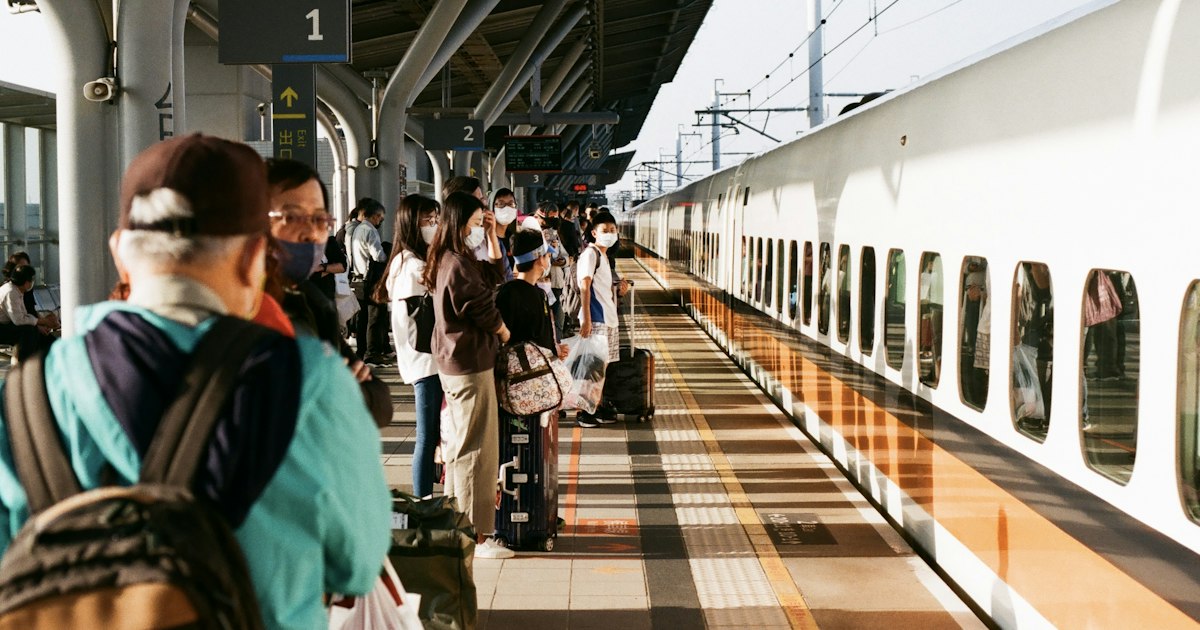
Photo by Jeffrey Chai on Unsplash
If you’ve ever tried to book a Shinkansen seat for mid-August and found every reserved car sold out a month in advance, you’ve run into Obon — the week when roughly half of Japan tries to go home at once. It’s not a public holiday, which confuses a lot of visitors, but it might be the single most disruptive week of the year for trains, flights, and highways. Here’s what’s actually happening and how to plan a trip that doesn’t get stuck in the middle of it.
When Exactly Is Obon (and Why the Dates Vary)
Obon is a Buddhist tradition honoring ancestral spirits, observed by families visiting and cleaning graves, then returning to their hometowns. Most of Japan — Kansai, Kyushu, Tohoku, and beyond — observes it August 13–16, following the old lunar calendar shifted to the modern one. Tokyo and parts of the Kanto region are the exception: they keep the original lunar-calendar timing and observe Obon in mid-July (around July 13–16) instead. This split matters for travelers, because it means Tokyo-based domestic travel pressure actually peaks twice in summer — a smaller bump in mid-July and the massive nationwide crunch in mid-August.
Obon itself isn’t a national holiday, so companies aren’t legally required to give time off. In practice, most Japanese companies close for a shuchu kyuka (concentrated holiday) of about a week around August 13–16, which is exactly why the whole country seems to move at once — everyone has the same few days off, so everyone books the same trains.
Why Trains and Flights Sell Out So Fast
JR opens Shinkansen reserved-seat bookings exactly one month before departure (for example, tickets for August 14 go on sale July 15). For Obon departures, popular trains on the Tokaido, Sanyo, and Tohoku Shinkansen lines can sell out within hours of that window opening, especially early morning and evening departures on the outbound Friday/Saturday before Obon and the return Sunday/Monday after. If you miss reserved seating, non-reserved (jiyuseki) cars during peak Obon days can mean standing for an hour or more, even on long routes like Tokyo–Osaka.
Domestic flights follow the same pattern — ANA and JAL routes to Fukuoka, Sapporo, and Okinawa see fares climb well above normal pricing as seats fill, sometimes doubling compared to a non-peak week. Airports themselves get congested too; Haneda and Itami see security lines stretch much longer than usual on the Friday before Obon.
Highways are arguably worse. NEXCO (the expressway operators) publishes an annual Obon traffic forecast, and it regularly predicts jams of 40–50 km or more on routes like the Tomei Expressway near Gotemba and the Chugoku Expressway, with travel times tripling. If you’re planning a road trip and want a feel for how central these highway rest stops are to Japanese road culture even in normal times, it’s worth reading about Japan’s expressway service areas before you find yourself parked in one for an extra two hours.
The Peak Days to Avoid — and the Sweet Spot
The single worst days to travel are the Saturday and Sunday immediately before Obon (the outbound rush) and the Sunday and Monday immediately after (the return rush). In a typical year where Obon runs August 13–16, that means avoiding Saturday–Sunday August 8–9 (outbound) and Sunday–Monday August 16–17 (return) if at all possible.
Counterintuitively, the actual Obon holidays themselves — August 13 through 15 — are often calmer for travel than the days flanking them, because most people have already arrived at their destination by then. If your schedule allows it, shifting your long-distance travel to land on August 13 or 14 rather than the weekend before can mean the difference between a sold-out train and a half-empty one.
How to Book Before Everything Disappears
- Shinkansen: Book the moment the one-month window opens, ideally through the JR East or Smart EX app at 10:00am on the release date. If you can’t get the exact train, book any reserved seat on a nearby departure rather than risking standing room.
- Flights: Domestic fares for Obon week are often locked in 2–3 months ahead at reasonable prices (¥15,000–25,000 one-way Tokyo–Fukuoka, for example); waiting until a month out can push that past ¥35,000–40,000 each way.
- Hotels: Popular destinations like Kyoto, Hokkaido, and Okinawa see room rates rise 30–50% during Obon week, and budget business hotels sell out first. Book accommodation as early as flights, not after.
- Rental cars: Fleets in Hokkaido and Okinawa, the two most popular Obon getaway regions, are often fully booked a month out — reserve early even if your dates are flexible.
Smart Alternatives When Everything’s Full
If you’re planning a trip without flexibility and discover everything’s sold out, overnight highway buses are usually the last resource with capacity, since fleets are larger and routes more numerous than Shinkansen schedules. Comparing the overnight bus seat classes is worth doing in advance — see our guide to Willer Express’s Cocoon and Relax class seats for what a comfortable overnight option actually looks like. Buses do get caught in the same highway jams, though, so budget extra hours either way.
Another option is simply avoiding the nationwide crunch altogether by picking a trip that doesn’t depend on long-distance transport during the worst days — city-based itineraries, or regions reachable by local trains rather than Shinkansen transfers, suffer far less disruption. If your trip already falls in August regardless, it’s also worth reading about Japan’s extreme heat warnings, since Obon week coincides with the country’s hottest, most humid stretch — a relevant factor if you end up standing in a non-reserved train car or queuing outdoors at a station.
Common Mistakes Visitors Make
The biggest mistake foreign travelers make is not realizing Obon isn’t a fixed public holiday on a calendar they can look up easily — it sneaks up because it’s cultural rather than statutory. The second is assuming train travel in Japan is always easy to book on short notice; outside of Obon, Golden Week (late April–early May), and New Year, that’s largely true, which makes visitors complacent about this one week. The third is booking a Tokyo–Kyoto–Osaka itinerary that requires three separate long-distance train legs during peak Obon days, when a single well-timed inter-city move plus local exploration would be far less stressful.
If your trip dates happen to land in mid-August, it’s not a reason to change plans — Japan is still fully open for travel, just busier. The fix is simple: book transport and lodging as early as the one-month Shinkansen window allows, avoid the weekend bookends around August 13–16, and build in slack for highway delays if you’re driving. Travelers who plan around these dates rather than through them tend to have the smoothest Obon-week trips.