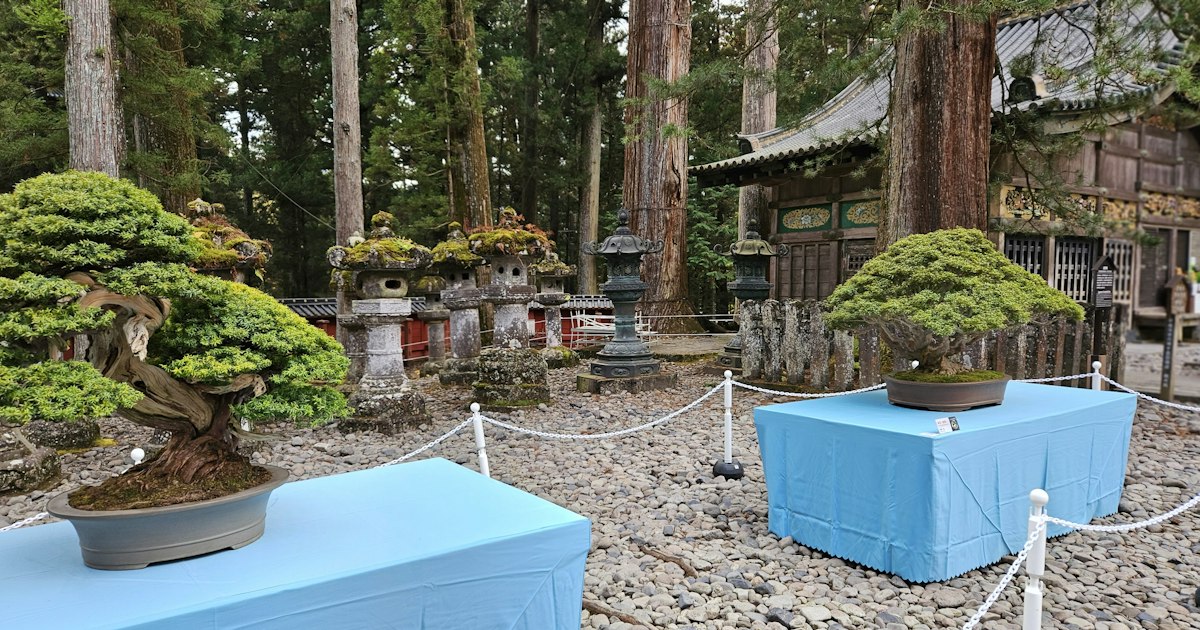
Photo by Chuck Eugene on Unsplash
Buying a bonsai tree in Japan is the easy part. Getting it home — alive, legal, and not confiscated at your destination’s border — is where most first-time buyers run into trouble. Japan has strict plant export rules, and your home country almost certainly has its own import restrictions layered on top. None of it is impossible, but it requires paperwork, patience, and usually a few weeks of lead time. Here’s exactly what’s involved, from the nursery floor to customs clearance on the other end.
Why Japan Is the World’s Bonsai Capital — and Where to Buy
If you want a serious, well-trained bonsai rather than a souvenir-shop sapling, two places dominate the trade. Omiya Bonsai Village in Saitama City (about 30 minutes north of central Tokyo) is a cluster of historic nurseries — Mansei-en, Toju-en, Seikou-en, and others — many of which have decades of experience preparing trees for international export. The adjacent Omiya Bonsai Art Museum (nearest station: Toro, a 5-minute walk, or Omiya-Koen on the Tobu Urawa Line) is open roughly 9:00–16:30, closed Thursdays, with admission around ¥310 — worth visiting even if you’re not buying, to see museum-grade trees up close.
The other major hub is Kinashi, in Takamatsu, Kagawa Prefecture on Shikoku — Japan’s largest bonsai-growing region, famous for black pine, and the source of a large share of the pines exported worldwide. Nurseries there are used to shipping abroad and can usually walk you through the paperwork. In Tokyo itself, the Shunkaen Bonsai Museum in Edogawa, run by master Kunio Kobayashi, sells trees by appointment and is a good stop if you want expert guidance on which species travel well.
Budget shohin (palm-sized) trees start around ¥5,000–¥20,000. Trained specimens with real age and shape run ¥50,000–¥300,000. Museum-quality trees — decades old, exhibition-grade — can run ¥500,000 to several million yen. The export process costs roughly the same regardless of price, so factor shipping and certification into your decision at the budget end especially; it can easily add 20–50% to a cheap tree’s total cost.
The Phytosanitary Certificate: Japan’s Non-Negotiable Export Document
Every bonsai leaving Japan as a live plant needs a phytosanitary certificate issued by Japan’s Plant Protection Station (植物防疫所), under the Ministry of Agriculture, Forestry and Fisheries (MAFF). This certifies the tree is free of pests and diseases and meets the destination country’s specific import conditions. You cannot skip this by claiming the tree as “personal luggage” — airlines and customs in most destination countries will ask for it, and without it the plant is typically destroyed or sent back at your expense.
In practice, most established nurseries handle this for you as part of the sale, since they already have a relationship with their local Plant Protection Station office. If you’re buying privately or want to arrange it yourself, you (or the nursery) need to bring the plant to the Plant Protection Station office for inspection before shipping, which usually takes several business days and may require the soil removal step below to happen first. Build at least 1–2 weeks of lead time into your plans, longer during spring and autumn when nurseries are busiest. If language is a barrier, a private guide or concierge service who can liaise with the nursery and the inspection office in Japanese is often worth the cost for a high-value purchase.
Preparing a Tree for Export: Bare-Rooting and Soil Rules
This is the step that surprises most buyers: almost no country allows soil to cross its border with a live plant. Japan and most importing countries require the tree to be shipped bare-root or soil-free — the nursery washes all soil from the roots and repacks them in an inert, inspected medium (commonly sphagnum moss or a similar approved material) wrapped in plastic. This is stressful for the tree, which is why timing (see below) and nursery experience matter so much.
Reputable export-savvy nurseries in Omiya and Kinashi have done this hundreds of times and know how to bare-root a pine or maple without killing it. If a seller seems unfamiliar with the process or suggests just “wrapping the root ball in soil and declaring it as a houseplant,” walk away — that tree will not clear customs legally, and you risk a confiscated or destroyed plant and a customs flag on your passport for future trips.
Shipping Options and Costs: Air Cargo vs. Hand-Carry
Live bonsai almost always travel as temperature-controlled air cargo, not as checked luggage or in a courier envelope. A crated, bare-rooted tree shipped internationally typically costs somewhere in the range of ¥30,000–¥150,000 depending on size, destination, and whether you use a specialist plant-shipping agent versus a general freight forwarder — small shohin trees are far cheaper to ship than large specimens requiring custom crating. On top of that, budget a modest fee for the phytosanitary inspection itself (often a few thousand yen) and, if the nursery doesn’t handle it, a packing/export-agent fee.
Hand-carrying a bonsai onto a flight is technically possible for very small trees in some cases, but it’s risky: airline staff and destination immigration officers may not recognize or accept a phytosanitary certificate presented informally at the gate, and soil-free roots dry out fast without proper humidity packing. Most experienced buyers let the nursery crate and air-freight the tree directly to their home address, arriving days or weeks after they do.
What Happens on the Other End: Your Country’s Import Rules
Japan’s export certificate is only half the equation — your destination country has its own import permit requirements, and they vary enormously:
- United States: Requires an APHIS import permit arranged in advance, and certain conifers (notably pines, due to pinewood nematode concerns) must spend time in a USDA post-entry quarantine facility — sometimes a year or more — before you can take them home.
- European Union: Requires an EU phytosanitary import notification and inspection on arrival; rules differ slightly by member state, so check with your own country’s plant health authority before buying.
- Australia and New Zealand: Among the strictest in the world for live plant imports; confirm permit requirements before you even visit the nursery, as some species may be effectively unimportable.
Contact your home country’s agricultural/plant-import authority before you buy, not after. Nothing is more disappointing than falling in love with a 40-year-old black pine only to learn your country won’t admit that species at all.
Best Season to Buy and Ship
Bare-rooting is hardest on a tree during peak summer heat or deep winter freeze. Most nurseries recommend shipping in spring (March–May) or autumn (October–November), when temperatures are mild and deciduous species are either not yet in full leaf or have dropped leaves, reducing transplant stress. Avoid arranging shipment during the humid, hot peak of summer (late July–August) or the coldest weeks of January–February unless the nursery specifically says the species tolerates it. If your trip coincides with cherry blossom season, note that nurseries get extremely busy — plan a visit around, not during, the week-long hanami peak if you want unhurried attention from staff.
Common Mistakes to Avoid
- Buying before checking import rules at home. Confirm your country will admit the species before you commit money.
- Assuming a certificate can be arranged after the fact. Inspection has to happen before the soil is removed and the tree is packed — it cannot be retrofitted once the box is sealed.
- Underestimating shipping costs relative to tree price. A ¥15,000 shohin tree with ¥60,000 of air freight and agent fees is a very different purchase than it first appeared.
- Trying to mail it via standard courier or EMS. Most carriers will not accept live plants without the proper permits already attached, and unauthorized attempts are routinely intercepted.
- Not asking about CITES status. Common nursery species (black pine, Japanese maple, shimpaku juniper) are not restricted, but wild-collected (yamadori) specimens of some species can be — ask the nursery directly if a tree was collected from the wild.
Done properly, exporting a bonsai is a well-worn path — Japanese nurseries ship trees abroad every year, and the process is routine for them even if it’s new to you. The key is sequencing: confirm your home country’s rules first, buy from a nursery that regularly exports, and build in enough time for bare-rooting, inspection, and air freight before you expect the tree on your doorstep.