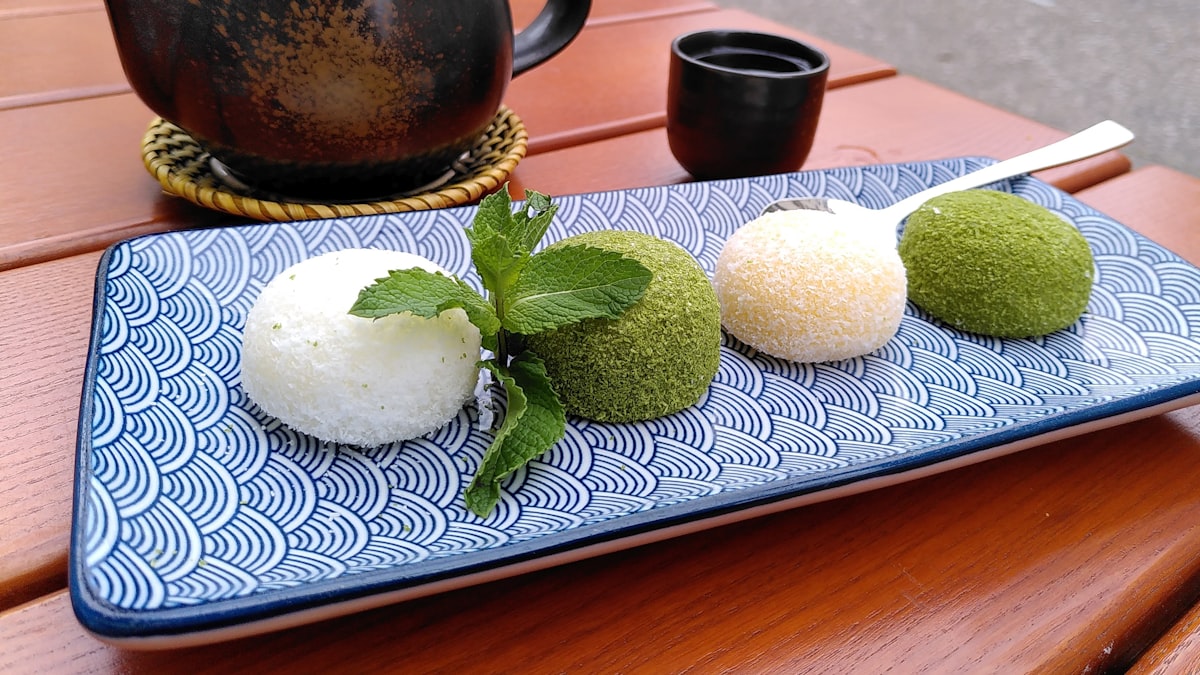
Long before Western-style chocolate arrived in Japan, there was wagashi — traditional confections built around red bean paste, mochi, and seasonal motifs rather than butter and sugar. If you’ve only tried the Kit Kats and Royce’ chocolate that fill souvenir shelves (our chocolate and sweets guide covers those), wagashi is the older, quieter tradition worth seeking out — and it pairs perfectly with a bowl of matcha.
What makes wagashi different
Wagashi is built around a small set of core ingredients: anko (sweetened red bean paste, either smooth “koshian” or chunky “tsubuan”), mochi (pounded glutinous rice), agar-based jellies, and seasonal fruit or floral flavoring. It’s typically far less sweet than Western confectionery and designed to be eaten in small portions alongside tea — the bitterness of matcha and the sweetness of wagashi are meant to balance each other, which is why the two are almost always served together.
Types worth knowing
- Namagashi — “fresh” wagashi, delicate and highly seasonal, often shaped to resemble cherry blossoms, autumn leaves, or seasonal flowers. These are the most artistic and the most perishable, usually eaten within a day or two.
- Daifuku — soft mochi stuffed with sweet red bean paste; strawberry daifuku (ichigo daifuku), with a whole strawberry inside, is a beloved seasonal spring version.
- Dorayaki — two small pancake-like discs sandwiching red bean paste, famous as the favorite food of the character Doraemon.
- Yokan — a firm, sliceable jellied bar made from red bean paste and agar, dense and not overly sweet; it travels well and keeps for weeks, making it one of the best wagashi to bring home.
- Monaka — thin, crisp wafer shells filled with red bean paste, assembled fresh so the wafer stays crunchy.
- Taiyaki — a fish-shaped waffle cake, usually filled with red bean paste (though custard and chocolate versions are common street-food variants), sold hot from street stalls.
- Higashi — dry, pressed sugar sweets used in formal tea ceremony, delicate and often shaped into small seasonal molds.
Where to find good wagashi
- Kyoto is the spiritual home of wagashi, thanks to its centuries of tea-ceremony culture; long-established shops near temples and in the Nishiki Market area specialize in namagashi made fresh daily. Pair a visit with our green tea guide to shop for matcha at the same time.
- Depachika food halls in any major department store carry a rotating, beautifully packaged selection — a good one-stop option if you’re short on time or want gift boxes.
- Specialty wagashi shops with generations of history exist in most historic cities; look for shopfronts with simple wooden signage and a small glass case rather than flashy displays.
- Convenience stores and supermarkets carry mass-produced daifuku and dorayaki that are perfectly good everyday versions, at a fraction of the price of artisan shops.
Prices and what to expect
- Individual pieces of namagashi from a quality shop typically run 300–600 yen each, reflecting the handwork involved.
- Daifuku, dorayaki, and taiyaki from a casual shop or street stall are much cheaper — often 150–300 yen.
- Gift boxes of yokan or assorted wagashi make excellent packable souvenirs, generally 1,000–3,000 yen depending on the shop’s reputation and packaging.
- A proper tea-ceremony experience that includes wagashi and matcha typically costs 1,500–3,000 yen at casual tea houses in Kyoto, less formal than a full ceremony but a good introduction.
Seasonal wagashi to look for
- Spring — sakura mochi (pink mochi wrapped in a pickled cherry leaf) and ichigo daifuku.
- Summer — mizu yokan (a lighter, more chilled version of standard yokan) and kingyokukan, a translucent jelly meant to look cooling.
- Autumn — chestnut-based sweets (kuri) and namagashi shaped like maple leaves.
- Winter — yuzu-flavored confections and New Year’s wagashi shaped like pine, bamboo, and plum, Japan’s traditional lucky symbols.
Bringing wagashi home
This is the catch: fresh namagashi doesn’t travel well and is meant to be eaten within a day or two, so it’s not a realistic souvenir for anyone flying home. For gifts, stick to shelf-stable options — yokan, dried higashi, and vacuum-packed monaka all survive a long flight fine. If you want the fresh experience, treat it the way locals do: buy it the same day you plan to eat it, ideally alongside a hot cup of matcha or sencha, and think of it as something to enjoy in Japan rather than to pack in your suitcase.
Trying a wagashi-making class
Several cities, especially Kyoto and Tokyo, offer short hands-on wagashi-making workshops for visitors, usually lasting 60–90 minutes and running 3,000–6,000 yen per person. An instructor guides you through shaping namagashi with small wooden and metal tools, and you get to eat what you make alongside a proper cup of matcha at the end. It’s a good rainy-day activity or a calmer alternative to a full tea ceremony, and unlike most souvenirs, the skill (if not the sweet itself) travels home with you. Many classes are run in English or with an interpreter on hand specifically for tourists, so no Japanese is required to join.