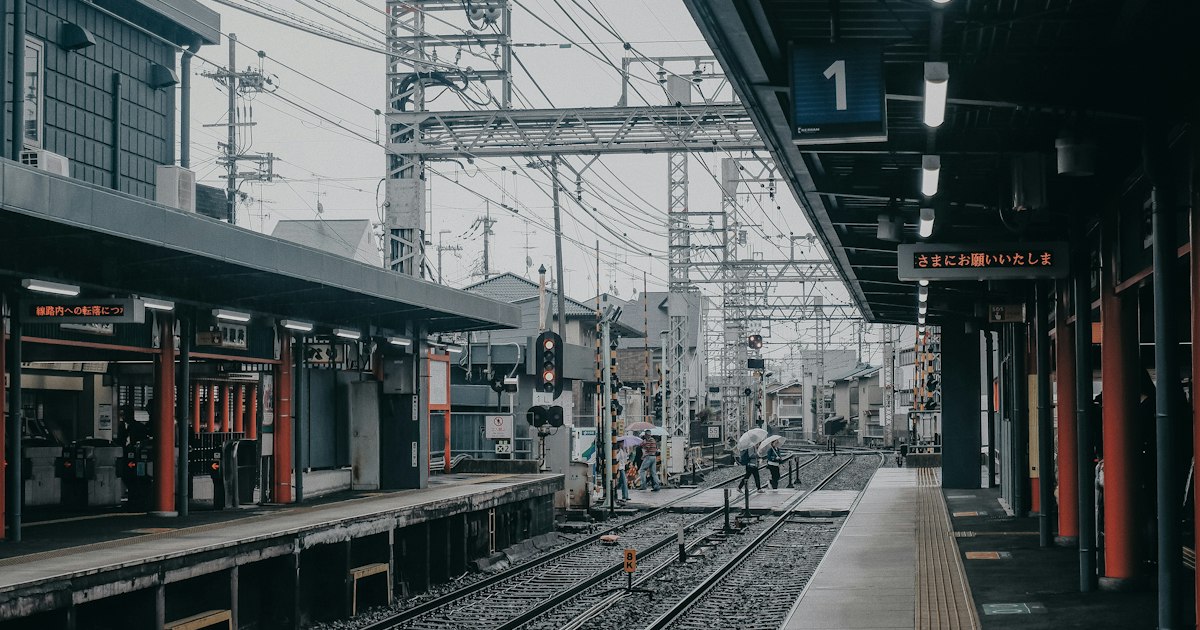
Photo by Samantha Hendrata on Unsplash
If your train grinds to a halt somewhere between Shinjuku and Shibuya and a staff member hands you a small paper slip at the gate, you’ve just received a densha chien shoumeisho (電車遅延証明書) — a train delay certificate. It looks official, it has a company stamp on it, and it feels like it should be worth something. For Japanese commuters it is: it’s the document that keeps you from getting marked late for work or school. For a tourist standing there with a connecting Shinkansen to catch, it’s almost always useless. Here’s what the certificate actually does, how to get one if you need it, and what to do instead when a delay is actually costing you money or time.
What a Densha Chien Shoumeisho Actually Is
A delay certificate is a short, standardized statement from a train operator confirming that a specific line was delayed by a specific number of minutes on a specific date. It typically lists the line name, the date, the approximate delay (in 5- or 10-minute bands), and sometimes the cause (signal failure, passenger incident, weather). It carries a company stamp or logo, and that’s it — there’s no fare amount, no refund voucher, no claim number tied to your specific ticket.
The entire purpose of the document is cultural: Japanese companies and schools generally require proof of a legitimate reason for tardiness, and “the train was late” only counts if you can produce the paper (or digital PDF) to attach to your attendance report. Operators issue these constantly — on the Yamanote Line, Tokyo Metro, Odakyu, Tobu, and basically every major commuter line — whenever a delay crosses a threshold, usually around 5 minutes.
How to Get One, If You Actually Need It
If a delay has already happened, you have two main options:
- At the station: Staff distribute paper slips at ticket gates during and shortly after a delay, usually free. Ask at the fare adjustment window (seisanjo) if you don’t see a stack by the gates — not the ticket vending machines.
- Online, after the fact: Most major operators (JR East, Tokyo Metro, Toei, private railways) post a delay certificate lookup page on their website where you select the date and line and download a PDF. JR East’s version is usually available same-day in the evening and stays accessible for about a week. This is the more reliable route for tourists, since you don’t need to be at the station at the exact moment.
There’s no cost either way, and no ID or ticket check is required — the certificate describes the line’s condition, not your personal journey.
Why It Won’t Get You a Refund or a New Ticket
This is the part that trips up visitors. The certificate is not a claim form, a voucher, or proof that you personally missed anything. A ticket gate agent cannot process a Shinkansen refund, rebook a reserved seat, or compensate you for a missed tour or hotel check-in just because you’re holding one. For local and commuter trains in Japan, there’s generally no cash compensation for ordinary delays at all — unlike some European rail systems, short delays on JR or metro lines simply aren’t refundable.
Shinkansen delays work on a completely separate system. If a Tokai, JR East, or JR West Shinkansen is delayed roughly 2 hours or more due to a cause attributable to the railway (not typically extreme weather), you may be eligible for a refund of the special express surcharge — but that’s handled through the Shinkansen ticket office or JR’s own claim process, not with a commuter delay certificate. If you’ve lost the exchange voucher tied to a rail pass amid all this chaos, that’s a different and more urgent problem — see Lost Your Japan Rail Pass Exchange Voucher? Here’s Exactly What to Do for the fix.
The One Scenario Where It Actually Helps Tourists
There is a legitimate use case: travel insurance claims. If a local train delay caused you to miss a connecting domestic flight, a prepaid tour, or a prebooked activity, your insurer will often ask for documentary proof of the delay before paying out. A densha chien shoumeisho, downloaded as a PDF with the date and delay duration clearly printed, is exactly the kind of evidence adjusters accept. Keep your original train ticket or IC card tap history alongside it to show which train you were actually on, since the certificate itself doesn’t name individual passengers.
If the missed connection was an international flight rather than a local train-to-train transfer, the relevant compensation rules are different and generally more generous — worth reading Flight Delays and Cancellations in Japan: Airline Compensation Rules Tourists Should Know before you assume you’re out of luck.
What to Do Instead When a Delay Actually Costs You
If a serious delay threatens a tight connection, skip the certificate line entirely and go straight to a staff member or the Midori-no-Madoguchi (green ticket counter) at a JR station — they can rebook a reserved Shinkansen seat onto a later train on the same ticket at no extra charge when the delay is the railway’s fault, which is standard practice even if no formal “compensation” is issued. For missed non-refundable bookings like tours or timed activities, contact the operator directly and explain the delay; many Japanese tour companies are flexible about rescheduling if you reach out same-day. And if the delay derails your plans enough that you’re stuck storing bags or killing hours near a station, it’s worth knowing where you can safely stash luggage — see Luggage-Free Day Trips in Japan: Where to Stash Your Bags at the Station for station-by-station options.
Common Mistakes Tourists Make
- Expecting cash or a refund at the gate. The certificate has no monetary value; station staff can’t issue money against it.
- Asking for one during very short delays. Most operators only issue certificates once a delay crosses roughly 5 minutes — a 2-3 minute hiccup won’t generate one.
- Assuming it applies to the Shinkansen. Delay certificates are a commuter/local-line convention; Shinkansen compensation runs through a separate ticket-office process.
- Not grabbing the PDF in time. Online certificate archives are usually only available for about a week, so download it the same day if you might need it for an insurance claim later.
- Treating it as proof you personally rode that train. It only confirms the line was delayed — pair it with your ticket or IC card record for anything insurance-related.
In short: a densha chien shoumeisho is a wonderfully Japanese piece of bureaucracy, built for salarymen who need to justify a late clock-in, not for travelers chasing a refund. Grab one if your travel insurer will want it later, skip the line for it otherwise, and go find a human at the ticket counter if you actually need your trip rearranged.