Some links below are affiliate links. If you book through them, Japan Trove may earn a small commission at no extra cost to you.
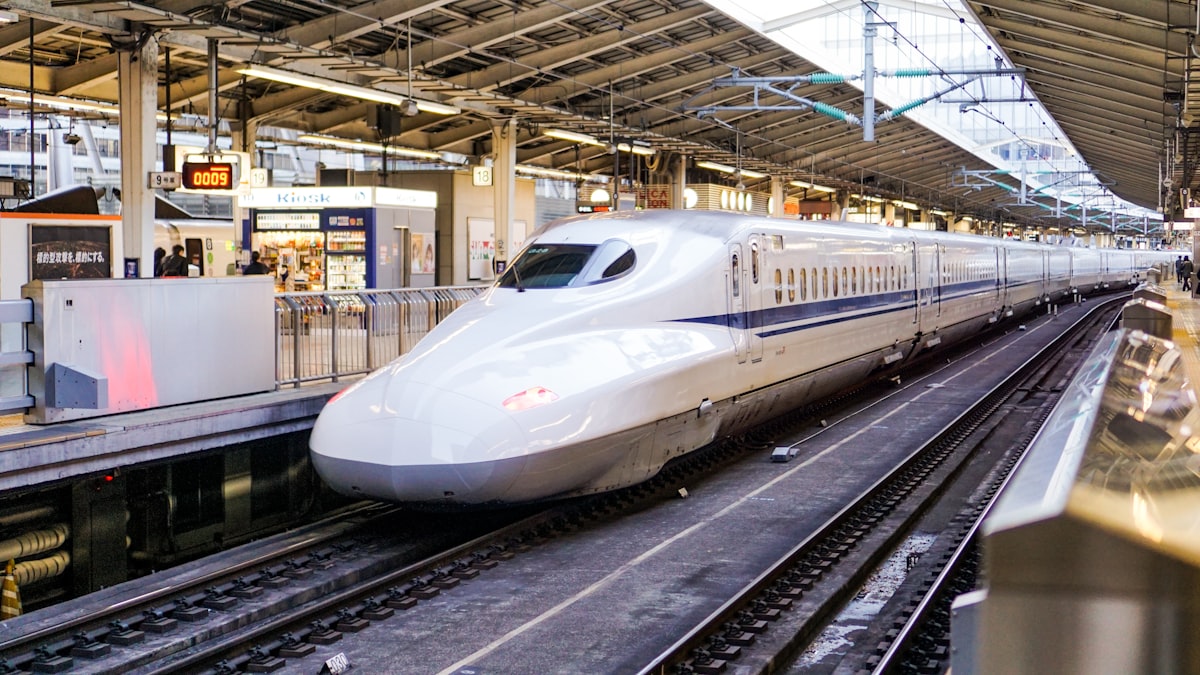
The bullet train from Tokyo to Kyoto is a rite of passage — fast, smooth, and with a chance to spot Mt. Fuji from your seat. Here’s exactly how to do it.
The basics
- Time: about 2 hours 15 minutes on the fastest trains.
- Line: the Tokaido Shinkansen, from Tokyo Station (or Shinagawa) to Kyoto Station.
- Trains: Nozomi (fastest), Hikari (slightly slower, covered by the JR Pass), and Kodama (all-stops).
Nozomi vs Hikari — which to take
Nozomi is fastest but not covered by the standard Japan Rail Pass. If you have the pass, take a Hikari (only ~15 minutes slower). Paying cash? Nozomi is fine and runs most frequently.
Reserved vs non-reserved seats
- Non-reserved cars are cheaper and fine off-peak — just queue on the platform.
- Reserved is worth it during holidays and busy seasons like cherry blossom time.
- Green Car (first class) has roomier seats for a premium.
Get the Fuji view
Sit on the right-hand (D/E) side heading from Tokyo to Kyoto for the best Mt. Fuji view, roughly 40–45 minutes in. On clear days it’s spectacular.
How to buy tickets
- Ticket machines and JR ticket offices at the station (English available).
- Reserve online in advance for peace of mind — handy at peak times. Compare rail options and passes on Klook .
- Have an IC card for the local trains at each end.
Pro tips
- Grab an ekiben (station bento) before boarding — a classic shinkansen ritual.
- Oversized luggage needs a reserved spot; otherwise use luggage forwarding to travel light.
- Stay connected with an eSIM.
Arriving in Kyoto? Jump to our Kyoto guide and where to stay.
What the ride typically costs
- An unreserved Nozomi seat Tokyo-Kyoto runs about JPY 13,320 one-way; a reserved seat adds a few hundred yen more, and Green Car (first class) runs roughly JPY 18,000-19,000.
- Booking through official channels or reliable ticket machines avoids markup — there’s no meaningful discount for advance purchase on standard fares the way there might be for flights, so timing your purchase doesn’t change the price much.
- An ekiben lunch (JPY 900-1,800) and a canned coffee or tea (JPY 130-160) round out a comfortable one-way trip budget without needing to plan a separate meal stop.
Common mistakes to avoid
- Boarding a Nozomi with a nationwide JR Pass — this is one of the most common and costly mistakes pass holders make; the standard Japan Rail Pass explicitly excludes Nozomi and Mizuho trains, and staff will require an upgrade payment or redirect you to a Hikari if you board by mistake.
- Standing in line for a popular non-reserved car during a holiday weekend — non-reserved cars can fill to standing room during Golden Week, Obon, or New Year; reserving a seat in advance for these dates is worth the small extra step.
- Missing the Fuji viewing window because you’re absorbed in a phone or laptop — the mountain is visible for only a few minutes around the 40-45 minute mark from Tokyo; a phone reminder timed to departure helps you look up at the right moment.
What to do if it’s cloudy
Since Fuji is often obscured, don’t build your whole trip’s excitement around the shinkansen sighting alone — treat it as a nice bonus on top of a dedicated Fuji-area stop like Kawaguchiko or Hakone, where you have more time and multiple chances across a stay to catch a clear view.
Making a short stopover along the way
The Tokaido Shinkansen passes through Nagoya, making it easy to break the Tokyo-Kyoto journey with a half-day stop if you have the time and a flexible ticket — see our Nagoya guide for what a quick stopover there can add to an otherwise point-to-point train ride.