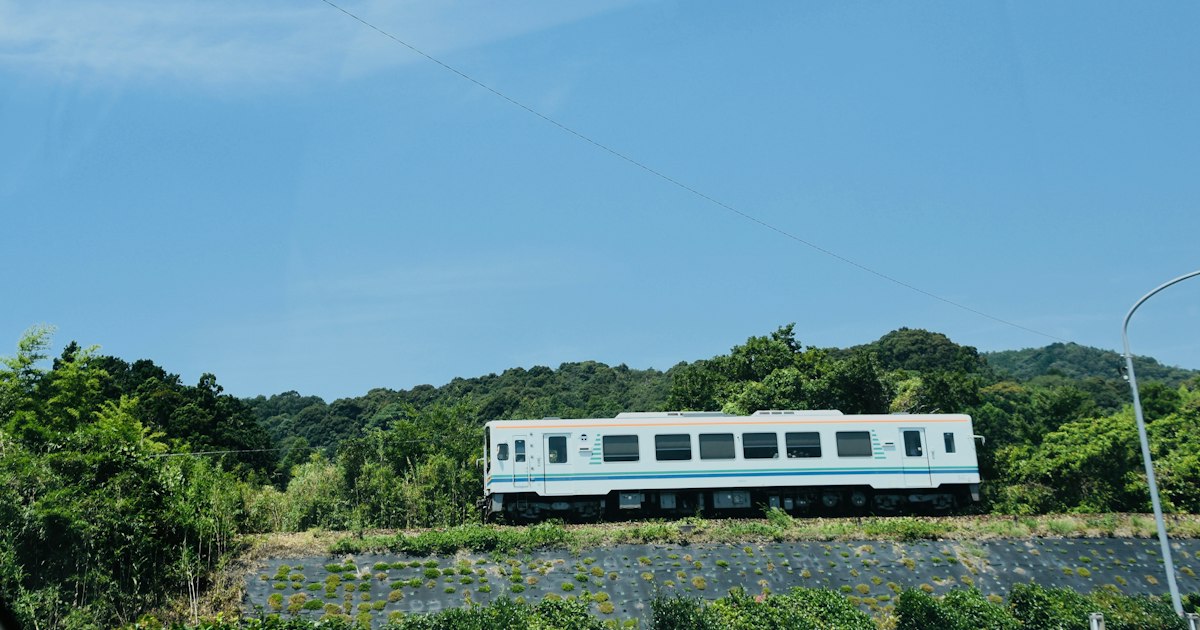
Photo by Yoko Correia Nishimiya on Unsplash
Japan’s three “cruise trains” — Seven Stars in Kyushu, Train Suite Shiki-Shima, and Twilight Express Mizukaze — aren’t really transportation. They’re multi-day hotel stays that happen to move, with price tags that can rival a week on a private yacht. If you’ve seen photos of the gold-and-maroon Seven Stars gliding through the Kyushu countryside and wondered what it would actually cost to be on it, here’s the real breakdown: fares, how booking works, and what you get for the money.
What Seven Stars in Kyushu Actually Is
Seven Stars in Kyushu was launched by JR Kyushu in October 2013 as Japan’s first ultra-luxury cruise train, designed by industrial designer Eiji Mitooka (the same person behind many of JR Kyushu’s distinctive limited express trains). The name refers to three sevens: seven train cars, the seven prefectures of Kyushu, and seven travel highlights (nature, food, hot springs, history, people, and so on). The train carries a maximum of about 30 guests across roughly 14 suites, plus a single deluxe suite at the rear of the last car with a wraparound bay window. There’s a lounge car with a grand piano and live music most evenings, and a dining car serving multi-course Kyushu-sourced meals prepared by rotating guest chefs.
The Two Itineraries and What They Cost
Seven Stars runs two set itineraries, both departing from and returning to Hakata Station in Fukuoka:
- 2 days / 1 night — a shorter loop through central/southern Kyushu. Fares have historically started around ¥550,000 per person (twin-share, standard suite) and run up toward ¥770,000+ for the DX suite.
- 4 days / 3 nights — the full circuit around Kyushu, including stops for onsen bathing, craft workshops, and scenic drives off the train. Fares have historically started around ¥950,000 per person and can exceed ¥2,000,000 per person for the single DX suite car.
Those numbers come from JR Kyushu’s published rate sheets in recent seasons, but the operator revises pricing periodically, so treat them as a ballpark and check JR Kyushu’s official Seven Stars page for the current season’s exact figures before you plan around them. Fares are all-inclusive: meals, drinks, excursions, and gratuities are built in — you genuinely don’t need your wallet once you board.
How to Actually Book a Seat
This is the part most people underestimate. You can’t just buy a ticket when you decide to go. JR Kyushu opens applications for each season’s departures months in advance, in defined windows (historically around four times a year), through its official site and a short list of authorized travel agents. If a departure date draws more applicants than seats — which is routine, especially for spring and autumn — JR Kyushu runs a lottery (chūsen) rather than first-come-first-served. Popular dates have reportedly drawn well over ten applicants per seat. Overseas visitors are welcome to apply, usually through the English-language application channel or a partner agent, but you’ll need to apply during the correct window for a departure that’s typically six months to a year out, not next month.
Getting to Hakata and Boarding Day
However you build your Japan itinerary, you’ll need to be in Fukuoka the morning of departure. The Sanyo/Kyushu Shinkansen puts Hakata Station about 5 hours from Tokyo and under 3 hours from Osaka, or you can fly into Fukuoka Airport, which is a short subway ride from Hakata. Guests typically check in at a dedicated lounge near JR Hakata City before a late-morning departure, with luggage handled separately from the main concourse. If you’re hauling oversized bags, a cello, or other large items on the Shinkansen leg of the trip, it’s worth knowing the extra-seat rules for large instruments and luggage before you book your seats.
How It Compares to Shiki-Shima and Mizukaze
Seven Stars isn’t alone — JR East and JR West each built their own answer a few years later, and all three compete for the same small pool of well-heeled train enthusiasts:
- Train Suite Shiki-Shima (JR East), launched in 2017, loops through Tohoku and sometimes Hokkaido. It’s generally the most expensive of the three, with fares for the one-night course starting in the low-¥600,000s per person and the multi-night suites widely reported to run well past ¥1,000,000.
- Twilight Express Mizukaze (JR West), also launched in 2017, runs through the San’in region and the Kyoto–Osaka–Shimonoseki corridor, with one- and two-night courses starting in the ¥300,000–¥400,000 range per person.
Seven Stars sits in the middle on price but is generally considered the hardest to book, partly because it was first and has the strongest brand recognition abroad.
Best Season and Common Mistakes
Cherry blossom season (late March–early April) and autumn foliage (late October–November) are the most requested — and most oversubscribed — windows, so your odds improve noticeably if you’re flexible about traveling in late spring or winter instead. Avoid banking on a late-summer departure if you want guaranteed outdoor excursions; Kyushu’s typhoon season (August–September) occasionally forces itinerary changes.
The mistakes that trip people up most:
- Applying too late. If you wait until you’ve already booked flights to Japan, you’ve likely missed the application window for that season.
- Skipping travel insurance. With fares running into the millions of yen, cancellation coverage is cheap relative to what you’re protecting. It’s also worth separately understanding what happens if you’re hospitalized in Japan without travel insurance, since medical coverage is a different policy from trip cancellation.
- Underestimating mobility needs. Off-train excursions involve walking, uneven ground, and stairs at temples and onsen facilities — not ideal if anyone in your party has limited mobility.
- Packing too casually. The dining car has a loosely enforced dress code: smart-casual is fine, but shorts and sandals at dinner will get you politely redirected.
Souvenirs Worth Bringing Home
Kyushu’s food culture is a big part of the appeal, and you don’t need a Seven Stars ticket to taste it. Fukuoka’s Yame district produces some of Japan’s finest gyokuro, the shade-grown green tea you may be served on board, and it’s easy to buy a tin before you leave Hakata. Further south, Nagasaki’s prized karasumi (dried mullet roe) is another regional delicacy worth seeking out, whether or not it shows up on the tasting menu.
Is It Worth the Money?
If your benchmark is “cost per kilometer traveled,” no luxury cruise train makes sense — a Green Car Shinkansen ticket covers the same ground for a fraction of the price. But that’s not what you’re buying. You’re buying a fixed, curated 2- or 4-day experience with chef-driven meals, private excursions, and a level of service closer to a five-star ryokan than a train. For travelers who’ve already done Tokyo, Kyoto, and Osaka and want one genuinely singular splurge on a return trip to Japan, Seven Stars delivers something you can’t replicate by booking hotels and trains yourself — you’re just paying handsomely for the privilege, and you’ll need to apply well before you’d normally start planning a Japan trip.