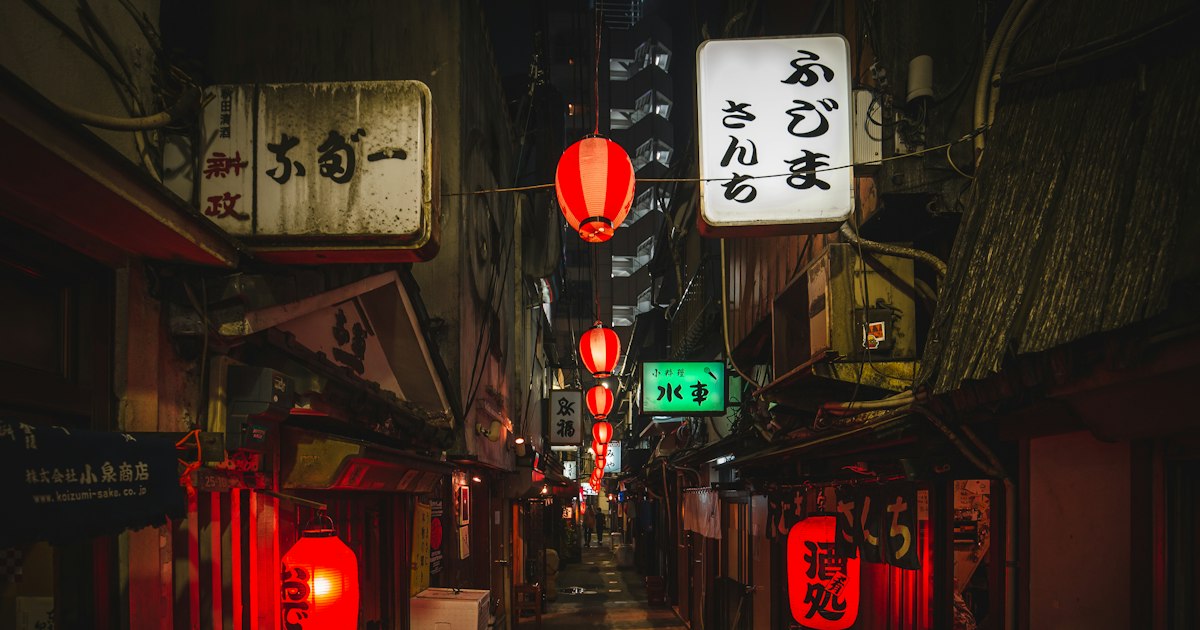
Photo by Denys Nevozhai on Unsplash
Shimbashi doesn’t try to be pretty. Grimy brick arches hold up the Yamanote Line tracks, smoke drifts out from yakitori grills set up almost on the sidewalk, and the crowd is overwhelmingly middle-aged office workers in loosened ties. That’s exactly why it’s worth a visit. If Shibuya and Shinjuku are where Tokyo performs for tourists, Shimbashi is where the city actually unwinds after work — and it’s one of the last central neighborhoods where you can still get a genuine, unpolished izakaya experience for the price of a fast-food combo meal back home.
Why the Tracks Matter Here
Shimbashi’s identity is tied directly to its train lines. The area became Tokyo’s first railway terminus in 1872, and the elevated Yamanote Line tracks that now cut through the district date from the early 20th century. The space underneath — low-ceilinged, noisy, cheap to rent — filled up with yakitori stalls, standing bars, and tiny izakaya in the postwar decades, catering to salarymen heading home from the surrounding office towers. That same arrangement survives almost unchanged today: narrow lanes like Shimbashi Garakuta Yokocho and the alleys around Karasumori Shrine are lined with stalls barely wider than a train car, many seating six to ten people at most.
The result is a district that looks and sounds like something out of a 1960s film — exposed beams, hand-painted signs, red lanterns (akachochin) marking izakaya entrances — but is still a fully working part of daily Tokyo life rather than a preserved attraction. Trains rumble overhead every few minutes, which is part of the charm rather than a flaw.
Getting There and When to Go
Shimbashi Station is served by the JR Yamanote and Keihin-Tohoku lines, the Ginza and Asakusa subway lines, and the Yurikamome monorail to Odaiba. From the Ginza side of the station, exit toward the Shiodome/Hibiya side and you’ll see the tracks and the stalls beneath them almost immediately — there’s no real walk involved, which is unusual for a Tokyo nightlife district.
Most stalls and standing bars open around 5:00–6:00pm and run until 11:00pm or midnight; a handful of standing bars (tachinomi) open earlier, around 3:00 or 4:00pm, for the after-work crowd that starts drinking before office hours officially end. Weeknights, especially Thursday and Friday, are busiest and most atmospheric — this is when the salaryman culture the area is famous for is actually on display. Saturdays are noticeably quieter since many places cater to the weekday office crowd, and a fair number close entirely on Sundays. Winter is arguably the best season to visit: the covered alleys stay warm from the grills and body heat, and the contrast between the cold outside and the glowing red lanterns is part of the appeal. In summer, some stalls spill further out onto the street with plastic stools and beer crates.
Where to Drink and Eat Under the Tracks
The two names to know are Shimbashi Garakuta Yokocho (ガラクタ横丁), a short alley of yakitori and motsuyaki (grilled offal) stalls directly under the tracks near the Hibiya exit, and the slightly larger cluster of izakaya around Karasumori Shrine, a small shrine wedged incongruously between bars that’s worth a quick look even if you don’t drink. Expect skewers of chicken thigh, skin, liver, and tsukune (chicken meatballs) grilled over charcoal, usually ¥120–250 per skewer, along with motsu nikomi (simmered offal stew, around ¥400–600) and cheap highballs or draft beer at ¥400–600 a glass.
Few of these places have English menus or English-speaking staff, and that’s genuinely part of the experience rather than an obstacle — pointing at what the person next to you is eating works fine. Seating is first-come, no reservations, and turnover is fast since most visits last 45 minutes to an hour before people move to a second or third spot, a drinking pattern called hashizake (bar-hopping) that’s normal here.
What a Night Out Actually Costs
Budget (¥1,500–2,500 per person): One standing bar or a quick stop at a yakitori stall — a few skewers and two drinks. This is how most regulars actually drink here, hopping between three or four spots rather than settling into one.
Mid-range (¥3,000–5,000 per person): A full sit-down izakaya meal with a shared selection of grilled and simmered dishes, several rounds of drinks, and often a seating charge (otsumami/tsukidashi) of ¥300–500 automatically added — a small appetizer you didn’t order but are expected to pay for, standard across izakaya in Japan.
Splurge (¥8,000+ per person): A handful of higher-end yakitori counters in the area use specific breeds of chicken (jidori) and charge course-menu prices, sometimes with an English-speaking chef who’ll explain each cut. These usually do take reservations and are worth booking a day or two ahead if you want a counter seat.
Common Mistakes First-Timers Make
Showing up on a Sunday evening expecting the full atmosphere — many stalls are closed, and the ones that are open feel sleepy compared to a Thursday. Assuming card payment is accepted — plenty of the smallest stalls and standing bars are cash-only, so carry ¥5,000–10,000 in notes and coins rather than relying on a card or IC card balance. Sitting down at a counter seat without checking if there’s a seating charge or a minimum order, which can turn a “quick drink” into an unexpectedly full bill. And treating it purely as a photo stop — these are working bars with regulars, not a set piece, so standing in the narrow alley blocking foot traffic to take photos of other people’s tables is a fast way to get an unfriendly look.
Beyond the Tracks
If the smoke and noise aren’t for you, or you want a lighter palate cleanser before diving in, it’s worth knowing Shimbashi isn’t your only option in Tokyo for a good drink. For something quieter and more wine-focused, several of the city’s best spots are covered in Natural Wine Bars in Tokyo: Where to Drink Beyond Sake and Highballs, which makes a good contrast piece if you’re spending a few nights sampling different sides of Tokyo’s drinking culture. And if you’d rather spend the daylight hours somewhere calmer before an evening in Shimbashi, the azalea-season walk around Nezu Shrine and the Nezu Museum is about as different from a yakitori alley as Tokyo gets, and it’s an easy subway ride away.
Shimbashi won’t appear on many must-see lists, and that’s the point — it’s one of the few central districts where you’re watching Tokyo go about its evening rather than watching Tokyo perform for visitors. Go on a weeknight, bring cash, and don’t expect an English menu, and it delivers one of the most authentic few hours you’ll spend in the city.