Some links below are affiliate links. If you book through them, Japan Trove may earn a small commission at no extra cost to you.
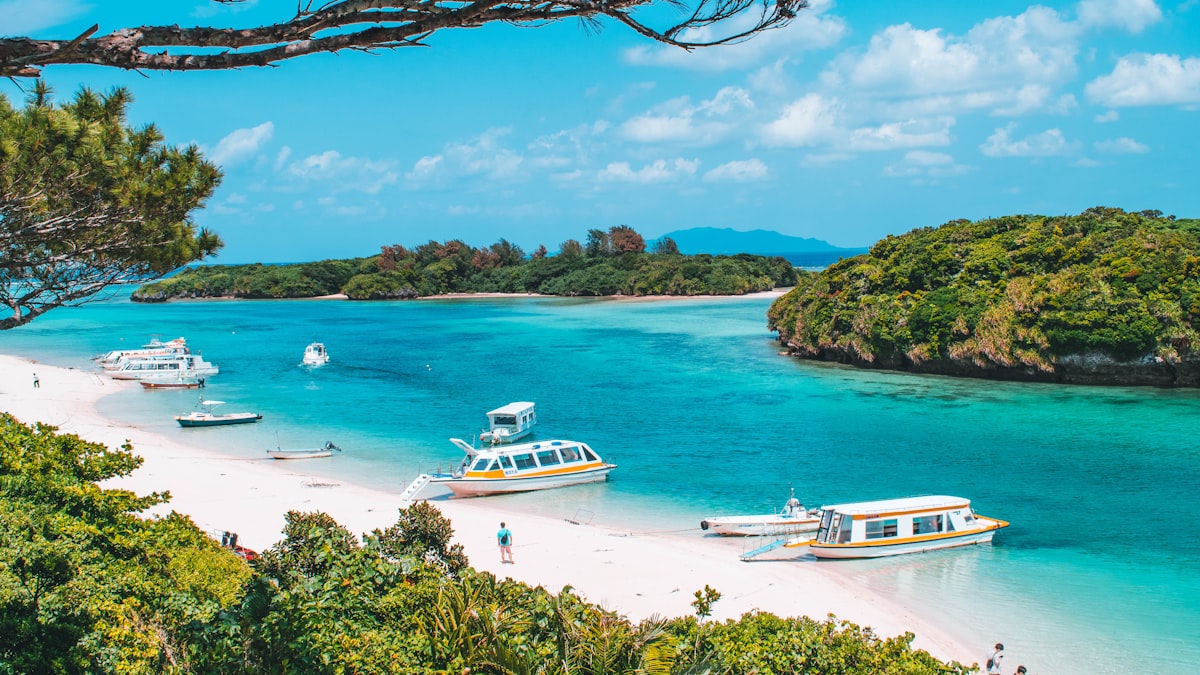
Okinawa is Japan’s tropical side — turquoise water, white-sand beaches, a distinct island culture, and some of the country’s best diving. It feels worlds away from Tokyo. Here’s what to do.
Top experiences
- Beaches & islands — the Kerama Islands and Miyako have jaw-dropping water; great for swimming and snorkeling.
- Diving & snorkeling — coral reefs, sea turtles, and the famous Blue Cave near Naha.
- Churaumi Aquarium — one of the world’s best, home to whale sharks.
- Shurijo Castle — the seat of the old Ryukyu Kingdom (check reconstruction status before visiting).
- Ryukyu culture — distinctive music, textiles, and cuisine unlike mainland Japan.
Okinawan food to try
- Okinawa soba — thick noodles in a light pork broth.
- Goya champuru — bitter-melon stir-fry, the signature dish.
- Taco rice and Blue Seal ice cream — local comfort food. More in must-try Japanese food.
When to go
- Best weather: spring and autumn; summer is hot, humid, and peak season.
- Beach season runs roughly April–October.
- Typhoons are possible late summer — build in flexibility. See best time to visit.
Getting there & around
- Fly into Naha (about 2.5 hours from Tokyo) — far quicker than any train.
- The main island rewards a rental car; the monorail covers central Naha.
- Island-hop by ferry or short flights to Miyako and Ishigaki.
- Book stays early for summer — compare on Booking.com .
Tips
- Okinawa is a fly-in trip — it pairs poorly with a rail-pass-only itinerary, so plan it as its own leg. See our 14-day itinerary.
- Grab an eSIM for maps and translation.
- Reef-safe sunscreen and water shoes are worth packing.
What things cost
- Flights from Tokyo to Naha run JPY 15,000-40,000 round-trip depending on season and booking lead time, generally the single biggest cost lever on an Okinawa trip.
- A one-day guided snorkeling or diving trip to the Kerama Islands runs JPY 8,000-15,000 including equipment, boat transport, and often lunch — genuinely excellent value given the water clarity and marine life on offer.
- Rental cars run JPY 5,000-10,000/day in peak season, and given how spread out the main island’s sights are, a rental car for at least part of the trip usually pays for itself in flexibility.
Common mistakes to avoid
- Treating Okinawa as an easy add-on to a rail-based mainland itinerary — it requires a separate flight and different logistics entirely; budget it as its own leg with its own travel days, not a quick side trip.
- Booking a peak summer trip without a flexible return date — typhoon season (roughly June through October, peaking August-September) can disrupt flights with little notice; build in a buffer day if your dates fall in this window.
- Sticking only to the main island — Miyako and Ishigaki have noticeably clearer water and less development than parts of the Naha area, and are worth the extra flight or ferry if diving and beaches are the trip’s main goal.
Choosing which island to prioritize
First-time visitors with limited time often do well sticking to the main Okinawa island for its mix of culture (Shurijo Castle, Ryukyu history) and beaches; those purely chasing the best snorkeling and diving water clarity should strongly consider flying onward to Miyako or Ishigaki, which consistently rank among Japan’s best diving destinations.
Okinawa’s distinct culture, beyond the beaches
The Ryukyu Kingdom that once ruled Okinawa had its own language, music, and cuisine shaped by trade with China and Southeast Asia rather than mainland Japan, which is why Okinawan food, textiles (like bingata dyeing), and even the local dialect feel genuinely distinct — worth treating Okinawa as its own cultural destination rather than simply “Japan’s beach region.”