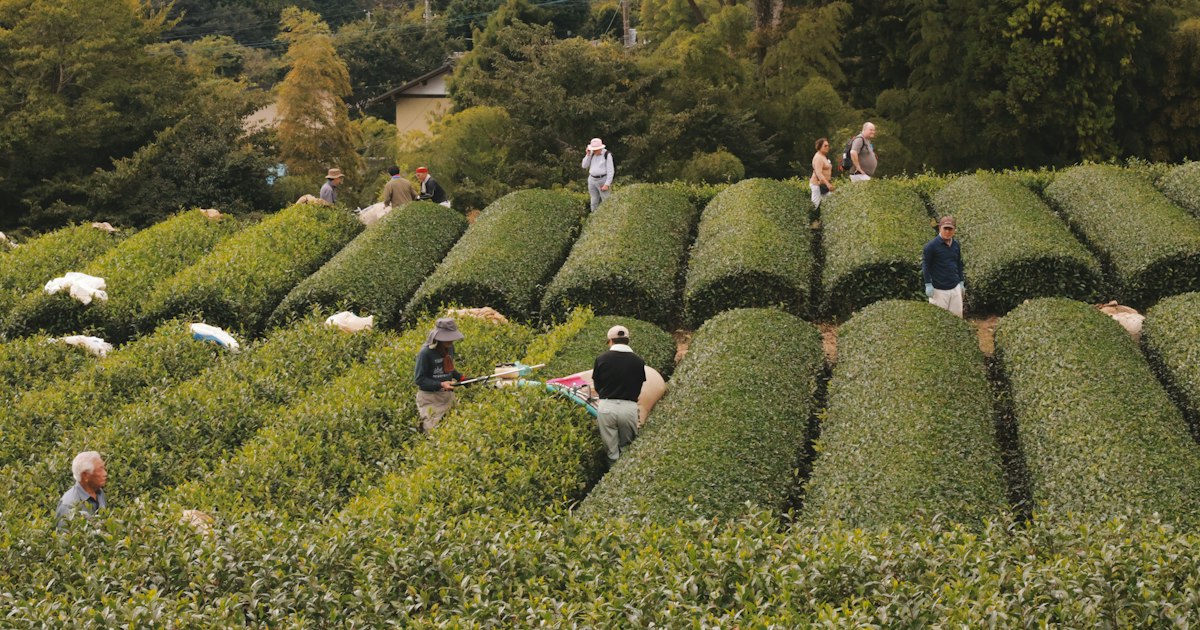
Photo by Michael Lebedew on Unsplash
If matcha is the green tea most foreign visitors already know, gyokuro (玉露) is the one serious tea drinkers ask about once they’ve been to Japan a few times. It’s grown in the shade, brewed at a lower temperature than you’d expect, and tastes less like “grassy green tea” and more like a savory, almost brothy sip of umami. It’s also one of the easiest high-quality souvenirs to carry home: a vacuum-sealed pouch weighs nothing, survives a suitcase, and lasts for months if kept cool and dark. Here’s what gyokuro actually is, how to brew it so it doesn’t taste bitter, and exactly where to buy good tins of it in Uji, Kyoto and Tokyo.
What Makes Gyokuro Different From Sencha or Matcha
Most Japanese green tea (sencha) grows in full sun. Gyokuro and matcha are both shade-grown — tea bushes are covered with cloth or reed screens for roughly the last 2-3 weeks before the spring harvest, blocking out 70-90% of direct sunlight. Starved of light, the plant pumps out more chlorophyll and amino acids (especially theanine, the compound behind tea’s umami sweetness) instead of the catechins that make sun-grown tea taste astringent. The leaves come out dark, almost black-green, and tightly needle-shaped.
The difference from matcha is simple: matcha is the shade-grown leaf ground into powder, while gyokuro is the same style of leaf left whole and steeped as a loose-leaf tea. Gyokuro is generally considered the pinnacle of loose-leaf green tea in Japan — it’s what’s served to guests at formal tea gatherings and given as a respectful business gift, not something people drink casually at their desk.
How to Brew Gyokuro Without Wasting It
The single most common mistake visitors make is treating gyokuro like regular green tea and dumping boiling water on it. That scalds the delicate amino acids and pulls out bitterness instead of sweetness. The traditional method:
- Water temperature: 50-60°C (not boiling — let boiled water sit for several minutes, or pour it between two cups to cool it down)
- Leaf amount: generously more than sencha — about 10g for a small gyokuro pot (kyusu) serving 2-3 tiny cups
- Steeping time: 1.5-2.5 minutes for the first infusion
- Serve in small cups (30-40ml) — gyokuro is sipped, not gulped
A good gyokuro leaf can be re-steeped two or three times, with the second infusion often considered the sweetest. Shops selling gyokuro will usually have a small brewing instruction card in English if you ask, and many will let you smell or sample the tea before buying — don’t be shy about requesting this, it’s completely normal shop etiquette in tea specialty stores.
Best Season and Timing to Buy
The first harvest (ichibancha) happens in late April to mid-May, and shops typically have the new crop in stock by late May or early June — this is the single best window to buy, since gyokuro is graded heavily on freshness and the new-crop (shincha) versions sell at a premium for good reason. If you’re visiting outside that window, that’s fine too; reputable shops store leaf in nitrogen-flushed or refrigerated conditions, but always check the harvest year printed on the package and avoid anything more than a year or two old unless it’s being sold explicitly as aged tea (a different, niche category).
Where to Buy: Uji and Kyoto
Uji, just south of Kyoto, is Japan’s most famous gyokuro-producing region, alongside Yame in Fukuoka Prefecture. If your itinerary includes Kyoto, a short detour to Uji (about 20 minutes by JR Nara Line or Keihan train from Kyoto Station) is worth it for tea shopping alone.
- Marukyu Koyamaen (Uji) — one of the most respected tea producers in Japan, selling gyokuro from roughly ¥1,500-¥2,000 for 100g up to ¥5,000+ for top-grade single-estate leaf. Their Uji shop and tearoom let you taste before buying.
- Nakamura Tokichi Honten (Uji) — a historic tea merchant with a shop near Uji’s Byodoin side; gyokuro here typically runs ¥1,200-¥4,000 for 100g, and the attached café serves gyokuro-based desserts if you want to taste the flavor profile before committing to a tin.
- Fukujuen — has both a Uji factory/museum (Ujicha Kobo) and a retail counter inside Kyoto Station, which is the easiest stop if you’re short on time. Gift sets with small gyokuro tins start around ¥1,000-¥1,500.
- Ippodo Tea (Teramachi, central Kyoto) — one of the oldest tea houses in Japan (founded in the 1700s), with an in-store tasting counter and English-friendly staff. Gyokuro starts around ¥1,500 for a small 50-100g bag and climbs well past ¥5,000 for the top grades.
Most of these shops open around 10:00 and close by 17:00-18:00, and the Uji shops in particular are quieter and more relaxed than central Kyoto — a nice contrast if you’ve just come from somewhere like the Zen temples of Kita-Kamakura, where tea and Buddhist practice have been intertwined since monks first brought tea culture to Japan.
Where to Buy in Tokyo
If Kyoto isn’t on your route, Tokyo has solid options too. Ippodo Tea has a Tokyo branch near Marunouchi/Tokyo Station with the same tasting-counter format as Kyoto. Department store food basements (depachika) in Ginza, Nihonbashi and Shinjuku — Mitsukoshi, Takashimaya, Isetan — all carry curated gyokuro sections from multiple regional producers, which is useful if you want to compare Uji tea against Yame (Fukuoka) tea side by side without traveling to either region. Expect similar pricing to Kyoto, roughly ¥1,500-¥4,000 for a 100g tin at mid-range quality.
Budget, Mid-Range and Splurge Picks
- Budget (¥1,000-¥1,500 for 100g): Department store own-brand or Fukujuen’s entry gyokuro — a genuine shade-grown tea, just a lower grade leaf. Fine for a first try.
- Mid-range (¥2,000-¥3,500 for 100g): Single-region Uji or Yame gyokuro from Ippodo, Nakamura Tokichi or Marukyu Koyamaen — this is where the umami really shows up.
- Splurge (¥5,000+ for 100g, sometimes far more): Competition-grade or single-farm limited lots, usually sold in smaller 40-50g packages. These make serious gifts for a tea-loving host back home.
A nice pairing idea if you want to taste gyokuro the way it’s traditionally served: many shops recommend sipping it alongside a small wagashi sweet, and if you’d rather make your own, the wagashi-making classes in Kyoto and Tokyo are a fun half-day activity that sets you up to understand why the tea is brewed so gently in the first place — the sweetness of the wagashi is meant to balance gyokuro’s savory depth.
Packing It Home
Vacuum-sealed foil pouches travel well in checked or carry-on luggage and aren’t liquid-restricted, so gyokuro is an easy item to buy early in a trip rather than saving it for the last day. Keep it away from heat and humidity, and once opened, store it in the fridge in an airtight container — it loses its delicate aroma faster than cheaper sencha once exposed to air. If you’re stocking up on other souvenirs or need to sort out connectivity before you start exploring tea shops, sorting out your pocket WiFi or data SIM at the airport on arrival means you can look up shop hours and train routes to Uji on the spot rather than guessing.