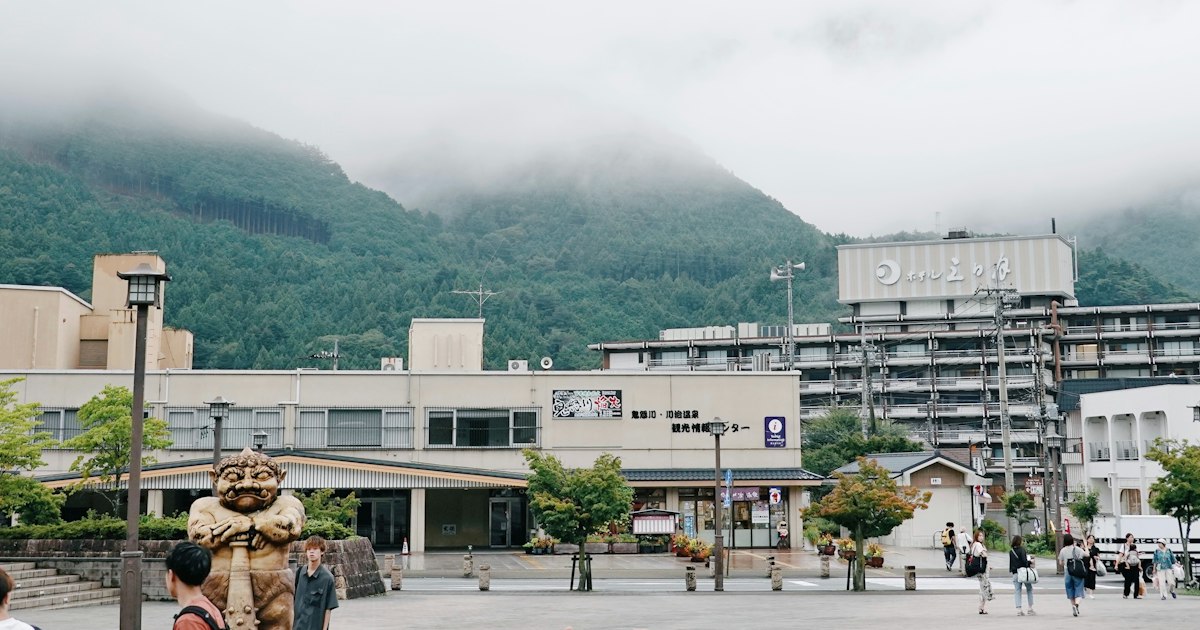
Most “accessible onsen” lists online just repeat the same three big resort hotels in Hakone and call it done. That’s a narrow slice of what’s actually out there. A fair number of smaller onsen towns have invested in barrier-free baths, step-free access routes, and lift-equipped tubs precisely because their traditional ryokan layouts — raised tatami entryways, narrow stone bath approaches — made them realize they’d lose guests otherwise. Here’s a short, honest list of towns where wheelchair users and visitors with limited mobility can actually soak, along with what to check before you book, because “accessible” in Japan varies wildly in what it actually means.
What “accessible” usually means on the ground
Before the list, a reality check. In Japan, “barrier-free” (バリアフリー) most often means a step-free path from the entrance to a bath with grab bars and a bench for transferring, not necessarily a fully mechanized lift into the water. Some facilities have a shallow entry bath (低床浴槽) you can wheel a transfer chair up to; others have an actual hydraulic lift seat. These are very different experiences, so always ask specifically “リフトはありますか?” (is there a lift?) or “車椅子のまま入れますか?” (can I enter in the wheelchair?) rather than trusting a blanket “accessible” label on a booking site. Call ahead — most of these towns are small enough that a phone call or an email in simple English (many now have at least one staff member who can manage it) gets a direct answer faster than searching their website.
Kinosaki Onsen, Hyogo Prefecture
Kinosaki is known for yukata-clad guests hopping between seven public bathhouses along a willow-lined canal, and it’s one of the better-prepared towns for mobility needs because the whole town center is flat. Of the seven public baths, Satono-yu (open 7am–11pm, closed Mondays, adult entry ¥900) has step-free entry, an accessible restroom, and an elevator to its upper-floor bath and sauna area — the most reliably accessible of the seven. Ichino-yu also has barrier-free entry at ground level. The other bathhouses have at least one step or a raised wooden threshold at the entrance, so if you’re using a manual or power wheelchair, lead with Satono-yu and ask the tourist information office next to Kinosaki Onsen Station (station building, open daily 9am–6pm) for a current access map — bath renovations rotate through the seven on a schedule, so the specific list changes year to year. Kinosaki is about 2.5 hours from Kyoto or Osaka by JR limited express (the “Kounotori” from Osaka, or “Hashidate”/transfer via Fukuchiyama from Kyoto); reserved seats are worth booking since the trains aren’t long. Best season is autumn (crab season, mild weather) or winter, when snow dusts the canal but the town’s flat streets stay walkable/rollable.
Kusatsu Onsen, Gunma Prefecture
Kusatsu’s famous Yubatake (hot water field) area has had sidewalk and curb-cut upgrades over the past decade, and the town’s main public bath, Otaki-no-yu (open 9am–9pm, last entry 8:30pm, adult entry ¥700), has a barrier-free entrance and an accessible changing area, though note it’s a multi-tiered bathing hall with several pools at different temperatures connected by a few steps — ask staff which pool is reachable without stairs on arrival. For a gentler option, several of the larger hotel day-spas near the Yubatake, including ones attached to major hotel chains, offer flat-access baths with transfer benches for day-use rates typically ¥1,000–¥1,500. Kusatsu has no train station; the standard route is JR to Naganohara-Kusatsuguchi Station then a 25-minute JR bus (about ¥800), and the bus itself is a regular coach, not low-floor, so budget extra time and ask ahead if a lift-equipped bus is scheduled (JR Kanto runs a handful of accessible buses on this route per day — confirm the departure time with the bus company, not just the general timetable). Go in late spring through early autumn; winter access on the steep town-center slopes gets genuinely difficult even with sidewalk clearing.
Yunomine Onsen, Wakayama Prefecture (Kumano Kodo)
This one’s a surprise entry because Yunomine sits on the Kumano Kodo pilgrimage trail, hardly an obvious accessible destination. But the town’s public bathhouse, Tsuboyu (a UNESCO-listed single-person bath, reservation required at the adjacent bathhouse office, ¥870 for 30 minutes), is not accessible — it’s a tiny stone tub down a few steps. The nearby Yunomine-so ryokan’s day-use bath, however, has a flat entry from the car park and a bench-equipped tub, and it’s the realistic option here; call ahead (listed on the Kumano Kodo region’s official tourism site) since day-use slots are limited. Getting here without a car is the real obstacle: the nearest practical route is a bus from Kii-Tanabe Station (about 75 minutes, roughly ¥2,500), and buses on this rural route are not reliably low-floor. If full-trail hiking isn’t the plan, a taxi from Kii-Tanabe is the more dependable option for wheelchair users, and it’s worth budgeting ¥10,000+ for the one-way fare. Best visited spring (April–May) or autumn (October–November) when the mountain roads are clear and the weather is stable.
Dogo Onsen, Matsuyama, Ehime Prefecture
Dogo is one of Japan’s oldest onsen towns, and its iconic three-story wooden bathhouse (the Honkan) is currently mid-renovation specifically to add accessible facilities in phases — which is a double-edged fact: check the current renovation status before you go, since some sections close on rotation. In the meantime, the adjacent Dogo Onsen Asuka-no-yu annex (open 6am–11pm, adult entry ¥610–¥1,280 depending on bath class) was built with step-free access and an accessible restroom from the start, making it the more reliable choice right now. Dogo is reached via a 20-minute tram ride from JR Matsuyama Station on the Iyotetsu line; the newer low-floor trams run on this route but not every single car does, so if a lift-equipped vehicle matters, wait for the next one rather than boarding the first tram that arrives — station staff can point out which cars are low-floor. Matsuyama itself is a reasonably flat city, which makes Dogo one of the easier onsen day trips to combine with general sightseeing. Any season works here since it’s a mild coastal climate, though summer is hot and humid.
Common mistakes to avoid
- Trusting “barrier-free” on a listing without calling. It can mean anything from a full lift to just “no stairs at the front door.” A two-minute call or email beats guessing.
- Booking a ryokan room without asking about the room-to-bath route separately from the room itself. A hotel can have an accessible room and still require navigating a flight of stairs or a steep slope to reach the bath wing.
- Assuming rural buses are low-floor. Many rural onsen towns (Kusatsu, Yunomine) are served by regular highway-style coaches, not the low-floor city buses common in Tokyo or Osaka. Confirm with the operator, or default to taxi for the final leg.
- Traveling in heavy snow season to mountain onsen towns. Kusatsu and parts of the Kumano Kodo region get real snow; sidewalk and slope clearing is inconsistent even where summer access is good.
Planning the trip around it
If Kinosaki or Dogo are on the itinerary, they both involve a shinkansen or limited express leg at some point — if your route includes a transfer at a major hub like Shin-Osaka, it’s worth reading up on the platform logistics in advance so you’re not navigating unfamiliar stairs or long platform walks with a tight connection; see Shin-Osaka Station’s Shinkansen-to-Shinkansen Transfer guide for a breakdown of which platforms require elevators versus stairs. And if the trip overlaps with winter sports regions near Kusatsu or similar mountain towns, sending luggage ahead rather than hauling it through unfamiliar terrain is worth considering — the takkyubin counter guide for ski resorts covers how that works at resort-adjacent stations. Budget-wise, day-use baths across these towns run ¥600–¥1,300, which is modest; the real cost driver is transport, especially taxis for the final mile in towns without reliable low-floor buses — build that into the budget rather than assuming the posted bus fare is the whole story.