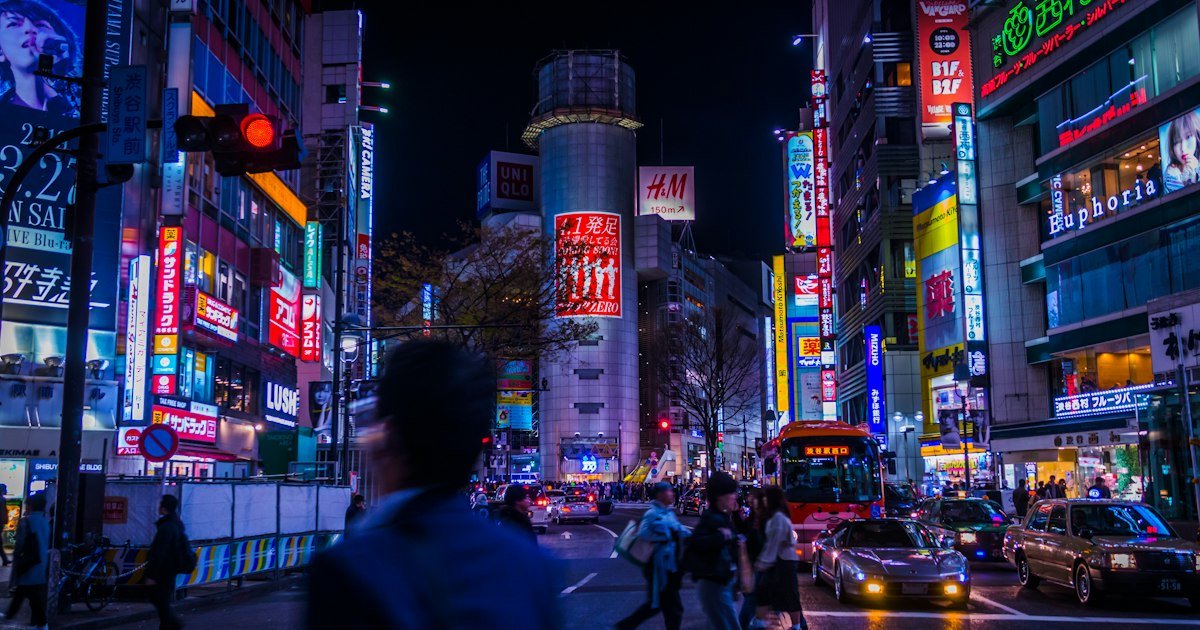
Photo by Koukichi Takahashi on Unsplash
Love hotels are one of the most misunderstood fixtures of Japanese city life. They’re not seedy back-alley operations — they’re a regulated, decades-old industry with over 20,000 properties nationwide, used by couples of all ages who want privacy, a theme room, or simply a few quiet hours away from thin apartment walls and multi-generational households. For visitors, they’re also a genuinely useful (and often cheap) accommodation option, as long as you understand the rules before you walk up to the check-in panel.
What Exactly Is a Love Hotel?
A love hotel is a short-stay hotel designed around privacy rather than service. Rooms are rented by couples for a few hours (“rest”) or overnight (“stay”), and the entire experience is built to avoid face-to-face interaction — no lobby chit-chat, no shared elevators with other guests, often no visible staff at all. The category took off in the 1960s–70s as Japanese cities grew denser and privacy at home became scarce, and it has since evolved into a legitimate, licensed segment of the hospitality industry governed by the Entertainment Business Control Law (Fūzoku Eigyō Law).
Rooms range from plain and modern to elaborately themed — space capsules, karaoke suites, rooms with private pools or saunas — and almost always include a large bathtub, a big TV, and a stocked drink/snack machine. Think of it as a boutique hotel room rented in blocks of time rather than by the night.
Rest vs. Stay: Understanding the Pricing System
Pricing is split into two modes, displayed on a lit panel at the entrance or on a screen inside:
- Rest (休憩, kyūkei): Typically 1.5–3 hours, priced around ¥2,900–¥6,000 depending on the room grade and city. Usually available from late morning until early evening.
- Stay (宿泊, shukuhaku): An overnight block, usually check-in after 22:00–23:00 with check-out by 10:00–11:00 the next morning. Expect ¥6,000–¥15,000, with nicer theme rooms and Friday/Saturday nights pushing toward the top of that range.
Some hotels also offer a “rest + stay” combo if you arrive in the evening and want to linger, which is usually cheaper than booking a stay from scratch. Prices are almost always posted outside or on the room-selection panel — there’s rarely any negotiation or hidden fee, though a handful of older places are cash-only, so carry yen just in case.
How to Actually Check In (No Front Desk Awkwardness)
The process is designed to be fast and anonymous:
- Walk into the entrance lobby, where a backlit panel shows available rooms with photos and prices. Press the button for the room you want.
- A key or electronic tag is dispensed from a small window or automatic gate — in most properties you’ll barely glimpse staff, if at all.
- Take the private elevator or stairwell directly to your floor.
- Payment happens either at a machine in the room (slide cash or a card into a slot by the door) or at a screened checkout window when you leave — you’re rarely asked for ID, and there’s no paperwork to fill out.
If a hotel has no vacancies, the panel lights go dark or show “満室” (full) — just walk to the next one, since most love hotel districts cluster several properties within a block of each other.
Where to Find Them: Best Neighborhoods
Love hotels cluster in entertainment districts, usually within walking distance of nightlife and arcades:
- Tokyo: Shibuya’s Dogenzaka slope (nicknamed “Love Hotel Hill”), a steep street of dozens of properties a 5-minute walk from Shibuya Station; also Ikebukuro and parts of Gotanda.
- Osaka: Namba and Dotonbori have a dense concentration, easy to reach on foot after a night out.
- Fukuoka: The Nakasu entertainment district.
These same neighborhoods tend to be where you’ll find Japan’s arcade and gaming culture too — if you’re staying near Shibuya or Namba, it’s worth pairing the night with a stop at a crane game arcade or a pachinko parlor, both of which cluster in the same streets. For a quieter, more local-feeling night out before heading back, Tokyo’s Sangenjaya izakaya district is a good alternative base, though it has fewer love hotels than Shibuya or Ikebukuro.
Can Tourists Stay? What’s Allowed and What’s Not
Yes — tourists are generally welcome, and plenty of foreign couples use love hotels as a cheap, convenient, and surprisingly fun alternative to a standard hotel room. A few rules to know:
- You need to be a couple (or at least present as a pair). Most love hotels won’t rent to solo travelers, and many historically wouldn’t rent to same-sex couples either — this is changing, especially in Tokyo and Osaka, but policy still varies property by property, so it can help to call ahead or use a booking app if you want certainty.
- Walk-ins are the norm, not reservations. The vast majority of love hotels don’t take advance bookings — you simply show up and pick an available room from the panel. A few tourist-friendly properties now accept reservations through apps like Kaveli, which has English listings and photos, useful if you want to guarantee a themed room on a weekend.
- Minors are not permitted, and some properties post signage limiting entry to adults only, in line with the entertainment business licensing law.
- Groups larger than two are usually turned away — rooms and pricing are built around couples, not friend groups or families.
Common Mistakes to Avoid
- Assuming you can pay by card everywhere. Many older love hotels are cash-only or have unreliable card readers; always carry enough yen to cover the room.
- Missing the check-out window. Overstaying a “stay” booking past 10–11am usually triggers an automatic extra “rest” or “stay” charge billed through the in-room payment machine — there’s no front desk to negotiate with.
- Arriving with large suitcases. There’s no luggage storage or bellhop service, and rooms are compact; love hotels work best as a one- or two-night novelty, not your main base with all your luggage for a multi-city trip.
- Confusing “rest” pricing for an overnight rate. Booking a rest block late in the evening can leave you scrambling at 1am when the clock runs out and the hotel wants you to re-pay for a stay.
- Expecting hotel amenities like breakfast or concierge service. This is a private-room product, not a full-service stay — there’s a vending machine, not a restaurant.
Budget, Mid-Range, and Splurge Picks
Since individual love hotels change names and ownership often and rarely have English websites, think in terms of tiers rather than specific properties:
- Budget (¥6,000–¥8,000/night): Simple, clean rooms on Dogenzaka or in Namba — plain decor, a double bed, bathtub, and TV. Fine for a one-off stay to save money versus a standard hotel.
- Mid-range (¥9,000–¥13,000/night): Theme rooms with better bathrooms (sometimes a jet bath or small sauna), karaoke machines, and more spacious layouts — the sweet spot for most tourists wanting the “experience” without going all-in.
- Splurge (¥14,000+/night): Flagship theme rooms — private pools, elaborate decor sets, multi-room suites — found at the larger, more famous properties in Shibuya and Osaka’s Minami district, often the ones featured in Japanese variety shows.
Whichever tier you choose, a love hotel stay is one of the more memorable, low-cost ways to see a side of Japanese urban life that most guidebooks skip entirely — just go in knowing the rules, and it’s a smooth, surprisingly efficient system.