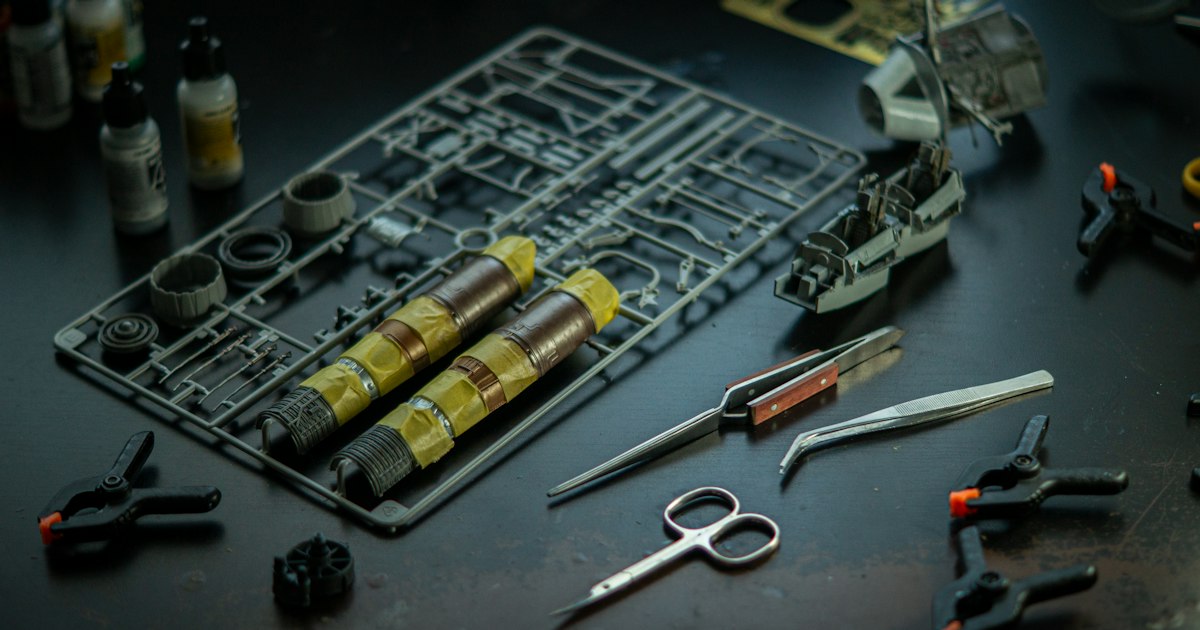
Photo by Matias Luge on Unsplash
Walk past a glass case in Akihabara and you’ll eventually spot them: unpainted gray or cream-colored resin figures, seams still visible, priced anywhere from a few thousand yen to six figures. These are garage kits — gareji kitto, often shortened to gareki — Japan’s long-running hobby of small-batch resin model kits sold by independent sculptors rather than big toy companies. If you’re curious about Japanese pop culture beyond anime merch and figures-in-a-box, this is one of the most hands-on and least tourist-packaged corners of it. Here’s how the scene actually works, and how a visitor can get into it without wasting money or a whole afternoon.
What Exactly Is a Garage Kit?
A garage kit is an unassembled, unpainted model cast in polyurethane resin, typically of an anime, game, or original character — sometimes a vehicle or mecha. The name comes from the 1980s US/Japan hobby tradition of sculptors literally casting small runs of resin parts in their garages. Unlike a mass-produced Bandai or Good Smile Company figure, a garage kit arrives as loose resin parts in a plastic bag with a photocopied instruction sheet. You cut away casting flash, fill seams with putty, sand, prime, and airbrush it yourself. Runs are small — often 50 to a few hundred units per design — which is why they’re pricier than injection-molded plastic kits and why good ones sell out at events within the first hour.
This is a builder’s hobby, not a collector-and-display one, though plenty of finished garage kits do end up on display shelves. If you don’t want to paint anything yourself, skip ahead to the shopping section below — some shops sell pre-painted finished samples or take commissions.
Wonder Festival: Japan’s Biggest Garage Kit Show
Wonder Festival (ワンダーフェスティバル, “WonFes”) is the center of this hobby. Organized by Kaiyodo, the figure company behind the Revoltech line, it’s held twice a year — a winter event in early February and a summer event in late July — at Makuhari Messe, the large convention center in Chiba, about 30–40 minutes by train from central Tokyo on the JR Keiyo Line to Kaihin-Makuhari Station.
The show floor is packed with thousands of independent “circles” (small studios, sometimes a single sculptor) selling their own garage kits directly, alongside the big manufacturers showing prototypes. General admission tickets run roughly ¥2,500–¥3,000; there are also paid early-entry tickets if you want first crack at the most sought-after circles’ tables, which is worth it if you have a specific sculptor or character in mind — popular kits can sell out within 30–60 minutes of doors opening. Cash is still king at most circle tables, so bring more yen than you think you’ll need.
If you’re building a Japan trip around a hobby event like this, it pairs naturally with other otaku-culture stops in Tokyo — a day at rhythm game arcades or a themed shoot at a cosplay photo studio fits the same trip well, since both scenes overlap heavily with the garage kit crowd.
Shopping Year-Round: Akihabara, Nakano, and Den Den Town
You don’t need to time a trip around Wonder Festival to buy garage kits — Tokyo and Osaka both have standing shops that stock kits from past events.
- Volks Akihabara Hobby Tengoku — Volks is the most important name in this hobby; their Akihabara multi-floor shop stocks garage kits, resin casting supplies, and painting tools all in one building. Most floors open around late morning and close around 8pm.
- Mandarake Complex, Akihabara — an eight-floor building where several floors carry secondhand and new garage kits, dioramas, and figures; good for hunting discontinued WonFes kits at resale prices.
- Yellow Submarine and Kotobukiya — chain hobby shops with Akihabara branches that stock plastic and resin kits, plus the glue, paint, and tools you’ll need.
- Nipponbashi Den Den Town, Osaka — Osaka’s answer to Akihabara, with its own Volks branch (near Volks’ Osaka roots) and several independent resin kit shops clustered within a few blocks of Nipponbashi Station.
Shop staff in these stores are used to foreign buyers and many display prices clearly, but stock of any specific kit is never guaranteed — garage kits are inherently limited, so “sold out, try resale” is a normal outcome.
Building Your First Kit: Tools, Costs, and Common Mistakes
If you want to actually build what you buy rather than just display it unpainted, budget for tools, not just the kit:
- Resin cement / epoxy glue (not plastic model glue) — around ¥500–¥1,200 per tube.
- Putty for seams (Mr. Surfacer or Tamiya putty) — ¥500–¥1,500.
- Files and sandpaper assortment — ¥1,000–¥3,000 for a decent set.
- Airbrush + small compressor set for painting — entry sets start around ¥10,000–¥15,000; this is the one tool worth not skimping on, since hand-brushed resin rarely looks as good.
The most common mistake newcomers make is treating a garage kit like a plastic snap-fit model — it isn’t. Resin parts need to be washed first (a mold-release residue sits on the surface and repels both glue and paint), test-fitted before gluing, and primed before any color coat. Skipping the wash step is the single biggest reason first attempts look patchy. The second most common mistake is buying a large, multi-part kit as a first project; start with a single-pose bust or small figure to learn seam-filling and resin priming before committing ¥20,000+ to something ambitious.
Budget to Splurge: What to Expect to Pay
Prices scale with size, sculptor reputation, and how limited the run was:
- Budget (¥3,000–¥8,000): small busts, single-character kits from newer or lesser-known circles — a reasonable entry point.
- Mid-range (¥10,000–¥30,000): full-figure kits with detailed bases, multi-part armor or weapons, work from established circles.
- Splurge (¥40,000–¥100,000+): large-scale, multi-character dioramas or kits from name sculptors with cult followings — these are the ones that sell out in the first 15 minutes of a Wonder Festival hall opening.
Secondhand garage kits at shops like Mandarake can go either way — a common kit might be marked down, but a discontinued one from a popular circle can carry a resale premium well above its original event price.
Getting There and Planning Your Visit
For Wonder Festival specifically: check Kaiyodo’s official event page for exact dates each cycle (early February and late July), buy tickets in advance online rather than at the door, and arrive early if there’s a specific circle you want — doors typically open mid-morning and the best tables empty out fast. Makuhari Messe is a short walk from Kaihin-Makuhari Station, and the hall itself is large enough that comfortable shoes matter more than you’d expect over several hours of browsing.
For shop visits outside event season, weekday mornings in Akihabara are far less crowded than weekend afternoons, which matters if you want unhurried time digging through bins at Mandarake or browsing Volks’ full floor of tools. Either way, this is a hobby where the fun is as much in the hunting and building as the finished shelf piece — budget time, not just yen.