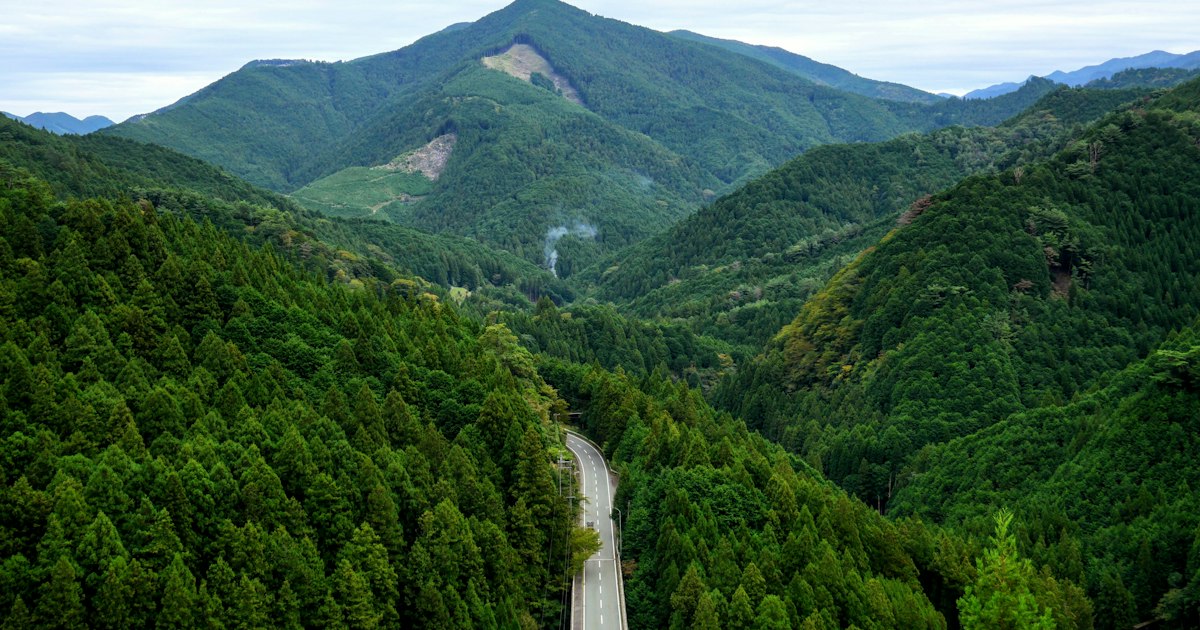
Photo by Sebastian S on Unsplash
If you grew up watching an AE86 drift sideways down a foggy mountain road, there’s a good chance you’ve daydreamed about standing on that same stretch of asphalt. Touge (峠, literally “mountain pass”) driving culture is real, the roads are real, and most of them are open public roads you can legally drive, walk, or photograph today. This guide covers the actual mountains behind Initial D’s fictional battles, what it costs and takes to experience them, and how to do it without getting a ticket, stuck in snow, or disappointed.
What Is Touge Driving, and Why Initial D Made It Famous
Touge roads are the narrow, switchback-heavy routes that climb Japan’s mountains, originally built to connect villages before tunnels and expressways existed. From the 1970s onward, these roads became informal proving grounds for drivers testing cornering skill on tight, technical asphalt — a scene Shuichi Shigeno’s manga and anime Initial D (1995–2013) turned into a global phenomenon by setting its story on fictionalized versions of real Gunma and Tochigi prefecture passes. The anime’s Mt. Akina is modeled on Mt. Haruna, Mt. Akagi keeps its real name, and the infamous “48 curves” of Myogi are a clear nod to Irohazaka in Nikko. None of these mountains host sanctioned street racing today — that’s illegal in Japan just as it would be anywhere — but the roads themselves are stunning, legal to drive at the posted speed limit, and genuinely popular with Japanese car clubs on weekend mornings.
The Real Mountains Behind Akina, Akagi, and Myogi
Mt. Haruna sits above Takasaki in Gunma Prefecture, about two hours by car or train-plus-bus from central Tokyo. The mountain road up to Lake Haruna and Haruna Shrine is the physical basis for Akina, and the shrine itself — a cluster of weathered wooden halls tucked into a rock face — is worth the drive even if you don’t recognize a single car reference. Mt. Akagi, roughly 40 minutes northeast, has a similarly technical pass up to Lake Onuma with wide views over the Kanto plain on clear days; both roads are free to drive, open to normal traffic, and best visited on a weekday to avoid both tour buses and the occasional car club meet. Neither mountain has official English signage pointing out “Initial D spots,” so download an offline map before you go — Google Maps works, but data coverage gets patchy on the upper switchbacks.
Irohazaka: The 48-Curve Pass You Can Actually Drive
Irohazaka, near Nikko in Tochigi Prefecture, is the most famous touge in Japan regardless of Initial D, and it directly inspired the anime’s Myogi setting. It’s actually two separate one-way toll roads — Dai-ichi (first) Irohazaka for descending and Dai-ni (second) Irohazaka for ascending — named for the 48 characters of the old iroha alphabet because that’s roughly how many hairpin curves each road has. The toll is a modest, per-car fee of a few hundred yen each way (tolls are reviewed periodically, so check the booth signage rather than relying on older online prices). The road connects Nikko’s temple town to Lake Chuzenji and the Kegon Falls viewpoint, making it an easy add-on to a Nikko day trip from Tokyo (about 2.5 hours one way by car, or train to Tobu-Nikko Station plus a bus). Avoid driving it after dark or following snowfall — the curves are tight, locals drive them fast, and winter ice closures are common from December through March.
Hakone Turnpike and Other Toll Roads With a View
If you want sweeping Mt. Fuji views alongside your mountain road experience, the Hakone Turnpike (connecting Odawara and Hakone) is the better choice. It’s a toll road built specifically for driving enjoyment, with a toll of roughly a few hundred to under a thousand yen depending on vehicle class, and a café and lookout deck near the summit where car enthusiasts gather, especially on weekend mornings. Hakone is also a practical base for a broader Japan itinerary — it pairs well with a scenic-drive day if you’re already combining it with other slower-paced excursions, similar in spirit to the mountain cable-car route up Mount Tsukuba in Ibaraki, which is a good non-driving alternative if you’d rather ride a ropeway than grip a steering wheel through hairpins.
Driving Legally: License, Apps, and Etiquette
To drive in Japan as a visitor, you need either an International Driving Permit issued under the 1949 Geneva Convention (get this before you leave home — Japan does not issue them to tourists) or, for a short list of countries including Switzerland, Germany, France, and Taiwan, a notarized Japanese translation of your home license. Most rental counters require the driver to be 18+ and will want to see your passport, home license, and IDP together. Once you’re on a touge, drive at or below the posted limit, pull over at designated spots rather than the road shoulder to let faster local traffic pass, and never attempt to race — police do patrol popular passes, especially on weekend nights, specifically because of Initial D-inspired visitors. For navigation, Japanese mapping and toll-payment apps are genuinely better than foreign equivalents on these rural routes; if you want access to Japan-only apps like Yahoo! Car Navi, setting up a local store account first (covered in our guide to setting up a Japan-region Apple ID or Google Play account) is worth doing before your trip.
If You’d Rather Watch — or Drift Legally — Try Ebisu Circuit
Public touge roads are not drift tracks, and treating them as such is both illegal and the single biggest mistake visitors make chasing the Initial D fantasy. For the real thing, head to Ebisu Circuit in Nihonmatsu, Fukushima Prefecture — a dedicated multi-course facility built around drift driving, with public track days, rental cars set up for sliding, and “drift taxi” rides where a professional pilots you around in the passenger seat for a few thousand yen. It’s roughly 2.5 hours from Tokyo by car or a combination of shinkansen to Koriyama plus a taxi, and it’s the legal, insured, consequence-free version of everything the anime glamorized. Days and hours vary by season and sometimes close for private events, so check the circuit’s own calendar before planning a special trip out.
Planning Your Trip: Season and Common Mistakes
Late spring (May) and autumn (October–November) are the best windows — clear skies, no ice, and foliage that makes Haruna and Akagi genuinely beautiful rather than just nostalgic. Weekday mornings mean lighter traffic and better light for photos; weekend evenings draw the biggest crowds of car enthusiasts but also the heaviest police presence. The most common visitor mistakes are renting a car without an IDP and getting turned away at the counter, attempting mountain passes in winter without checking for ice closures, and expecting curated “Initial D tourism” infrastructure that simply doesn’t exist outside a few gift shops in Nikko and Takasaki. Treat these roads as what they are — beautiful, technical, ordinary Japanese infrastructure with an extraordinary pop-culture backstory — and the trip delivers far more than the fan-service version would anyway.