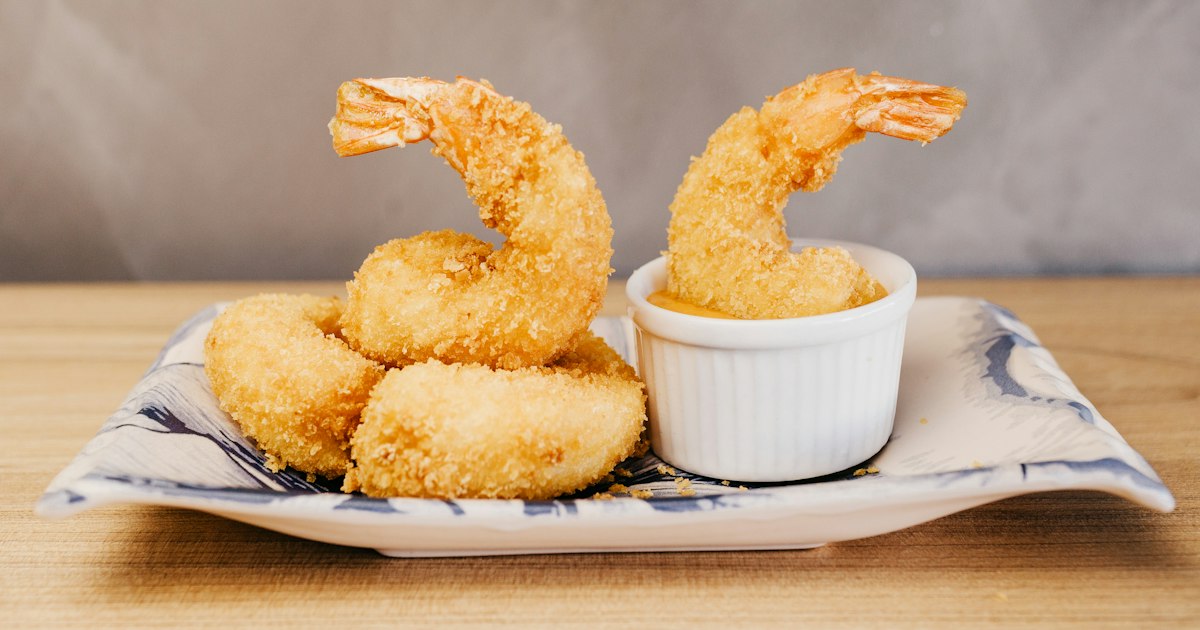
Photo by Jonathan Borba on Unsplash
Golden, crunchy, and shaped like a comma with the tail still attached — ebi furai (エビフライ) is one of those dishes that looks simple but took Japan more than a century to perfect. It’s not tempura, and it’s not quite katsu, though it borrows techniques from both. If you’ve only ever eaten shrimp tempura in Japan, ebi furai is the dish to try next: it’s a cornerstone of yoshoku, Japan’s category of Western-inspired home cooking, and it shows up everywhere from convenience store bento to white-tablecloth diners that have been frying it the same way since the Meiji era.
What Makes Ebi Furai Different from Tempura
The confusion is understandable — both are deep-fried shrimp. The difference is in the coating. Tempura uses a thin, loose batter of flour, egg, and ice water, fried until lacy and pale. Ebi furai uses the katsu method: the shrimp is dusted in flour, dipped in egg, then rolled in panko (dry breadcrumbs) before frying, producing a thick, craggy, deep-gold crust. It’s the same breading process used for tonkatsu (pork cutlet) and menchi katsu, which is why you’ll often see all three on the same yoshoku menu. If you’ve read our guide to menchi katsu, ebi furai is its seafood cousin — same crust, different protein.
The shrimp itself is usually butterflied (sliced along the belly and straightened out) so it fries flat and stays long and dramatic on the plate, with the tail left on both for presentation and so diners have something to hold. A good one should have a crust that shatters rather than chews, and shrimp inside that’s still faintly springy, not rubbery or overcooked.
A Yoshoku Dish with Meiji-Era Roots
Ebi furai belongs to yoshoku, the family of Western-influenced dishes that Japanese cooks adapted and made their own after the country opened to foreign trade in the late 1800s. Tonkatsu, omurice, and croquettes all come from the same lineage, and so does ankake pasta over in Nagoya. One of the oldest surviving yoshoku restaurants, Rengatei in Tokyo’s Ginza district, opened in 1895 and is widely credited with inventing tonkatsu itself; ebi furai developed alongside it as cooks applied the same breaded, deep-fried technique to shrimp. That history is why you’ll still find ebi furai served the old-fashioned way — on a plate with a mound of finely shredded raw cabbage, a wedge of lemon, and a pool of tonkatsu sauce or tartar sauce — rather than reinvented as a modern fusion dish.
Where to Eat It: Budget to Splurge
Budget (¥150–500): Convenience stores (7-Eleven, Lawson, FamilyMart) sell individual pieces of ebi furai in the fried-food case near the register, usually ¥150–250 each, and many bento boxes include one or two as a side. Supermarkets and department store basement food halls (depachika) sell them by the piece for home reheating, generally ¥200–400 depending on shrimp size.
Mid-range (¥1,000–1,800): This is where ebi furai shines, as a teishoku (set meal) at family restaurant chains like Ootoya or Yayoiken, and at countless local yoshoku and tonkatsu shops nationwide. A typical set pairs two to three shrimp with rice, miso soup, shredded cabbage, and pickles for around ¥1,200–1,600. Many katsu restaurants also offer a mixed set pairing ebi furai with tonkatsu or menchi katsu, letting you compare all three breaded styles side by side.
Splurge (¥2,500–4,000+): At historic yoshoku restaurants like Rengatei in Ginza, or specialist ebi fry restaurants that use larger, premium shrimp (sometimes kuruma ebi or other prized varieties), a set can run ¥2,500–4,000. These places tend to fry each piece individually to order, so expect a short wait and a noticeably thicker, juicier shrimp than the quick-turnaround version at a chain.
How to Order and Eat It
At a sit-down restaurant, you’ll typically be asked whether you want tonkatsu sauce (a thick, slightly sweet Worcestershire-style sauce) or tartar sauce — many places offer both on the table so you can switch between bites. A dab of karashi (hot mustard) on the side is traditional with katsu-style dishes and works well with ebi furai too, cutting through the richness. Squeeze the lemon wedge over the shrimp rather than the cabbage, and eat the cabbage between bites — it’s there as a palate cleanser, not a garnish to ignore.
One common mistake: ordering ebi furai expecting the light, crisp-but-not-filling feeling of tempura. The panko crust is heartier and the dish is meant to be more substantial — it’s built to be eaten with rice as a main, not as a side nibble. Another mistake is skipping the tail; it’s fully edible once fried and many Japanese diners eat it for the extra crunch, though it’s perfectly fine to leave it if you prefer.
Best Timing and Practical Tips
Ebi furai isn’t seasonal in the way some Japanese dishes are tied to a specific month, but it’s worth knowing that lunch teishoku sets are almost always cheaper than the same dish at dinner — often ¥300–500 less — so go midday if budget matters. Most yoshoku and katsu restaurants open for lunch around 11:30am and for dinner from around 5 or 6pm, with many independent shops closing one day a week (often Monday or Tuesday); it’s worth checking a restaurant’s posted hours before making a special trip, especially for older, smaller establishments. Depachika food halls keep department store hours, typically 10am to 8pm, and are a reliable fallback if a sit-down restaurant is closed.
If you’re traveling with kids or picky eaters, ebi furai is one of the safest, most universally liked items on a Japanese menu — mild, crispy, and familiar in shape even to people who’ve never had Japanese food before. It also travels well: a cooled ebi furai bento holds up fine for a few hours, making it a good pick for a train journey or a packed lunch before a day of sightseeing, the same logic that makes shrimp-based ekiben like ikameshi popular on long rides.
Other Yoshoku Classics Worth Seeking Out
If ebi furai hooks you on yoshoku, the category goes much deeper than fried shrimp. Osaka’s negiyaki takes the Western-adapted griddle-cooking idea in a completely different direction, while Nagoya’s ankake pasta linked above shows how far Japan took Italian food once it arrived. Seeking out regional yoshoku specialties is one of the more rewarding, low-effort ways to eat well on a Japan trip — the dishes are inexpensive, filling, and almost always better than you expect from the photo on the menu.