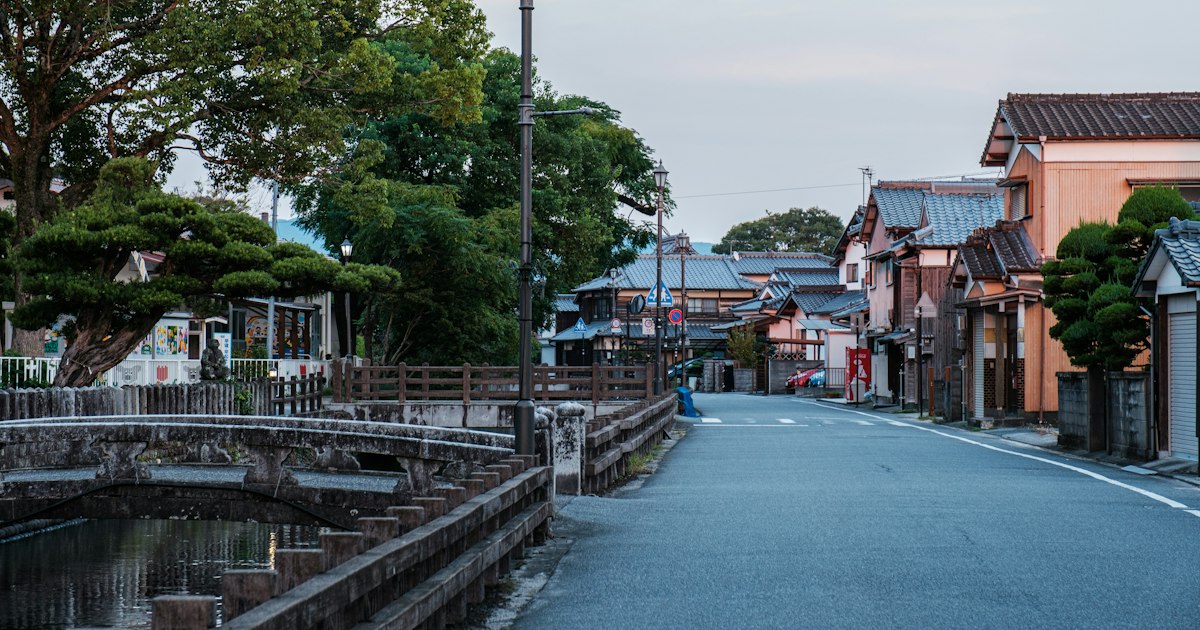
Photo by Nichika Sakurai on Unsplash
If you’ve seen Your Name (Kimi no Nawa), you’ve already walked through Hida Furukawa in your mind — the sleepy train platform, the white-walled canal streets, the long shrine staircase where the film’s two timelines nearly collide. The real town, tucked in the mountains of Gifu Prefecture just north of Takayama, is far smaller and quieter than the movie’s fictional Itomori, but that’s exactly its appeal. There’s no ticketed attraction here, no queue — just a genuinely well-preserved Edo-period townscape that most Japan itineraries skip entirely because it’s “only” fifteen minutes from somewhere more famous.
Why Anime Fans Know This Town
Director Makoto Shinkai and his team drew on the Hida region while scouting for Your Name, and Hida Furukawa’s streetscape and train station show up in recognizable form throughout the film — the platform at Hida-Furukawa Station, the Seto River canal lined with white storehouse walls (shirakabe dozō), and the stone steps near Hie Shrine in particular. It’s not a one-to-one recreation of Itomori (parts of the film also borrow from Lake Suwa in Nagano), but it’s close enough that fans walking the real streets will recognize individual shots immediately. Locals are used to visitors photographing the station platform and the canal bridges; just be considerate of residents going about their day, since this is a living town, not a theme set.
Getting to Hida Furukawa
The gateway is Takayama. From Nagoya, take the JR Takayama Line limited express “Hida” (about 2 hours 15 minutes, roughly ¥6,000 one-way unreserved). From Toyama, the same line runs the other direction in about an hour. From Takayama Station, Hida-Furukawa is just one stop on the local Takayama Line — about 15 minutes and around ¥230. Trains run roughly hourly, so check the timetable rather than assuming a quick connection. Renting a bicycle in Takayama and riding the roughly 4km to Furukawa is also a pleasant option in good weather, and a few shops near Takayama Station rent them for around ¥1,000–¥1,500 a day. If you’re also planning to see the Japan Alps while you’re in the area, the Shin-Hotaka Ropeway is a reasonable add-on from the same Gifu base, though it requires a separate bus transfer and a full extra half-day.
The Canal Streets and Carp
The heart of Hida Furukawa is the Seto-gawa, a narrow canal running past the old merchant district, where over a thousand koi carp swim in water channeled from the surrounding mountains. The white plaster storehouse walls, black ceramic roof tiles, and wooden lattice fronts along Ichinomachi and Sannomachi streets date largely from reconstruction after a major fire in 1904, but the layout and craftsmanship follow centuries-older building traditions. There’s no entry fee and no set hours — it’s simply a street to walk slowly, which is the whole point. Early morning (before 9am) is best if you want the canal and streets without other visitors; by midday a modest trickle of day-trippers from Takayama arrives.
Festival Floats, Sake, and Local Craft
A few small, specific sights are worth building time around:
- Hida Furukawa Matsuri Kaikan — a hall housing the elaborately decorated yatai (festival floats) used in the town’s spring festival, plus a short karakuri puppet demonstration. Entry is roughly ¥800, open daily approximately 9:00–17:00.
- Hida no Takumi Bunka Kan (Craftsmanship Culture Hall) — a museum on traditional Hida carpentry joinery, built without nails. Entry is around ¥300, and it’s a quick, worthwhile stop if you’re at all curious about Japanese woodworking.
- Kawai Shuzo — a working sake brewery on the main canal street that has produced its “Hourai” label since the Edo period. You can browse the storefront and sometimes sample small pours of sake and amazake. If the dry, refined style here interests you, it’s worth comparing against the rougher, cloudier style covered in our guide to doburoku — the two represent opposite ends of Japan’s sake spectrum.
Best Time to Visit
The town’s biggest event, the Furukawa Matsuri, runs every year on April 19–20 and culminates in the Okoshi Daiko (“waking drum”) festival, where loincloth-clad men wrestle through the night to place smaller drums near a sacred central drum — it’s one of the more physical, less photographed festivals in Japan and is part of the UNESCO-recognized Yama, Hoko, Yatai float festival group. Outside festival dates, spring (cherry blossoms along the canal, April) and autumn (foliage in the surrounding hills, mid-to-late October) are the most scenic windows. Winter is genuinely underrated here: snow settles on the black tile roofs and the canal rarely freezes because of the flowing mountain water, so you get carp swimming beneath a dusting of snow with almost no other visitors — a much quieter version of the scene tourists crowd into at nearby Shirakawa-go.
Where to Eat and Stay
Hida Furukawa has very limited lodging, so most visitors base themselves in Takayama (10–15 minutes away by train) and come to Furukawa as a half-day trip. On a budget, guesthouses in Takayama run around ¥4,000–¥6,000 a night. Mid-range, a traditional ryokan with dinner and breakfast included typically runs ¥15,000–¥25,000 per person. For a splurge, Takayama and the wider Hida region have onsen ryokan from ¥30,000 and up that pair hot-spring bathing with Hida beef kaiseki dinners. For lunch in Furukawa itself, look for small soba and Hida-beef restaurants along the main street; a bowl of soba runs roughly ¥900–¥1,200, and a Hida beef dish typically starts around ¥2,000.
Common Mistakes to Avoid
The most common misstep is treating Hida Furukawa as a standalone day trip from Tokyo or Osaka — the train connections alone make that exhausting, and the town rewards slow walking more than a rushed checklist. Pair it with Takayama instead, and budget at least two to three hours in Furukawa rather than the “quick stop” many guides suggest. Second, don’t assume shops and the Matsuri Kaikan are open late; most close by 17:00, and the town goes very quiet after dark outside festival dates. Third, if you’re traveling in winter, confirm your train times in advance — heavy snow can delay the Takayama Line, and this is a rural area where English signage and English-speaking staff are limited. It’s also worth knowing, anywhere this far from a major city, how to reach help if needed — see our guide to calling 110 and 119 as a tourist before you head into more remote parts of Japan. Finally, don’t skip Furukawa just because Takayama’s old town looks similar in photos — Furukawa is smaller, has almost no tour groups, and that absence of crowds is precisely what makes it feel like stepping into the anime rather than a stage set of it.