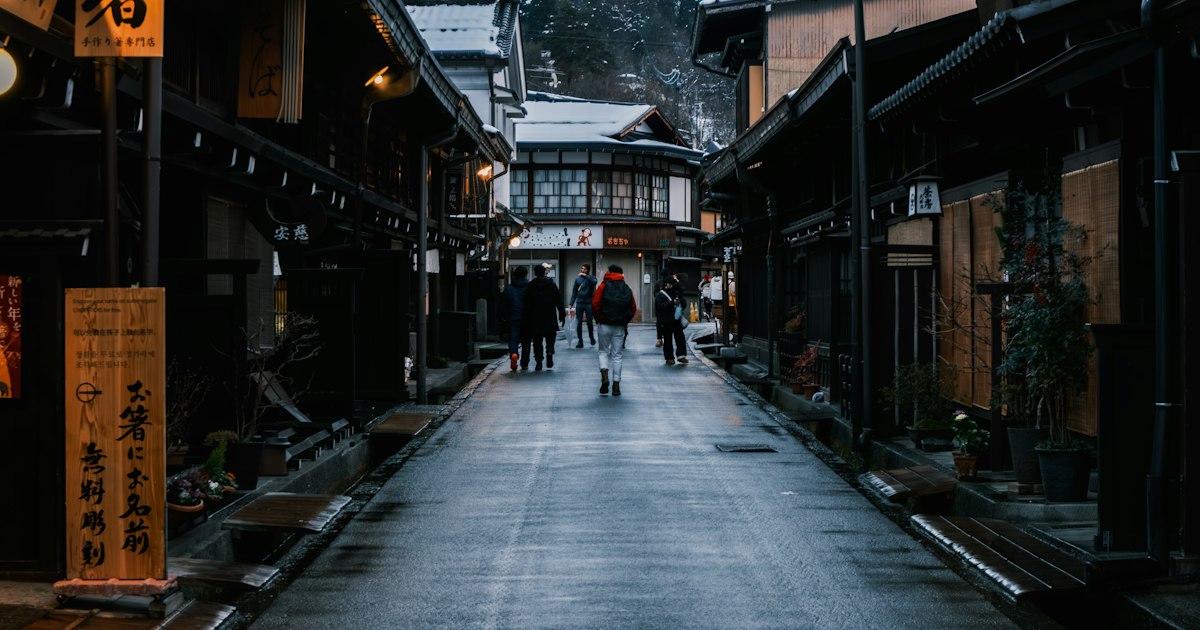
Less than an hour from central Tokyo, Kawagoe packs Edo-period warehouse streets, a 400-year-old bell tower, a candy-shop alley, and some of Japan’s best sweet potato desserts into a single, easy day trip. Locals call it “Koedo,” or Little Edo, because its merchant district survived the fires and rebuilding that erased most of old Tokyo. It’s compact enough to see on foot in half a day, which makes it one of the most efficient day trips out of the capital — especially if you pair sightseeing with a serious amount of snacking.
Getting There from Tokyo
Kawagoe has three realistic rail options, and the one you pick depends on where you’re staying:
- Tobu Tojo Line from Ikebukuro — the fastest option. The limited express “Kawagoe” train covers the distance in about 30 minutes for a regular fare of around ¥480, with no extra limited-express surcharge. Regular rapid trains take closer to 35-45 minutes for the same fare.
- Seibu Shinjuku Line from Seibu-Shinjuku Station — useful if you’re near Shinjuku. The “Koedo” limited express reaches Hon-Kawagoe Station in about 44 minutes but adds a seat-reservation fee on top of the roughly ¥480 base fare; regular trains take 50-60 minutes without the surcharge.
- JR Saikyo/Kawagoe Line direct from Shinjuku or Ikebukuro — no transfer needed, arriving at Kawagoe Station in about an hour for roughly ¥620-650. This is the simplest option if you’d rather not think about which line to board.
If you’re traveling on a wider JR itinerary and already have a rail pass that covers local lines, the JR route costs you nothing extra — worth checking if you’re using something like the Seishun 18 Ticket on a slower-paced, budget rail trip through the Kanto region. Note that Kawagoe Station (JR/Tobu) and Hon-Kawagoe Station (Seibu) are about 1km apart, so check which one your train actually uses before you book onward plans.
Kurazukuri Street and the Old Town
From either station, it’s a 20-25 minute walk (or a short bus ride) to Kurazukuri Street, the row of black-tiled kura (storehouse-style) merchant buildings that gives Little Edo its name. These thick-walled, fireproof warehouses date mostly from the Meiji era, after a major 1893 fire, and today house shops, cafés, and small museums. It’s free to walk the street itself; the Kurazukuri Shiryokan museum charges a small admission (around ¥100) to go inside one of the original buildings, but it’s closed on Mondays, so avoid planning your trip for that day if you want to see the interior.
At the end of the street stands Toki no Kane, the wooden bell tower that’s become Kawagoe’s unofficial symbol. The current structure dates to 1894 and still rings four times a day — 6am, noon, 3pm, and 6pm — though you’re mostly there for photos rather than the sound itself, since the street gets busy with other visitors doing the same thing.
Just off the main street is Kashiya Yokocho, or Candy Alley, a short lane of old-fashioned sweet shops selling hand-pulled candy, dagashi (penny candy), and rice crackers much as they would have decades ago. It’s free to wander and a good spot for small, cheap souvenirs in the ¥200-500 range.
Kita-in Temple and Hikawa Shrine
A 15-20 minute walk from Kurazukuri Street, Kita-in Temple is worth the detour for two reasons: its collection of roughly 540 stone Rakan (disciples of Buddha) statues, each carved with a different expression, and the fact that some of its buildings were actually relocated from Edo Castle in the 17th century — making them the only surviving structures from the original castle anywhere in Japan. Entry to the Rakan garden and historic hall area runs around ¥400 for adults.
Kawagoe Hikawa Shrine, a bit farther out, is known for its “enmusubi” (matchmaking) blessings and, in summer, for hanging over 2,000 wind chimes across its grounds during a festival that typically runs from early July through mid-September. If your trip lands in that window, it’s a photogenic, free add-on to the main loop.
Sweet Potato Treats to Try
Kawagoe’s connection to sweet potatoes (satsumaimo) goes back to the Edo period, when the sandy, volcanic-ash soil of the surrounding Kanto plain proved ideal for growing them, and roasted “Kawagoe-imo” became a popular Edo-era snack. That legacy is everywhere on Kurazukuri Street and Candy Alley today:
- Imo soft serve — purple or golden sweet potato soft-serve ice cream, typically ¥400-500, sold from stands along the main street.
- Daigaku imo — bite-sized candied sweet potato chunks coated in a sugar-and-sesame glaze, usually sold by weight or in small bags around ¥400-600.
- Imo chips and senbei — thin-sliced, baked or fried sweet potato crisps, a good packable souvenir at roughly ¥400-600 a bag.
- Purple sweet potato Mont Blanc or tarts — richer, café-style desserts in the ¥600-900 range, found in a few of the sit-down shops on the side streets.
- Yaki-imo (roasted sweet potato) — sold whole, especially in autumn, for around ¥300-500 depending on size.
Autumn (roughly October through November) is harvest season and when the sweet potatoes taste best and are most widely available; some shops scale back the fresh offerings in late spring and summer. If dessert-hopping is your main goal, this is the season to prioritize.
Best Time to Visit
Kawagoe works as a day trip year-round, but a few windows stand out: autumn for sweet potato season and fall foliage, late March to early April for cherry blossoms along the Shingashi River near Kita-in, and early January for Kita-in’s lively Daruma market. Summer is workable but Kurazukuri Street has little shade and can feel brutal at midday — aim for a morning start and save indoor stops (museums, cafés) for the early afternoon heat. Weekends and holidays bring heavy crowds to the main street and long lines at the most popular soft-serve stands; a weekday morning gives you a noticeably calmer version of the same experience.
Getting Around and Common Mistakes
Everything described here is walkable from either station, though the “Koedo Loop” tourist bus (a one-day pass runs around ¥500) is handy if you want to save your legs or if it’s raining. A few things catch first-time visitors off guard:
- Monday closures — several small museums and some shops close on Mondays; check before building your whole itinerary around indoor stops.
- Underestimating the walk — Kurazukuri Street, Candy Alley, and Kita-in together add up to a few kilometers of walking on uneven stone paths; comfortable shoes matter more than they look like they would.
- Kimono rental without a reservation — walking Kurazukuri Street in rented kimono is popular, and on weekends the walk-in shops can sell out of sizes; booking ahead avoids disappointment.
- Treating it as a quick stop — the station-to-old-town walk eats real time in both directions; budget at least 4-5 hours total if you want to see the old town, eat properly, and visit Kita-in without rushing.
If you’d rather not walk the station-to-town stretch at all, a taxi is a reasonable option for a small group splitting the fare — see our guide on taking a taxi in Japan for how fares and apps work outside central Tokyo.
Budget, Mid-Range, and Splurge Options
For a bare-bones trip, take the regular (non-limited-express) train, skip Kita-in’s admission, and stick to free streets plus a couple of ¥300-500 snacks — doable for well under ¥2,000 round-trip including food. A mid-range day adds the limited express train, Kita-in’s ¥400 admission, a proper sit-down lunch (Kawagoe is also known for unagi, with set meals typically ¥2,000-3,000), and a sweet potato dessert or two, landing somewhere around ¥4,000-6,000 per person. For a splurge, book a short kimono rental (roughly ¥3,000-5,000 for a few hours) to photograph the old town in costume, or treat yourself to a multi-course kaiseki-style lunch at one of the higher-end restaurants tucked into the kura buildings.
Kawagoe rewards an unhurried pace more than a packed checklist — if you’ve already done a brisk nature-focused day trip like Mount Takao, this is a good contrast: slow streets, old buildings, and a lot of standing around eating. And if you enjoy wandering historic merchant districts, it pairs naturally with Tokyo’s own Nihonbashi, which tells the same Edo-era merchant story from the capital’s side.