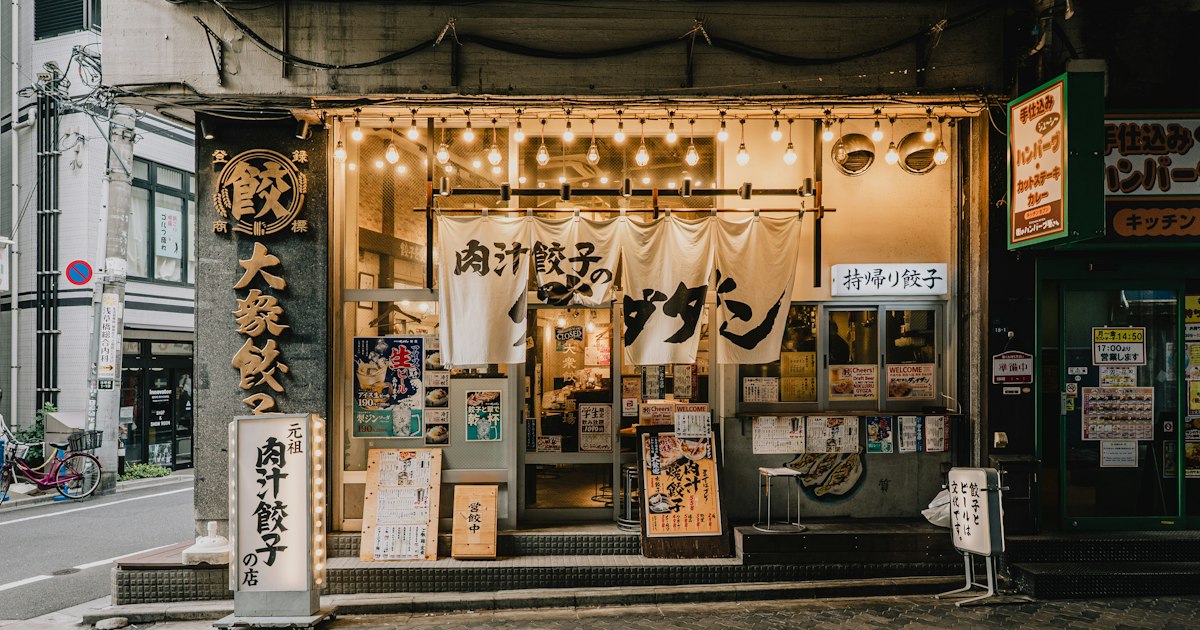
Photo by Vinicius Brasil on Unsplash
Japan takes stationery more seriously than almost any country on earth, and nowhere is that clearer than in the quiet cult following of the Kuru Toga, a mechanical pencil that rotates its own lead as you write so the tip never wears down into a lopsided wedge. It sounds like a minor engineering flourish. In practice, it’s turned a 100-yen category of object into a genre of obsessive design, with entire multi-floor stores in Tokyo and Osaka dedicated to pens, pencils, tape, and paper that foreign visitors often end up loving more than the souvenirs they planned to buy.
What Makes the Kuru Toga Different
A normal mechanical pencil writes with the same flat edge of lead every time, which is why your “0.5mm” line slowly turns into a “0.8mm” smear as you write a page of notes. Mitsubishi Pencil’s Kuru Toga (by Uni) solves this with an internal clutch mechanism that rotates the lead a few degrees every time you lift the pencil off the page, so it’s constantly re-sharpening itself into a fine point. The name literally means “spin” (kuru) “corner” (toga) in playful onomatopoeia.
The original Kuru Toga, launched in 2008, runs about ¥300–¥500 depending on the model and barrel design. The upgraded “Kuru Toga Dive” (the lead retracts into the tip when you press down, which protects it from snapping) is roughly ¥500–¥700. The high-end “Kuru Toga Advance,” with a twin-pipe stabilizer for finer lines, runs ¥1,000–¥1,500. All take standard 0.3mm, 0.5mm, or 0.7mm lead refills sold everywhere, so there’s no awkward proprietary-cartridge trap waiting for you back home.
Where to Buy: Flagship Stationery Stores
You don’t need to hunt — Japan’s stationery culture is concentrated in a handful of destination stores that stock Kuru Toga alongside hundreds of other cult items:
- Itoya Ginza (Tokyo) — 12 floors near Ginza Station, open 10:00–20:00 daily. This is the closest thing Japan has to a stationery department store, with an entire floor devoted to pens and writing instruments and staff who will let you test nibs before buying.
- Sekaido Shinjuku (Tokyo) — a sprawling, slightly chaotic multi-floor shop near Shinjuku Station East Exit, open 10:00–20:30, known for deep discounts on everyday brands like Kuru Toga, Frixion, and Hi-Tec-C.
- Loft and Tokyu Hands branches nationwide — found in nearly every major shopping district (Shibuya, Umeda, Sapporo, Fukuoka), these are reliable one-stop shops if you don’t have time for a dedicated pilgrimage.
- Kingdom Note and Maruzen — smaller specialist chains, particularly good for limited-edition barrel colors and collaboration prints that sell out at bigger stores.
If you’re doing a wider electronics-and-hobby crawl, stationery floors are also tucked inside big department stores near Den Den Town or Akihabara, so it’s easy to fold a stationery stop into the same afternoon.
Beyond Kuru Toga: Other Cult Stationery Worth Seeking Out
Once you’re in a Japanese stationery store, the Kuru Toga is really just the entry point. A few other items consistently surprise first-time buyers:
- Frixion erasable pens (Pilot) — gel ink that vanishes with friction heat, ¥150–¥300 each. Genuinely useful for planners and travel journals.
- Hi-Tec-C and Juice Up gel pens — ultra-fine 0.3–0.4mm tips prized by people with small handwriting, ¥150–¥250.
- Midori MD notebooks — minimalist, acid-free paper beloved by fountain pen users, ¥500–¥1,500 depending on size.
- Traveler’s Company (formerly Midori) leather notebook covers — ¥5,000–¥12,000, a genuine splurge item and a popular refillable souvenir.
- Kokuyo “Jump Rule” and Campus notebooks — unglamorous but beloved for paper quality; a pack of Campus notebooks is ¥150–¥300 and a favorite cheap gift for teachers or students back home.
- Washi masking tape (mt brand) — ¥300–¥500 a roll, lightweight and flat-packable, a good low-cost souvenir for non-stationery people too.
Budget, Mid-Range, and Splurge Picks
If you only want to spend ¥1,000–¥2,000 total: grab two or three Kuru Toga standard models in different barrel colors (¥300–¥500 each) plus a pack of lead refills (¥150–¥200) — these alone make a better souvenir for students and office-worker friends than most keychains.
For a ¥3,000–¥6,000 mid-range haul: add a Kuru Toga Dive, a few Hi-Tec-C gel pens, and a Midori MD notebook. This combination covers almost every writing preference and fits easily in a daypack.
For a genuine splurge (¥10,000+): look at a Traveler’s Company leather cover system, a Pilot Custom 823 or Capless fountain pen (¥15,000–¥30,000), or limited-edition Kuru Toga collaborations (seasonal Ghibli, Sanrio, or anime tie-ins) which can resell for well above retail once discontinued.
Common Mistakes Foreign Shoppers Make
The biggest one is buying lead refills in the wrong diameter — Kuru Toga pencils are sold in 0.3mm, 0.5mm, and 0.7mm versions, and the barrel size is printed in small text near the clip, easy to miss. Check before you buy refills separately.
Second, don’t assume duty-free or tax-free pricing applies to small stationery purchases — the 10% consumption tax exemption generally requires a single receipt over ¥5,000 at a store with tax-free counter service (common at Itoya and larger Loft/Tokyu Hands branches but not at small specialist shops), and you’ll need your passport at checkout.
Third, many limited-edition barrel colors and collaboration prints are store-specific or event-exclusive, so if you see one you like, buy it on sight — it’s genuinely common for it to be gone from that location within weeks and never restocked.
Timing Your Visit
Stationery stores don’t have a “best season” the way cherry blossom or strawberry-picking trips do, since they’re indoor, year-round attractions — but two timing notes matter. New fiscal/school year season (late March into April) brings fresh limited-edition “new term” colorways and displays, since Japanese schools and companies both start their year in April. And late-year gift season (November–December) is when stores stock the widest range of boxed gift sets, useful if you’re buying for multiple people back home. Outside of those windows, weekday mornings right after opening are the quietest time to browse without crowds, especially at Itoya Ginza and Sekaido.
However you plan your itinerary — whether it’s wedged between a day of electronics shopping or a quick stop on the way to catch a train through one of Japan’s underground station malls — a stationery stop rewards even fifteen minutes of browsing, and it’s one of the rare souvenir categories where the cheap option is often just as beloved as the expensive one.