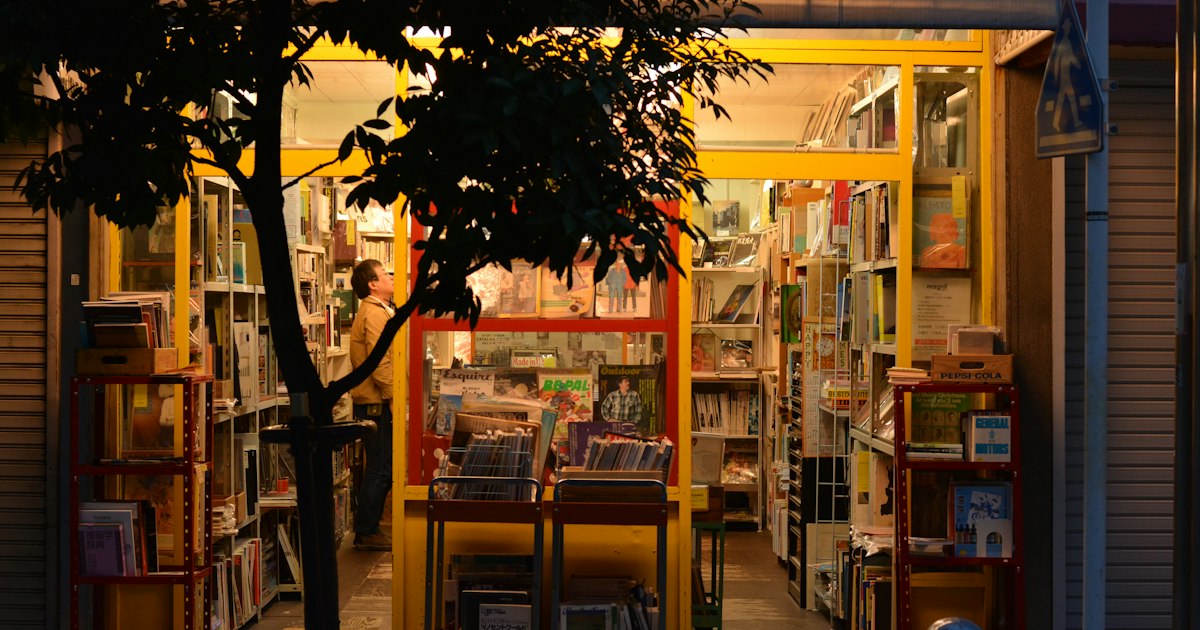
Photo by amandazi photography on Unsplash
If you’ve wandered past a store with a yellow-and-black sign stacked floor to ceiling with manga, CDs, and old video game cartridges, you’ve found BookOff — Japan’s biggest secondhand media chain and one of the best low-stakes shopping stops for any visitor. It’s not glamorous, but for travelers willing to dig, it’s one of the few places in Japan where you can walk out with an armful of goods for less than the price of a convenience store lunch.
What Exactly Is BookOff?
BookOff (ブックオフ) started in 1990 as a secondhand bookstore and has grown into a nationwide chain of well over 700 branches, plus sister brands under the same corporate umbrella: Hard Off (used electronics, instruments, cameras), Off House and Mode Off (secondhand clothing), and Garage Off (sporting goods and outdoor gear). You’ll see the main BookOff format in nearly every city center and train station shopping street, while the larger “BookOff Super Bazaar” stores — usually in suburban roadside locations with parking — stock everything from furniture to clothing alongside the usual media.
The core inventory at a standard store is books, manga (comics), CDs, DVDs, Blu-rays, video games and consoles, and trading cards. Larger branches add toys, idol goods, cameras, and occasionally vintage electronics.
What’s Worth Buying (and What Isn’t)
For foreign visitors, the best finds tend to be things that are either expensive or hard to find back home:
- Manga sets — complete runs of older series often sell for a fraction of new retail, especially once a series has been out for a few years.
- Japanese photography and art books — these can be pricey new but show up secondhand in excellent condition.
- Retro and used video games/consoles — Japanese releases, regional variants, and older handhelds are common.
- J-pop, city pop, and soundtrack CDs — a genuinely good hunting ground if you’re into Japanese music, including obi-strip first pressings.
- Used cameras at Hard Off locations — point-and-shoots and film cameras in working condition, often cheaper than at a dedicated camera shop.
What’s usually not worth your suitcase space: English-language books (rare and not particularly cheap), bulky DVDs/Blu-rays if your home region uses a different disc format, and anything you could get just as easily at a 100-yen shop. If you’re specifically after anime figures, cel art, doujinshi, or rarer otaku collectibles, Mandarake is the stronger specialist — see our guide on Mandarake: Japan’s Secondhand Otaku Treasure Trove and How to Shop It for how that chain differs and how to navigate its pricing tiers.
Pricing: How Cheap Is “Cheap”?
Prices are marked directly on a small sticker on each item, tax not included until checkout (8% for books/food, 10% for most other goods). Rough real-world ranges:
- Manga volumes: ¥100–¥400 for common back-catalog titles, up to ¥1,000+ for recent or in-demand releases.
- Paperback novels and art books: ¥100–¥600, though large-format photo books can run ¥1,500–¥3,000.
- CDs: ¥100–¥500 for older or mainstream releases, more for rare pressings.
- DVDs/Blu-rays: ¥300–¥1,500 depending on title and condition.
- Video games: ¥500–¥3,000; retro cartridges vary wildly based on rarity.
The ¥100 shelf (sometimes a dedicated bin near the entrance) is where the real bargain-hunting happens — rummage through it and you’ll usually find something worth taking home even if it wasn’t on your list.
Where to Find the Best Branches
BookOff is genuinely everywhere, but a few areas reward a dedicated visit. Akihabara and Nakano (near Nakano Broadway) have several branches close together with deep manga and game selections. Shibuya and Shinjuku locations tend to have strong CD/DVD sections given the foot traffic of music fans. If you want the full department-store experience — clothing, furniture, and media all in one warehouse-sized store — look for a “Super Bazaar” branch on the edge of a city, which usually requires a short taxi or bus ride from the nearest station but rewards you with far more stock to sort through.
Typical opening hours run from around 10:00 to 21:00 or 22:00, seven days a week, though smaller urban branches may close earlier. Hours vary store to store, so it’s worth a quick map check before you go, especially if you’re planning a stop late in the evening.
Tax-Free Shopping and Payment
Some larger BookOff and BookOff Super Bazaar locations are registered tax-free shops for overseas visitors, meaning you can get the consumption tax refunded on a same-day purchase total over ¥5,000 (before tax) when you show your passport at a dedicated tax-free counter. Not every branch offers this — look for a tax-free sign near the entrance or ask staff (“tax-free, arimasu ka?”). Before your trip, it’s worth registering your passport details through Visit Japan Web: How to Pre-Register Customs, Immigration & Tax-Free Shopping Before You Land, which speeds up the paperwork at checkout considerably.
Most branches accept cash and major IC cards (Suica/Pasmo), and larger stores take credit cards, but don’t assume every small branch does — carrying some cash is the safer bet. If you’re a frequent shopper, BookOff also has its own point card system, which sits alongside the broader landscape of Japanese loyalty programs explained in our guide to Japan’s Store Point Card Culture — generally not worth signing up for on a short trip, but handy to know about if you’re staying long-term.
Timing Your Visit and Common Mistakes
There’s no strict “season” for BookOff shopping, but stock tends to refresh most heavily after Japan’s graduation and moving season in March and April, when people clear out apartments, and again after New Year’s as households declutter. Visiting a Super Bazaar branch on a weekday morning also means first pick of whatever just came in, before weekend crowds thin it out.
The most common mistake visitors make is assuming BookOff will have English-language stock or English-speaking staff — it won’t, beyond basic phrases. Bring a translation app for checking condition notes or searching titles. The second mistake is skipping the Off House and Mode Off clothing branches entirely; these secondhand clothing arms occasionally turn up excellent vintage Americana and old denim, in the same spirit covered in our piece on Vintage Levi’s & Americana: Why Japan Is a Treasure Hunt for Old American Clothing. Finally, don’t expect to haggle — prices are fixed, and the only real strategy is checking multiple branches, since stock and pricing differ store to store even within the same city.
BookOff won’t give you the curated thrill of a specialist vintage shop, but as a low-cost, low-effort way to bring home a genuine slice of Japanese pop culture, it’s hard to beat.