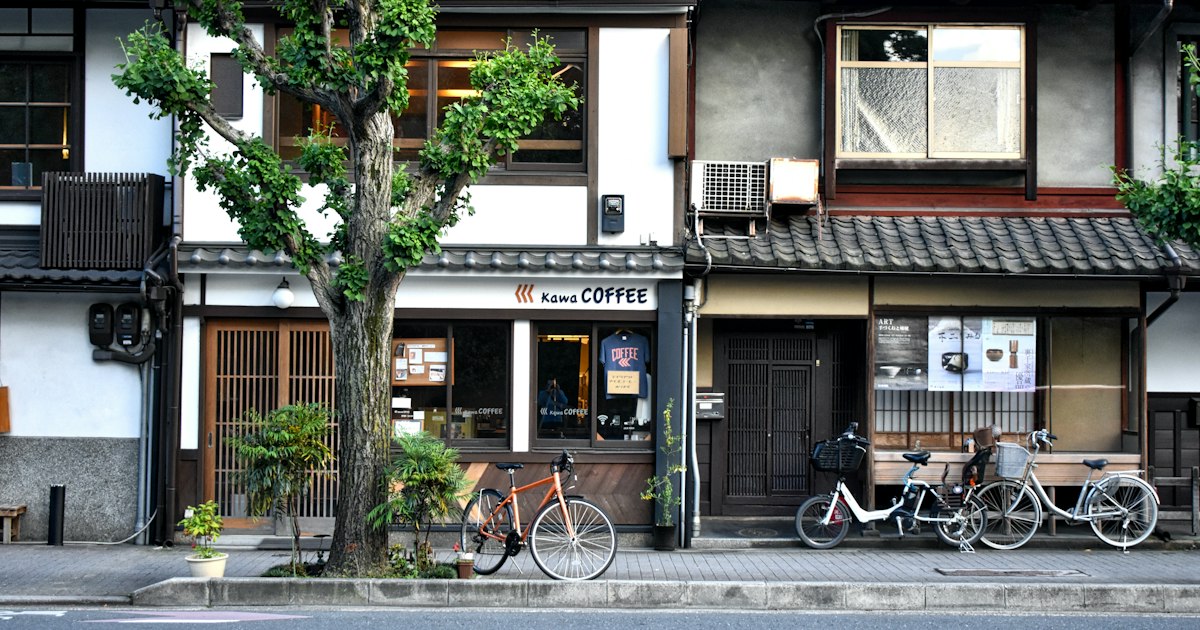
Photo by Rob Maxwell on Unsplash
Japan runs on bicycles. In almost any city or town, you’ll see commuters, students, and parents with kids strapped into front and back seats pedaling sturdy, basket-equipped bikes called “mamachari” — literally “mom’s bicycle.” If you’re staying long enough to want one of your own, or you’ve fallen for the look of a Japanese city bike and want to ship one home, here’s what actually happens at the shop, what the registration sticker on the frame means, and what it costs to get a bike out of the country.
What a Mamachari Actually Is
A mamachari is a single- or three-speed upright bicycle with a front basket, a kickstand, a wheel lock built into the frame, and usually a dynamo or battery light. They’re built for short errands at low speed, not for serious cycling, and that’s the point — they’re cheap, low-maintenance, and everywhere. If you only need wheels for a day or two of sightseeing rather than a bike to own, renting a LUUP shared e-scooter is far less hassle than buying and registering an actual bicycle — no paperwork, no resale to worry about, just an app and a QR code.
Where to Buy a New One
The easiest option is a nationwide chain store, where staff are used to handling registration on the spot. Asahi Cycle (サイクルベースあさひ), with around 400+ stores across Japan, is the default choice — most branches open around 10:00 and close at 20:00, and you can search for a location on their site before you go. Aeon Bike (inside Aeon Mall shopping centers) and Don Quijote’s in-house bike line are also common for basic models. Expect a plain steel mamachari with a basket and lock to run ¥9,800–¥15,000. Electric-assist models (denkō assist jitensha) from Panasonic, Bridgestone, or Yamaha, which flatten hills and make hauling kids or groceries painless, run ¥90,000–¥160,000. Shops will usually include basic assembly and a test of the brakes and gears before you wheel it out.
Buying Secondhand
If you don’t need a brand-new bike, secondhand is where the real savings are. Recycle shops (chain names like Hard Off, or local “jitensha recycle” shops) sell inspected used mamachari for roughly ¥3,000–¥8,000. The best timing is late March into early April, when the Japanese academic and fiscal year turns over — graduating students sell or abandon bikes en masse near universities, and some schools or shops run organized used-bike sales with prices as low as ¥2,000–¥5,000. For something more specific — a vintage road bike, discontinued Shimano components, or a particular brand you can’t find locally — the Yahoo Auctions Japan guide covers how overseas buyers can bid on and import items like these through a proxy service.
The Bōhan Tōroku: Japan’s Registration Sticker
This is the part visitors most often miss. Nearly every prefecture in Japan legally requires a bicycle anti-theft registration, called bōhan tōroku (防犯登録), for any bike actually ridden on public roads. A small sticker on the frame, tied to your name and address, lets police confirm the bike isn’t stolen — and they do spot-check cyclists, especially at night. When you buy new from a shop, staff register it for you on the spot for a fee of roughly ¥500–¥700, using an ID that shows your name and address. This is the real catch for tourists: registration is built around having a Japanese address, so it works smoothly for residents, students, and long-stay visa holders, but a short-term hotel guest may find shops reluctant to register a bike to a hotel address. If that’s your situation, ask the shop directly before buying — policies vary by store.
Buying secondhand adds another wrinkle: the registration needs to be formally transferred to your name (meigi henkō), which requires the previous owner’s registration card. Private sales — a bike left behind by a departing expat, something bought on a local marketplace app — often skip this step, leaving you riding a bike registered to someone else. It’s a common reason foreign residents get stopped and questioned by police, so if you’re buying secondhand from an individual rather than a shop, ask for proof of the original registration and get it transferred.
Budget, Mid-Range, and Splurge
- Budget (¥2,000–¥15,000): secondhand recycle-shop mamachari, or a basic new one from Asahi Cycle or Aeon Bike.
- Mid-range (¥20,000–ª60,000): a new multi-speed city bike or a folding bike (useful if you’re planning to ship it home, since folders break down smaller for boxing).
- Splurge (¥90,000–¥160,000+): an electric-assist mamachari from Panasonic or Bridgestone, or a Japanese-made road/touring bike with higher-end components.
Shipping One Home
Getting a bicycle out of Japan takes the same basic logistics as shipping any oversized item — it’s worth comparing notes with how visitors handle shipping a Japanese toilet seat home, since both involve bulky items, courier pickup, and international customs declarations. First, the bike needs to be partially disassembled — front wheel off, pedals removed, handlebars turned sideways — and boxed. Bike shops often have free used cardboard boxes on hand, or will sell a proper travel box for roughly ¥1,000–¥3,000.
From there you have two realistic routes. If you’re flying home, check your airline’s sports-equipment or oversized-baggage policy well in advance; fees for a boxed bike typically run ¥5,000–¥30,000 depending on the carrier and route, and some airlines count it against checked-baggage weight rather than charging separately. Alternatively, a domestic courier like Yamato or Sagawa can take the boxed bike to an international freight forwarder, which then ships it by air or sea — budget roughly ¥20,000–¥50,000+ for a full international door-to-door shipment, with sea freight much cheaper but taking weeks rather than days. Before you commit to either, check your home country’s import rules for used goods; the kind of personal-allowance thinking covered in Japan’s duty-free allowance guide is about what you carry back yourself, but it’s a useful reminder to also check your destination country’s duty rules for anything shipped separately, since a bicycle usually isn’t covered by standard traveler exemptions.
Common Mistakes
- Riding unregistered. Even a short-term use case can get you stopped by police if the frame has no registration sticker at all.
- Skipping the registration transfer on a secondhand buy. Always ask for the previous owner’s registration card.
- Not measuring the shipping box. International courier services often cap total dimensions (length + girth), and a fully assembled frame won’t fit — confirm sizing before you box it.
- Forgetting to sell or dispose of the bike properly if you don’t ship it. Abandoning a registered bike on the street can trace back to your name; return it to a shop or hand it off to another resident instead.