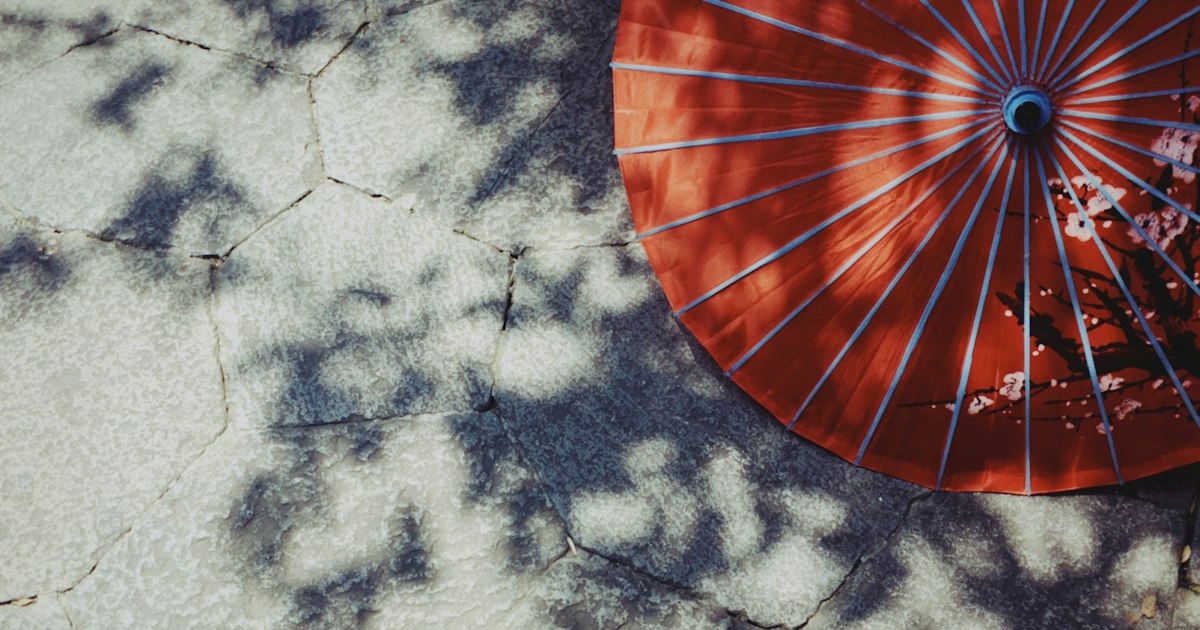
Photo by Yeh Xintong on Unsplash
Walk through Kyoto’s Higashiyama district or a Gifu craft workshop and you’ll eventually spot one: a round, ribbed umbrella made of bamboo and paper, glowing amber when backlit by the sun. This is wagasa (和傘), Japan’s traditional oil-paper umbrella, and it’s one of the country’s most beautiful — and least understood — souvenirs. A good wagasa is a working piece of engineering as much as it is decor, and knowing what you’re buying makes the difference between a treasured object and a paper umbrella that falls apart in a Tokyo drizzle. Here’s what to know before you shop.
What Actually Makes a Wagasa
A wagasa’s frame is made from dozens of thin bamboo ribs (often 30-70, compared to 8 on a typical Western umbrella), lashed together with cotton or silk thread at the hub in patterns that are half structural, half decorative. The canopy is washi, Japanese mulberry paper, coated with kaki-shibu (fermented persimmon tannin) or perilla (egoma) oil to make it water-resistant and give it that glossy, faintly amber sheen. The handle and shaft are usually unlacquered bamboo or cedar.
This construction is why wagasa are heavier and slower to open than a folding umbrella — and why the good ones are genuinely rain-worthy, not just photogenic. It’s also why they need different care: a wagasa should be opened fully and left to air-dry after rain, never furled up wet, or the paper will mildew and the thread will loosen.
The Main Types You’ll See
- Janome-gasa (蛇の目傘) — the “snake’s eye” umbrella, named for the concentric ring pattern on the canopy. Lighter and more refined-looking; the classic choice for rain use with kimono.
- Bangasa (番傘) — sturdier, plainer, originally a workhorse umbrella for merchants and rickshaw drivers. Thicker ribs, often navy or indigo paper, built for actual daily rain.
- Higasa (日傘) — a sun parasol rather than a rain umbrella, often more decorative, with painted florals or gold leaf. Not waterproofed the same way, so don’t take one out in a downpour.
If you want something you can genuinely use back home in wet weather, ask specifically for a rain-use (雨傘, amagasa) janome or bangasa — shops will tell you plainly if a piece is decorative-only.
Where to Buy in Kyoto
Kyoto is the easiest city to shop for wagasa as a visitor, with several long-established makers clustered in the historic streets near Kiyomizu-dera and Gion. Kasagen, on the slope near Yasaka Shrine, is one of the best-known names — a small storefront stacked with janome and bangasa in the ¥8,000–¥30,000 range, plus smaller decorative pieces from around ¥3,000. Tsujikura, with a shop in Kyoto and another in Kanazawa, is another old maker worth comparing prices at, since styles and finishes vary noticeably between the two shops. Most of these shops keep daily hours roughly 10:00–18:00, though it’s worth checking ahead since small family-run stores sometimes close for a day mid-week or during obon and New Year.
Because this area sits right along the walk up to Kiyomizu-dera, it pairs naturally with a half-day of craft shopping — if you’re also curious about other traditional textiles, the noren doorway curtains and tenugui hand towels sold in the same neighborhoods make lighter, cheaper, and far more packable souvenirs than an umbrella if luggage space is tight.
Gifu: The Wagasa Capital
If you want to see wagasa actually being made, head to Gifu City, which for decades has produced the large majority of Japan’s wagasa and is still home to several working ateliers, some of which allow visitors to watch craftsmen assemble the bamboo ribs and stretch paper over the frame. Gifu wagasa tend to be sold both at workshop storefronts and at local craft cooperatives, generally in a similar price band to Kyoto (roughly ¥7,000 for a simple janome up to ¥50,000+ for a large, elaborately patterned piece). Gifu is about 20 minutes by train from Nagoya, making it a workable day trip if you’re routing between Kyoto and Tokyo, or if you’re already exploring other regional crafts — the pottery towns covered in our guide to Mashiko and Bizen follow a similar model of small-city craft tourism worth building a day around.
Shopping in Tokyo
Tokyo has fewer specialist wagasa shops than Kyoto, but options exist. Wagasa Tsujikura operates a Tokyo location, and department stores like Takashimaya and Isetan occasionally carry a curated wagasa selection in their crafts or kimono-accessory floors, especially around early summer when rainy-season goods are stocked. Expect Tokyo department store prices to run slightly higher than buying direct from a Kyoto or Gifu maker, since you’re paying for the retail markup, but it’s a reasonable option if your itinerary doesn’t include Kansai.
Budget, Mid-Range, and Splurge
- Budget (¥2,000–¥5,000): Small decorative wagasa or higasa parasols, often mass-produced rather than hand-assembled. Fine as a display piece or interior photo prop, not meant for daily rain use.
- Mid-range (¥8,000–¥25,000): A genuine hand-assembled janome-gasa or bangasa from a Kyoto or Gifu maker, oiled and usable in real rain. This is the sweet spot for most visitors who want an authentic, functional piece.
- Splurge (¥30,000–¥100,000+): Large, intricately patterned janome-gasa with fine thread work at the hub, sometimes made to order. These are collector pieces and traditionally part of formal kimono or tea-ceremony dress.
Common Mistakes to Avoid
The biggest mistake is treating a wagasa like a folding travel umbrella: cramming it into a suitcase will crack the bamboo ribs, and rolling it up wet will mildew the paper within days. Buy one near the end of your trip if possible, carry it upright in a bag or its original wrapping, and let it dry fully open indoors after any rain exposure before storing it. Second, don’t assume every pretty wagasa is rainproof — many higasa sun parasols are not oiled for water resistance, so confirm with the shop if you intend to use it as a working umbrella rather than a display piece. Finally, rainy season (tsuyu, mid-June to mid-July) is genuinely the best time to buy, since it’s when shops restock and when you’ll actually get to test yours in Japanese rain before flying home.