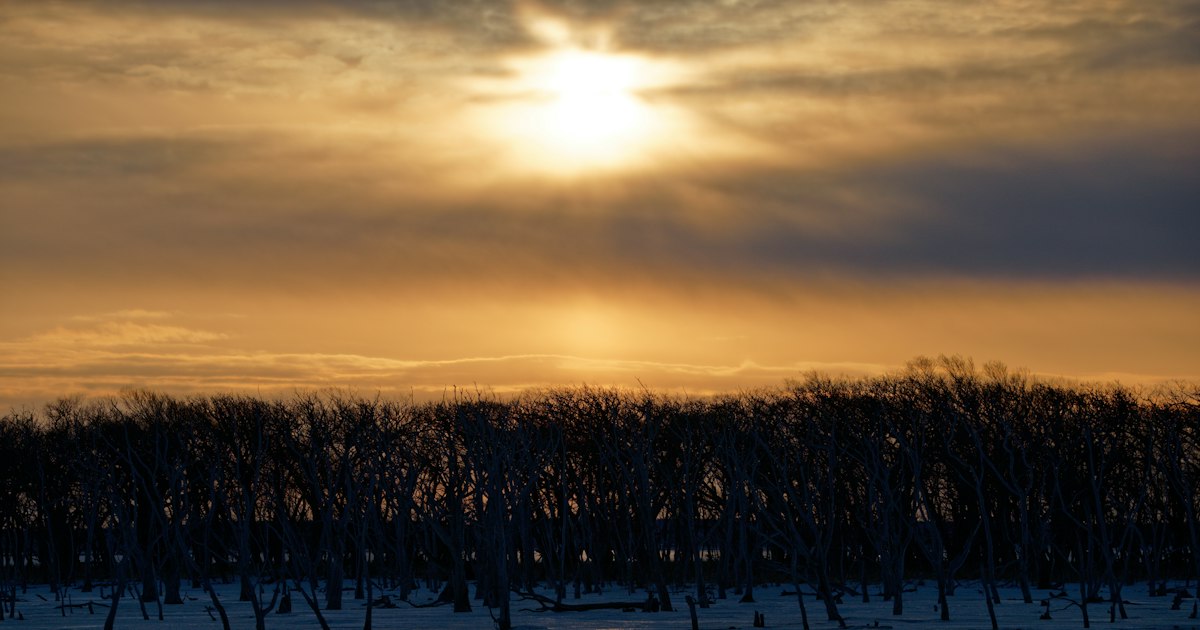
Kushiro Shitsugen is Japan’s largest wetland, a 183-square-kilometer sweep of reed marsh, peat bog, and winding river in eastern Hokkaido that feels closer to Siberia than to Tokyo. It’s also the year-round home of the tancho, Japan’s red-crowned crane, a bird so tied to national identity that it appears on the ¥1,000 note. For visitors willing to make the trip out to Kushiro, this is one of the few places on Earth where you can watch a wild crane population up close, in a landscape that looks almost unchanged since the Ainu named it centuries ago.
A Wetland That Was Almost Drained
Kushiro Shitsugen became Japan’s first Ramsar Convention wetland of international importance in 1980 and was designated a national park in 1987, largely to stop agricultural drainage projects that had already shrunk the marsh. The park sits just north of Kushiro city, straddling the Kushiro River as it meanders slowly toward the Pacific. Unlike a mountain or temple destination, there’s no single “site” to see — the appeal is the scale of it, the silence, and the wildlife that depends on it: Ezo deer, Blakiston’s fish owls, and roughly 1,800 red-crowned cranes that now live in eastern Hokkaido, almost all descended from this marsh.
The Tancho’s Near-Extinction and Comeback
Red-crowned cranes were hunted to the brink of extinction in Japan by the early 20th century and were believed completely gone until a small group of around 20 birds was found hiding in the Kushiro marshes in 1924. Winter feeding programs started in the 1950s, after a brutal winter nearly wiped out the remaining population, and that intervention is the reason the species survives in Japan today. The cranes are now protected as a Special Natural Monument, and the local feeding stations that saved them in the 1950s are the same places tourists visit today.
When to Go: Winter Cranes vs. Summer Marsh
Timing changes the entire experience. In winter (roughly late December through February), snow covers the marsh and natural food is scarce, so cranes concentrate at a handful of feeding stations where you can see 30, 50, even 100 birds at once, often performing their famous courtship dances. This is by far the best season for seeing cranes up close, but daytime highs sit around -5°C to -10°C and mornings can drop below -20°C, so come prepared with real winter layers, not just a city coat. If you need to pick up extra thermal gear or boots once you’re in Japan, it’s worth checking a size chart in advance — see this guide to Japanese clothing and shoe size conversion before you shop, since Hokkaido stores sell out of larger sizes fast in cold snaps.
In summer (June–August), the cranes disperse into the marsh to nest and raise chicks, so sightings become scarce and distant — you might spot one or two from an observatory with binoculars, but the dramatic flocks are gone. Summer is instead the season for the wetland itself: lush green reeds, kayaking the Kushiro River, and the Norokko sightseeing train. Early autumn (late September–October) offers a middle ground, with some cranes still visible and cooler, comfortable hiking weather.
Best Places to See the Cranes
- Tsurumidai (Tsurui Village): A free, open-air feeding field where cranes gather most reliably in winter, typically with morning and midday feeding times. It’s the easiest spot for a quick, high-volume crane sighting.
- Akan International Crane Center (GRUS), Akan-Kushiro: An indoor observation hall with glass walls facing an outdoor feeding ground, useful if you want warmth between photo sessions. There’s a modest entrance fee (around ¥480 for adults) and exhibits on crane conservation history.
- Otowabashi Bridge, Tsurui: The iconic shot of cranes roosting on a steaming river at dawn is taken here. You need to arrive well before sunrise (often by 6am) in deep winter for a parking spot and a clear view — this is the spot every Hokkaido photography tour builds its itinerary around.
- Kushiro Shitsugen Observatory and Hosooka Observatory: Year-round viewpoints over the marsh itself, with boardwalk trails. Don’t expect crowds of cranes here outside winter, but the panoramic view of the wetland is worth it in any season. The Kushiro Shitsugen Observatory charges a small entry fee (roughly ¥480); Onnenai Visitor Center’s boardwalk nearby is free.
Getting There and Around
Kushiro Airport has direct flights from Tokyo Haneda (around 1 hour 40 minutes, several times daily on ANA and JAL) and seasonal connections from other cities. From Sapporo, the JR limited express “Super Ozora” runs to Kushiro Station in about 4 hours. From the airport or station, Tsurui Village and the Akan crane sites are roughly 45–60 minutes further inland by car.
A rental car is genuinely the best option for winter crane viewing, since the feeding stations and Otowabashi Bridge aren’t well served by public transport and you’ll want flexibility for a pre-dawn start. Studded or winter tires are mandatory and standard on Hokkaido rental fleets in this season — confirm it when booking. If you’d rather not drive on icy rural roads, winter day tours from Kushiro city covering Tsurumidai, Otowabashi, and the crane center typically run ¥8,000–¥15,000 per person including a guide and vehicle.
The Norokko Train and Summer Kayaking
The Kushiro Shitsugen Norokko-go is a slow sightseeing train with oversized windows and open-air viewing sections, running on the JR Senmo Line between Kushiro and Toro Station through the heart of the marsh. It operates seasonally (roughly mid-April through early October, with gaps — check current JR Hokkaido schedules before planning around it), and seats require a reserved-seat ticket on top of the base fare, so book a day or two ahead in peak season. Get off at Toro and walk up to Hosooka Observatory for one of the best wide views of the whole wetland.
In the warmer months, guided canoe and kayak trips down the gentle Kushiro River are a highlight — half-day tours run roughly ¥6,000–¥9,000 per person through local outfitters based near Toro or Kushiro city, no experience needed since the current is slow and flat.
Common Mistakes and Practical Tips
The single biggest mistake is visiting in summer expecting the crane spectacle people see in photos — that’s a winter phenomenon. The second is underestimating the cold: locals wear insulated boots with real tread, not fashion sneakers, since ice forms on parking areas and boardwalks before dawn. Budget travelers can see cranes for free at Tsurumidai and the Onnenai boardwalk; mid-range visitors should add the Akan Crane Center and a Norokko train ride; a splurge option is a private winter photography tour timed for first light at Otowabashi, which small Kushiro-based operators run for roughly ¥20,000–¥30,000 for a few hours with a guide who knows exactly where the cranes will be standing.
Before heading back to Kushiro city, it’s worth stopping at Washo Market for a build-your-own kaisendon seafood rice bowl — Kushiro is a major fishing port and the market is one of the best places in Hokkaido to try one. And if you’re stocking up on Hokkaido souvenirs before flying home, this region is where Shiroi Koibito cookies are sold everywhere from convenience stores to the airport, making them an easy last-minute gift. Just double check your duty-free allowance if you’re buying food items in bulk to take home.