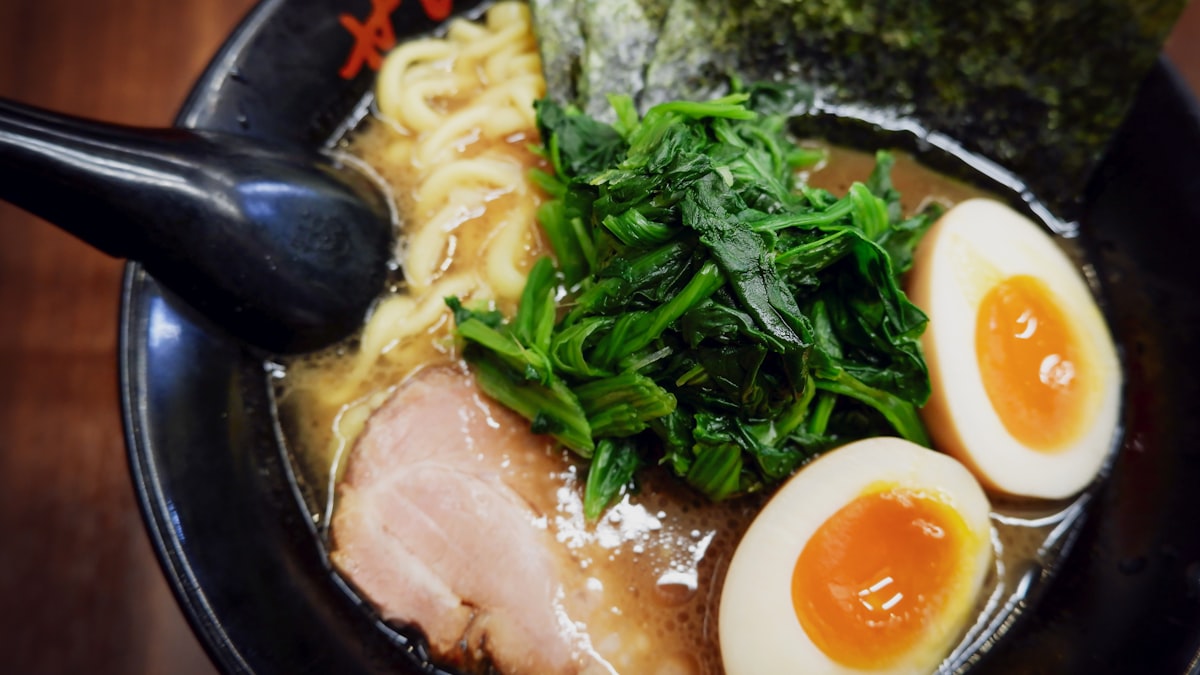
Ramen is Japan’s ultimate comfort food — and every region has its own style. Knowing the main types helps you order like a pro. Here’s a guide to Japanese ramen and how to eat it.
The main ramen styles
- Tonkotsu — rich, creamy pork-bone broth; the Kyushu classic (see our Fukuoka guide).
- Shoyu — soy-sauce based, clear and savory; the Tokyo standard.
- Miso — hearty and warming; born in Sapporo (see our Sapporo guide).
- Shio — light, salt-based broth, delicate and clean.
- Tsukemen — noodles served separately for dipping in concentrated broth.
How to order & eat
- Many shops use a ticket machine — buy a meal ticket and hand it over.
- Customize richness, noodle firmness (katame = firm), and toppings where offered.
- Slurping is encouraged — it cools the noodles and shows you’re enjoying it.
- Eat quickly while hot; it’s fast food, not a lingering meal.
Toppings to know
Chashu (braised pork), ajitama (seasoned egg), menma (bamboo), nori, and negi (green onion). Add extra noodles (kaedama) at tonkotsu shops.
Where to find great ramen
- Follow the queues — a line usually means it’s good.
- Regional specialties are best in their home cities.
- Even konbini and instant versions are excellent; see our instant ramen guide.
- More dishes in our must-try food guide.
What a bowl typically costs
- Standard ramen runs JPY 700-1,100 at most shops; adding toppings (extra chashu, ajitama egg, extra noodles) brings a loaded bowl to around JPY 1,200-1,500.
- Tsukemen (dipping noodles) is usually priced similarly to regular ramen, sometimes slightly higher because portions tend to be larger.
- Ramen is one of the best-value hot meals in Japan — even in expensive tourist areas, a bowl rarely crosses JPY 1,500 unless it is a specialty or premium ingredient shop.
Common ordering mistakes
- Freezing at the ticket machine — most machines have an English button or picture menu; if not, the base ramen button is usually the largest, top-left button, with topping buttons below.
- Asking to modify a bowl at a specialist shop — many small ramen-ya are built around one exact recipe and do not take substitutions; save customization requests for shops that clearly offer them (richness/firmness dials on the ticket machine).
- Lingering too long at the counter during a lunch rush — ramen shops turn tables fast, and it is normal (not rude) to eat efficiently and leave your seat for the next customer.
Regional detours worth making
If ramen is a trip priority, it is worth routing travel around it: Hakata tonkotsu in Fukuoka, miso ramen in Sapporo, and Kitakata’s soy-based style in Tohoku are each distinct enough from the Tokyo standard to justify trying the original in its hometown rather than a transplant shop elsewhere.
Ramen for different diets
Classic ramen broth is almost always built on pork, chicken, or fish stock, which makes vegetarian and vegan ramen genuinely hard to find outside of a growing number of specialist shops in Tokyo, Kyoto, and Osaka that make dedicated vegetable or soy-based broths — see our vegetarian and vegan in Japan guide for how to spot them. Halal-certified ramen shops also exist in a handful of major cities, mostly using chicken broth instead of pork.
A short ramen crawl idea
If you have a free evening, try comparing two styles back to back: a tonkotsu shop for a rich, filling first bowl, followed an hour or two later by a lighter shio or shoyu bowl elsewhere — portions are generally small enough that this is realistic, and it makes the differences between broths far clearer than reading about them. Many ramen districts in Tokyo (like parts of Shinjuku and Ikebukuro) cluster several well-regarded shops within a five-minute walk of each other.