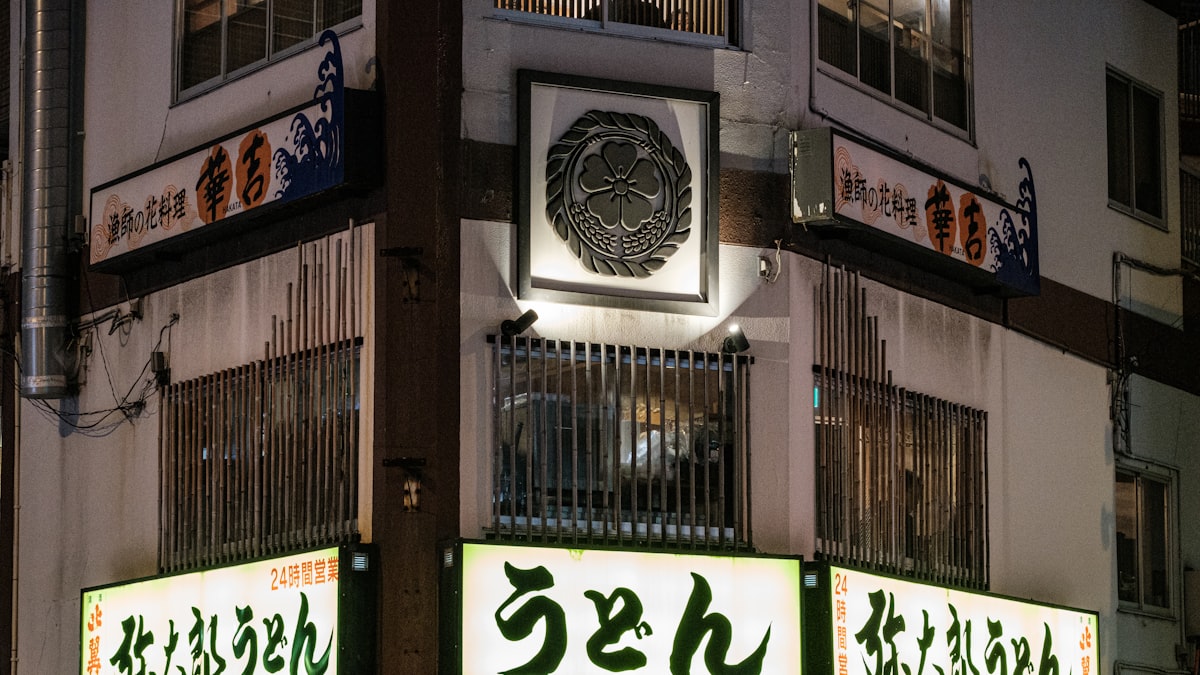
Fukuoka, the gateway to Kyushu, is a laid-back food city loved for its ramen, open-air food stalls, and easy pace. It’s underrated by first-timers and perfect for a relaxed few days. Here’s what to do.
Top experiences
- Yatai food stalls — Fukuoka’s famous open-air street stalls, buzzing at night along the river and in Nakasu.
- Hakata ramen — the rich tonkotsu (pork bone) ramen that made the city famous.
- Ohori Park & Fukuoka Castle ruins — a relaxing central green space.
- Canal City & Tenjin — shopping and entertainment districts.
- Dazaifu Tenmangu — a beautiful shrine a short trip away.
A springboard for Kyushu
Use Fukuoka as a base to explore Kyushu — hot-spring towns like Beppu and Yufuin, and Nagasaki are within reach. Great for a longer itinerary.
Getting there
- The Sanyo Shinkansen reaches Hakata Station from Osaka (~2.5 hrs) and Hiroshima; see our bullet train guide.
- Fukuoka Airport is unusually close to the city — minutes by subway. Grab an IC card.
Tips
- Go to a yatai at night for the full experience — cash only, small and social.
- Try both tonkotsu ramen and mentaiko (spicy cod roe), a local specialty. See must-try food.
What things cost in Fukuoka
- A bowl of Hakata tonkotsu ramen at a yatai stall runs JPY 700-900, and it’s normal to order a small extra portion of noodles (kaedama) for JPY 100-150 once you finish the broth.
- A full yatai evening — moving between two or three stalls for different dishes and drinks — typically runs JPY 3,000-5,000 per person, cash only at nearly every stall.
- The Sanyo Shinkansen from Osaka (Shin-Osaka) to Hakata runs about JPY 15,000-16,000 one-way and takes roughly 2.5 hours; flying can be cheaper and faster from Tokyo if booked with notice.
Common mistakes to avoid
- Showing up to a yatai stall right at opening expecting full atmosphere — most get going after 7-8pm and reach peak energy later; an early visit means a quieter, half-empty stall.
- Lingering too long at a popular stall during peak hours — yatai have limited seats (often under 10), and while there’s no strict time limit, moving on after finishing lets others in during a busy night.
- Skipping Dazaifu because it feels like an afterthought — it’s a genuinely beautiful shrine complex and less than 30 minutes from central Fukuoka, easily worth a half-day.
Using Fukuoka as a Kyushu base
Fukuoka’s central position and excellent transport links make it a smarter Kyushu base than trying to move hotels every night — Beppu and Yufuin are about 2 hours by train, Nagasaki around 2 hours, and Kumamoto under an hour, all doable as day trips or short overnight hops from a single Fukuoka hotel.
The mentaiko souvenir detour
Fukuoka’s spicy cod roe (mentaiko) is sold vacuum-packed at the airport and department stores specifically for travel, and it’s one of the few fresh regional foods that survives a flight home well when kept cold — a genuinely distinctive souvenir compared to the packaged snacks available almost everywhere else in Japan.