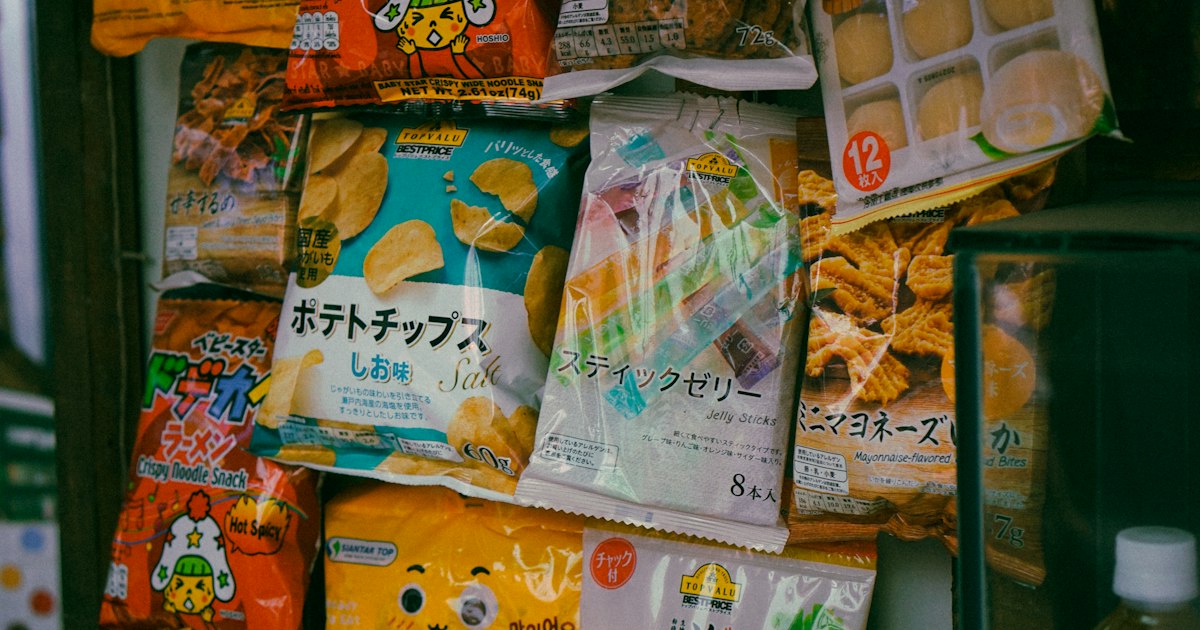
If you’ve wandered past a snack stall in Asakusa or scanned the sweets aisle of a Japanese supermarket, you’ve probably seen bags of small, dark, twisted sticks that look almost like pretzel logs. That’s karinto (かりんとう) — a deep-fried wheat-dough snack glazed in brown sugar, and one of the most underrated souvenirs you can bring home from Japan. It’s cheap, it keeps for weeks, and it tastes like nothing else: crunchy, faintly bitter-sweet, with a toasty depth from the molasses-like sugar coating. This guide covers what karinto actually is, the regional variations worth seeking out, and exactly where to buy good versions at every budget.
What Karinto Actually Is
Karinto starts as a simple dough of wheat flour, water, and a leavening agent, rolled into short batons and deep-fried until firm and golden inside. While still warm, the fried sticks are tossed in a hot syrup made from brown sugar (kokuto or kurozato) or sometimes white sugar, which hardens into a thin, crackly shell as it cools. The result sits somewhere between a cookie and a pretzel — dense, audibly crunchy, and less sweet than most Western candy because the bitterness of the raw sugar balances it out.
It’s an old snack. Versions of fried, sugar-glazed dough existed in the Nara period as a Buddhist temple confection, but the karinto most people eat today was standardized in Tokyo during the Edo period, when confectioners in the shitamachi (old downtown) districts started selling it as an affordable everyday treat rather than a formal sweet. That history is why Tokyo’s old merchant neighborhoods — Asakusa in particular — are still some of the best places to buy it.
Regional and Flavor Variations Worth Trying
Standard black-sugar karinto (kuro karinto) is the baseline, but there’s real variety once you start looking:
- Shiro karinto (white sugar) — lighter, crisper, less molasses flavor, sometimes dusted rather than glazed.
- Goma karinto — black or white sesame seeds mixed into the dough for a nuttier, slightly savory edge.
- Kokuto karinto from Okinawa — made with Okinawan brown sugar, which has a more mineral, almost rum-like sweetness than mainland kokuto. If you enjoy hunting down regional specialties the way you would with something like Okinawa’s other distinctive local foods, Okinawan kokuto karinto is worth comparing side by side with the Tokyo version.
- Imo karinto — thin-sliced sweet potato, fried and glazed the same way; crunchier and more snackable, closer to a chip.
- Karinto manju — not the stick form at all, but a fried, sugar-glazed manju bun with sweet bean paste inside. Common at festival stalls and worth trying if you see it.
- Chocolate-dipped karinto — a newer convenience-store and department-store trend, half-dipped in dark or milk chocolate. Good as a gift because it photographs well and reads as “modern Japanese snack” to people back home.
Where to Buy It in Tokyo
Budget (¥150–¥400 a bag): Any convenience store (7-Eleven, Lawson, FamilyMart) and supermarket chain carries at least one or two karinto brands in the dry snacks aisle. Look for brands like Tohato or Matoya — these are mass-produced but genuinely decent, and the cheapest way to try the snack before committing to a souvenir purchase.
Mid-range, specialty shops (¥400–�た1,200 a bag): Asakusa is the best single neighborhood for this. Along and just off Nakamise-dori — the approach to Sensoji Temple — several long-running senbei and dagashi (old-fashioned candy) shops sell fresh-made karinto by weight or in packaged bags, often with goma, imo, and seasonal flavors you won’t find in a convenience store. Shops here are typically open around 9:00/10:00 to 18:00/19:00, closing times vary by store and season, so afternoon is the safest time to go. If you’re already in the area for a drink, it’s an easy pairing with a stop at Kamiya Bar, which is a five-minute walk from Nakamise and makes a logical bookend to an Asakusa snack-shopping afternoon. Ameyoko market near Ueno is a second good option, with candy wholesalers selling karinto in bulk bags at lower per-gram prices than boutique shops.
Splurge, gift-box tier (¥1,000–¥3,000): Department store basement food halls (depachika) — Isetan Shinjuku, Mitsukoshi Nihombashi, Takashimaya — stock boxed karinto assortments from established confectioners, nicely packaged for gift-giving, often with a mix of flavors and chocolate-dipped varieties in one box. These are the ones to buy if the karinto is a formal omiyage gift rather than a personal snack. If your trip includes Kansai, the depachika at Hankyu Umeda or other stations served by the private Kansai railways are worth a browse too, since regional department stores sometimes stock karinto makers you won’t see in Tokyo.
Best Time to Shop and How to Get There
Karinto doesn’t have a “season” the way fresh food does — it’s sold year-round and keeps well, so there’s no wrong time to buy it. The only practical timing consideration is crowd avoidance: Nakamise-dori in Asakusa gets very congested from late morning through early afternoon on weekends, so an early-morning (shops open ~9:00–10:00) or weekday visit makes browsing and buying much easier. Asakusa Station is served by the Ginza, Asakusa, Tobu Skytree, and Tsukuba Express lines, so it’s reachable directly from most parts of Tokyo without transfers.
Common Mistakes to Avoid
- Buying only the convenience-store version and assuming that’s “real” karinto. It’s fine, but it’s the equivalent of judging French pastry by a gas-station croissant. The hand-made shop versions in Asakusa have noticeably more texture and a less uniform, less oily glaze.
- Not checking the sugar — some bags use white sugar, not kokuto. If you specifically want the deep brown-sugar flavor, check the package for kokuto (黒糖) or kurozato (黒砂糖) in the ingredients, since “karinto” alone doesn’t guarantee it.
- Packing it loosely in a suitcase. Karinto is hard but brittle — it shatters into crumbs under pressure. Buy it in its original sealed bag or box and pack it near the top of your luggage, not under shoes or souvenirs.
- Assuming it won’t survive the flight home. It’s dry and shelf-stable (most bags list 2–4 months from production), so it’s actually one of the safer snack souvenirs — just mind the crushing issue above.
A Simple Shopping Plan
If you only have time for one karinto stop, make it the Asakusa/Nakamise area: grab a cheap bag from a convenience store beforehand as a baseline, then compare it against a fresh shop-made version on Nakamise-dori. For gift boxes to bring home for coworkers or family, save the purchase for a depachika food hall near the end of your trip, where the packaging is sturdier and more presentable. Either way, budget roughly ¥300 for a casual snack-sized bag, ¥500–¥1,000 for a good specialty bag, and ¥1,500–¥3,000 for a proper gift box — karinto is one of the few Japanese souvenirs where even the cheap option is genuinely worth eating.