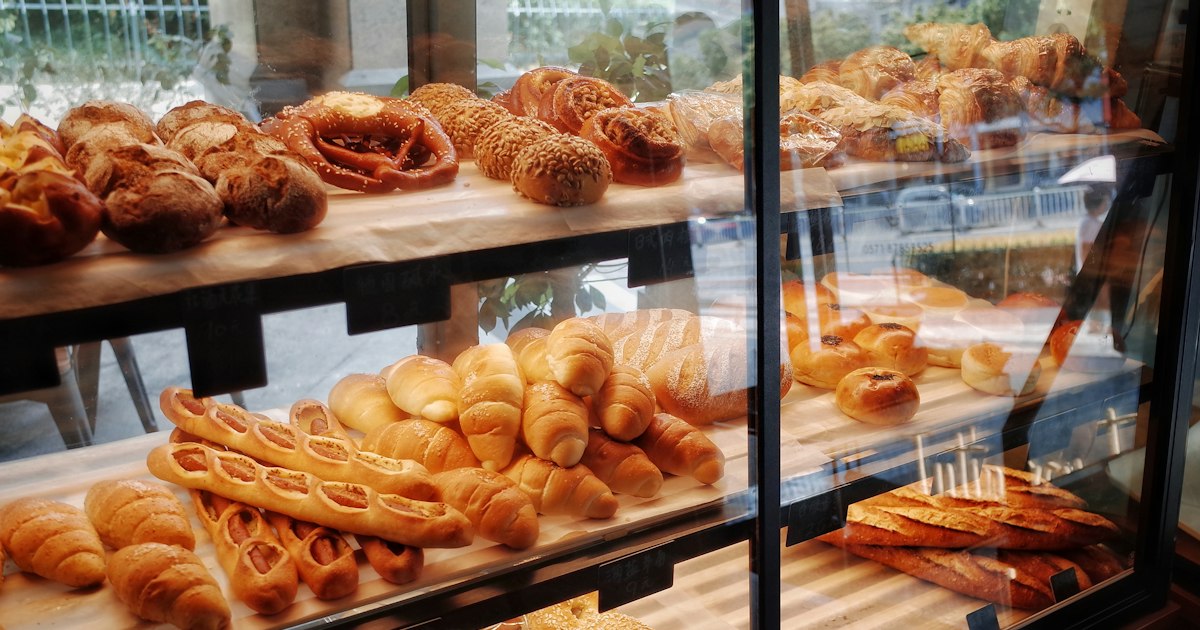
Photo by Yeh Xintong on Unsplash
Melon pan is the bread you’ll see piled in the window of nearly every Japanese bakery, convenience store, and train station kiosk — a round, golf-ball-textured bun with a crackly cookie crust and a soft, slightly sweet interior. Despite the name, it rarely contains actual melon. It’s one of Japan’s most accessible, affordable treats, and a genuinely good item to sample on day one of a trip, not just a novelty for Instagram.
What Melon Pan Actually Is (and Isn’t)
Melon pan is a yeasted bread dough wrapped in a thin layer of cookie dough (biscuit dough), then scored in a crosshatch pattern before baking so it cracks open like a cantaloupe rind. The “melon” refers to the shape and surface pattern, not the flavor — most versions taste like a lightly sweet vanilla cookie over soft milk bread, with no fruit flavor at all. Some regional and specialty versions do add real melon flavoring or even cream filling, so if you want actual melon taste, look for labels that say “メロン果汁入り” (contains melon juice) or ask for “メロン風味” (melon-flavored) versions — plain “メロンパン” is the classic, melon-less original.
Texture is the main appeal: a firm, sugar-crusted shell gives way to pillowy bread underneath. It’s best eaten the same day it’s baked, ideally within a few hours, since the crust softens and loses its snap by the next morning.
Where to Buy: Budget, Mid-Range, and Splurge Options
Budget (¥110–¥160): Convenience stores (7-Eleven, Lawson, FamilyMart) and supermarket bakeries sell perfectly decent melon pan for around ¥120–¥150. This is a fine way to try one on arrival day with zero planning — similar in spirit to grabbing oden at a convenience store counter in winter, it’s a snack culture built around convenience, not ceremony.
Mid-range (¥150–¥350): Neighborhood bakeries (machi no pan-ya) and chains like Vie de France or Shiro-Hige’s Cream Puff Factory bake fresher batches, often still warm in the morning. Look for a sign reading “焼きたて” (freshly baked) and ask staff when the next batch comes out — many bakeries bake melon pan two or three times a day.
Splurge (¥400–¥900): Specialty melon pan shops sell oversized versions (some the size of a small cantaloupe), stuffed versions with custard or ice cream inside, or artisan takes using French butter and high-fat milk. These make a fun, photogenic treat but aren’t necessary to understand what makes melon pan good — the ¥150 version from a decent bakery is genuinely representative.
Where to Find the Best: Specific Shops Worth Seeking Out
- Kagetsudo (Asakusa, Tokyo) — Famous for enormous, warm melon pan with a thick cookie crust, sold from a stall near Nakamise shopping street. Expect a queue, especially on weekends; go on a weekday morning for a shorter wait. Roughly ¥280–¥350 each.
- Yamashiroya and local bakeries in Kagurazaka, Tokyo — This quiet, cobblestoned former geisha district (see our Kagurazaka guide) has a mix of old-school Japanese bakeries and French-influenced patisseries, making it a good spot to compare a traditional melon pan against a butter-heavy French-style one in the same afternoon.
- Kobe — Often cited as melon pan’s birthplace region, thanks to the city’s early 20th-century bakeries that experimented with Western breads. Kobe’s old foreign settlement bakeries still turn out well-regarded versions, and it’s worth a stop if you’re already in the Kansai area.
- Department store basement food halls (depachika) — Almost every major department store basement (Isetan Shinjuku, Daimaru, Hankyu) has at least one bakery counter selling fresh melon pan, often with unusual seasonal flavors like matcha, hoji-cha, or chocolate chip versions layered into the crust.
Best Time to Buy
Morning is best — most bakeries bake their first batch between 7:00 and 9:00 AM, and melon pan is at its peak within an hour or two of coming out of the oven, when the crust is still crisp and slightly warm. Many popular bakery stalls (like Kagetsudo in Asakusa) sell out of the freshest batch by early afternoon on busy days, restocking a few more times before closing, typically around 18:00–19:00. There’s no strong seasonal angle the way there is with, say, winter oden — melon pan is sold year-round — but summer heat can make the cookie crust go soft faster if you’re carrying it around all day, so plan to eat it soon after buying rather than saving it for later.
Common Mistakes Travelers Make
- Expecting melon flavor. The single biggest letdown for first-timers is biting in expecting fruit flavor and getting vanilla-cookie bread instead. Go in knowing this and you’ll enjoy it much more.
- Buying it too early in the day and eating it too late. The crust-to-bread contrast is the whole point; a melon pan that’s sat in a bag for six hours loses its crackle.
- Assuming all melon pan is the same. Regional and shop-to-shop variation is significant — some are bready and light, others are dense and buttery, some add chocolate chips inside the dough. If your first one disappoints, try a different shop before writing off the whole category.
- Not checking for cream or custard-filled versions if you want something richer. These are usually labeled “メロンパン(クリーム入り)” and cost a bit more, but satisfy a different craving than the plain version.
Bringing Melon Pan Home as a Souvenir
Fresh melon pan doesn’t travel well and isn’t a practical souvenir to carry home — it’s a same-day eat. If you want to bring a bread-adjacent gift back for coworkers or family, look instead for individually wrapped, shelf-stable melon pan–flavored snacks (cookies, rusks, or KitKat-style confections) sold at souvenir shops and airports, which hold up far better in a suitcase. For general guidance on what makes a thoughtful workplace gift versus what to skip, our omiyage etiquette guide covers the unwritten rules. If you’re assembling a broader snack box from Japan, pairing a shelf-stable melon pan treat with something like a few varieties of senbei gives recipients a mix of sweet and savory. Travelers who enjoyed melon pan in Tokyo and are heading toward the Tohoku region afterward might also want to try zunda mochi and other Sendai sweets as a regional counterpart — both are humble, everyday treats that say a lot about local taste.
Quick Reference
Expect to pay ¥110–¥160 at a convenience store, ¥150–¥350 at a neighborhood bakery, and up to ¥900 for oversized or filled specialty versions. Buy in the morning, eat within a couple of hours, and don’t expect it to taste like actual melon. With no reservation needed and shops open from early morning until evening (most bakeries run roughly 7:00/8:00 AM to 19:00/20:00), it’s one of the easiest, cheapest, and most satisfying food stops to slot into any Japan itinerary.