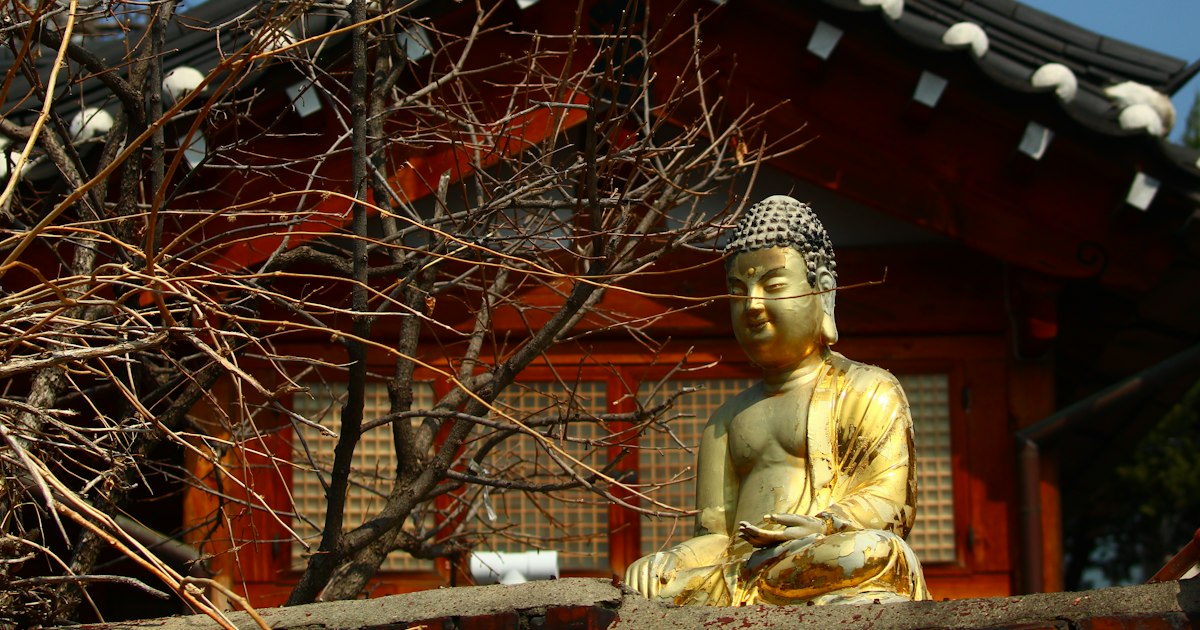
Photo by Seval Torun on Unsplash
You don’t need to be Buddhist, flexible, or fluent in Japanese to sit zazen. A growing number of temples in Kyoto and Kamakura run sessions specifically aimed at curious visitors, and the barrier to entry is lower than most people expect — some are free, walk-in, and over in under an hour. Here’s what’s actually on offer, what it costs, and how to avoid the mistakes that make a first session more painful than it needs to be.
What Zazen Actually Involves
Zazen (坐禅) is seated Zen meditation, usually done facing a wall or a plain space, with attention on posture and breath rather than on reaching any particular mental state. A typical beginner session at a temple runs like this: a monk or guide explains the basic posture (cross-legged on a cushion, or kneeling on a low bench if your knees won’t cooperate), you sit for one period of roughly 15–20 minutes, there’s often a short walking-meditation break (kinhin), and then a second sitting period. Some temples ring a bell to mark the start and end, and some monks will tap you on the shoulder with a flat wooden stick (keisaku) if you ask for it — it’s a wake-up aid, not a punishment, and you can decline. Total time commitment is usually 45 minutes to an hour.
Kamakura: Free, Walk-In Zazen at Kenchoji and Engakuji
Kamakura, an easy day trip from Tokyo, is the more low-key and budget-friendly of the two cities for this. Kenchoji Temple, Japan’s oldest dedicated Zen training temple, holds public zazen sessions on Friday and Saturday evenings at 5:00 pm in its main hall. No reservation, no English guarantee, and the entry fee is the same as general temple admission (around 500 yen) — the zazen session itself is free. Sit toward the back or sides if you want to watch how returning practitioners handle the posture before the bell rings.
Engakuji Temple, a short walk from Kita-Kamakura Station, also runs a public zazen meeting on Sunday mornings, open to anyone who shows up a little before start time. Because schedules shift seasonally and around temple events, it’s worth checking each temple’s official notice board or website the week you plan to go rather than locking in a date months ahead.
Both temples are a few minutes’ walk from JR Kita-Kamakura Station on the Yokosuka Line, about an hour from Tokyo Station with no transfer. If you’re coming from central Tokyo, this is a comfortable half-day trip combined with the Kamakura Daibutsu or the Hase-dera gardens.
Kyoto: English-Guided Sessions at Shunkoin and Kenninji
Kyoto’s options are more structured, more expensive, and more reliably in English — useful if you want an explanation of what’s happening and why, not just a quiet room to sit in.
Shunkoin Temple, a sub-temple within the Myoshinji complex in northwest Kyoto, is the best-known option for foreign visitors. Sessions are led in English, typically run close to two hours including a talk on Zen philosophy, and need to be booked in advance through the temple’s own website — walk-ins aren’t accommodated. Expect to pay in the range of 3,000–4,000 yen per person. This is less a quick taste and more a genuine introductory class, which makes it a good fit if you want context, not just the physical sitting.
Ryosokuin, a sub-temple of Kenninji in the Gion area, also offers zazen experiences with English support by reservation, set inside a quieter, moss-and-rock garden setting that’s worth the visit on its own. Because it sits right in the Gion/Gion-Shijo area, it pairs naturally with a walk through the old streets before or after — this is also the neighborhood that fills up during the Gion Matsuri float processions each July, so if your trip overlaps with the festival, book your zazen slot early and expect heavier foot traffic around the temple.
Best Season and Timing
Zazen itself isn’t seasonal, but your comfort sitting still on a temple floor is. Spring (April) and autumn (October–November) are the easiest months — rooms are unheated or only lightly heated, and midsummer sessions in Kyoto’s humidity can be genuinely uncomfortable in formal seated posture. If you’re visiting in July or August, dress as lightly as temple etiquette allows and bring a hand towel; the UV-cut arm covers and cooling towels sold in convenience stores and drugstores around the city are genuinely useful for the walk to and from the temple, not just the session itself. Winter sessions in Kamakura and Kyoto can be cold enough that tatami-floor halls feel it through your trousers — thick socks help more than a jacket does.
Morning sessions tend to be quieter and less rushed than afternoon ones, especially at temples that also run general sightseeing hours. Arrive 15–20 minutes early everywhere; latecomers are sometimes turned away rather than seated mid-session.
What to Wear and Common Beginner Mistakes
- Loose, dark, modest clothing. Tight jeans make cross-legged sitting miserable. Avoid shorts and sleeveless tops at more traditional temples.
- Socks, not bare feet or shoes. You’ll remove your shoes before entering the hall; bring socks without holes.
- Don’t lock your knees into full lotus if it hurts. Temples offer cushions and benches precisely because most visitors can’t sit full lotus comfortably — half-lotus or simply kneeling is completely normal and nobody will judge you for it.
- Silence your phone before you walk in, not after you sit down — fumbling for it mid-session is the most common disruption guides mention.
- Don’t assume English is available at the free Kamakura sessions. If you want spoken explanation, Shunkoin or Ryosokuin in Kyoto are the safer bet.
Budget, Mid-Range, and Splurge Comparison
- Budget: Kenchoji or Engakuji in Kamakura — effectively free beyond basic temple admission (around 500 yen), no reservation, minimal English.
- Mid-range: Ryosokuin at Kenninji in Kyoto — roughly 2,000–3,000 yen with reservation, English support, garden setting.
- Splurge / most thorough: Shunkoin Temple’s full English session — around 3,000–4,000 yen, nearly two hours, includes a philosophy talk and personal Q&A with the guiding monk.
Getting There
For Kamakura, take the JR Yokosuka Line from Tokyo, Shinagawa, or Yokohama Station directly to Kita-Kamakura Station — both Kenchoji and Engakuji are within a five-minute walk. For Kyoto’s Myoshinji complex (Shunkoin), the nearest station is Hanazono on the JR Sagano Line, about 15 minutes from Kyoto Station, followed by a short walk through the temple grounds to find the correct sub-temple gate — they aren’t always clearly signed in English, so screenshot a map in advance. Ryosokuin, inside Kenninji, is walkable from Gion-Shijo Station on the Keihan Line or from Kiyomizu-Gojo on the Keihan line, both a few minutes’ ride from Kyoto Station. If you’re taking local trains at off-peak hours, note that priority seating rules are stricter than the signage suggests — leave those seats open even if the car looks empty, since elderly passengers and those with disabilities get priority regardless of how busy the train appears.
However you choose to try it, treat zazen as an experience to sit through rather than one to master in a single visit — even the monks running these sessions will tell you that sitting badly once is still worth more than reading about sitting well.