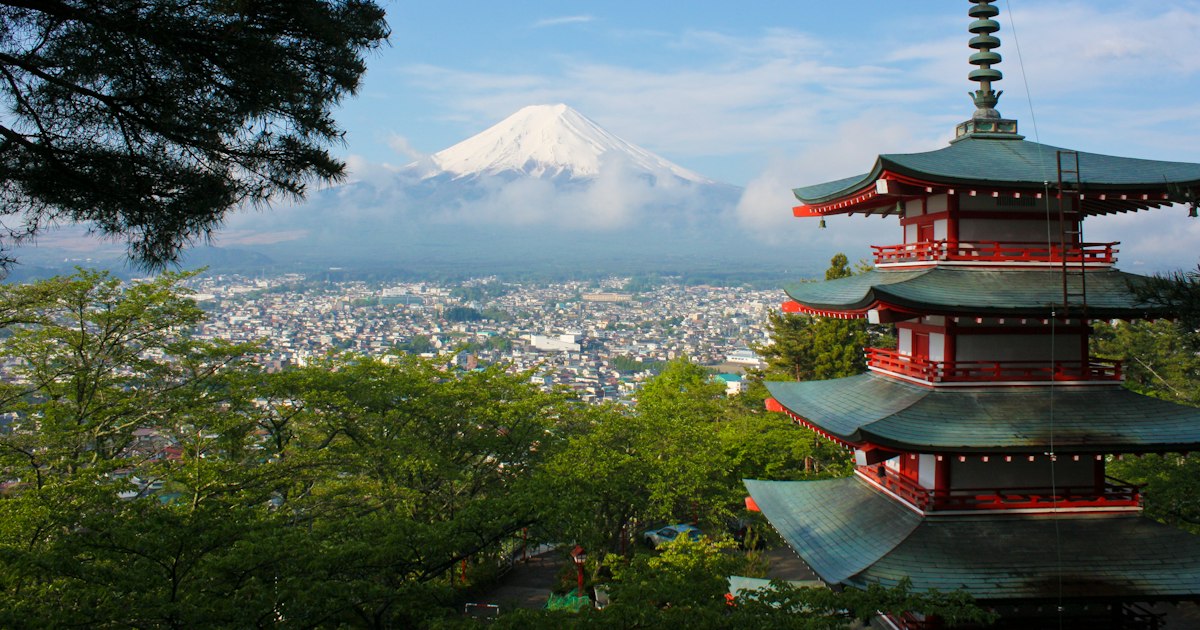
Photo by David Edelstein on Unsplash
If you’ve scrolled through Japan travel photos for more than five minutes, you’ve seen this view: a red-and-white five-story pagoda framed by cherry blossoms or autumn maples, with snow-capped Mount Fuji rising perfectly behind it. That spot is Chureito Pagoda, inside Arakurayama Sengen Park in Fujiyoshida City, Yamanashi Prefecture. The photo looks like it requires a drone or a long lens — it doesn’t. You just need to know which stairs to climb and when to show up.
What Chureito Pagoda Actually Is
The pagoda (officially Chureito, meaning “monument to loyal spirits”) was built in 1963 as a war memorial and peace monument, not an ancient temple — which surprises a lot of visitors expecting centuries-old architecture. It sits partway up Mount Arakura, inside a small shrine park (Arakurayama Sengen Jinja) that’s been drawing locals for cherry blossom viewing long before it became an internet-famous Fuji shot. The park itself is free to enter and has no gates or set closing time, though there’s nothing to see or do safely after dark — no lighting on the stairs — so plan for daylight hours.
Getting There
The gateway station is Shimoyoshida on the Fujikyuko Line (sometimes branded the “Fujisan” line). From Otsuki Station (reachable by JR Chuo Line from Shinjuku in about 70–90 minutes), it’s roughly 20 minutes on the Fujikyuko Line, costing around ¥320–400 one way. From Kawaguchiko Station — the usual base for Fuji Five Lakes trips — it’s one stop back toward Otsuki, about 5 minutes and around ¥220. If you’re already holding a Fuji-area rail pass, this leg is typically included or discounted.
From Shimoyoshida Station, follow the signs (English is provided) through a short residential street for about 5–10 minutes to the park entrance and the base of the stairs. If you’re driving, there’s a small free public parking area near the station, but it fills up fast during cherry blossom and autumn weekends — arriving before 8am solves most of this. If you’re renting a car for the wider Fuji Five Lakes area, it’s worth reviewing how speed cameras and traffic fines work for foreign drivers in Japan before you set off, since this region has stretches of rural road where it’s easy to drift over the limit without noticing.
Climbing the Stairs: What to Expect
This is the part people underestimate. Reaching the pagoda viewpoint involves climbing 398 steps, gaining around 100 meters of elevation through a forested hillside. It takes most visitors 15–20 minutes at a relaxed pace, with a few benches along the way. The path is paved stone steps the whole way — no technical hiking gear needed — but wear real shoes, not sandals, especially if the steps are wet from rain or morning dew. If you’ve got any mobility concerns, know that there’s no elevator or alternate route; this viewpoint is stairs-only.
At the top, you’ll find the pagoda itself and a lower observation deck — this is the classic photo angle. A second, slightly higher platform just beyond it gives a wider view and is usually less crowded. There are vending machines and a small rest hut near the top, but no restaurant, so bring water, particularly in summer. If you’re visiting July–September, pack along what locals use to survive the heat — something like UV-cut arm covers and a cooling towel make the climb genuinely more bearable, and good outdoor gear from a brand like Montbell (moisture-wicking shirts, a packable rain layer) is worth having for any stair climb or hike in this region.
Best Time to Visit
Three seasonal windows matter most:
- Cherry blossoms: Late March to mid-April, usually peaking around the first two weeks of April. This is the single most photographed combination — pink blossoms, red pagoda, white-capped Fuji — and also the single most crowded period. Expect tour buses and long waits for a clear shot at the railing between 9am and 3pm.
- Autumn foliage: Mid-to-late November. The maples around the pagoda turn red and orange, and Fuji’s visibility tends to be better than in spring because autumn air is drier and clearer.
- Clear-sky season: December through February statistically offers the highest number of days with an unobstructed view of Fuji, even without the foliage. If a clean mountain photo matters more to you than flowers, winter mornings are the safer bet — just dress warmly, since the stairs are shaded and cold.
Whatever the season, go early. Arriving by 7–8am gets you softer light, far fewer people in frame, and a better chance Fuji hasn’t clouded over yet — the mountain is notorious for vanishing behind haze by late morning, especially in summer.
Avoiding the Crowds
During peak cherry blossom weekends, the lower viewing platform directly in front of the pagoda can have a real queue for the railing spot. A few fixes: climb to the second, higher platform where the crowd thins out noticeably; visit on a weekday rather than Saturday or Sunday; or simply go right at opening light rather than mid-morning. Weekday mornings outside of the two peak weeks can feel almost empty.
Budget, Mid-Range, and Splurge Options
This is inherently a budget-friendly outing — entry is free and the only real cost is the train fare (under ¥500 each way from Kawaguchiko or Otsuki). For a mid-range add-on, many visitors combine the pagoda with a half-day Fuji Five Lakes loop by local bus or rental bike from Kawaguchiko Station, including a stop at Oshino Hakkai, the spring-fed ponds village about 20–30 minutes away by bus, which offers its own strong Fuji backdrop without any stairs. For a splurge, consider staying overnight near Kawaguchiko or Fujiyoshida so you can hit Chureito Pagoda right at sunrise — ryokan and lakeside hotel rooms with a Fuji view run from around ¥15,000 to well over ¥40,000 a night depending on season, but staying local means you can beat the day-trip crowds entirely.
Common Mistakes to Avoid
The biggest one is assuming Fuji will definitely be visible — it’s frequently hidden by cloud, especially from late spring through summer, so build in flexibility rather than a single tightly-timed visit. The second is underestimating the stair climb and showing up in flip-flops with no water. The third is treating this as a standalone destination worth a whole day — realistically, the pagoda itself takes an hour or two round trip, so it works best folded into a broader Kawaguchiko or Fuji Five Lakes itinerary rather than a special trip on its own.