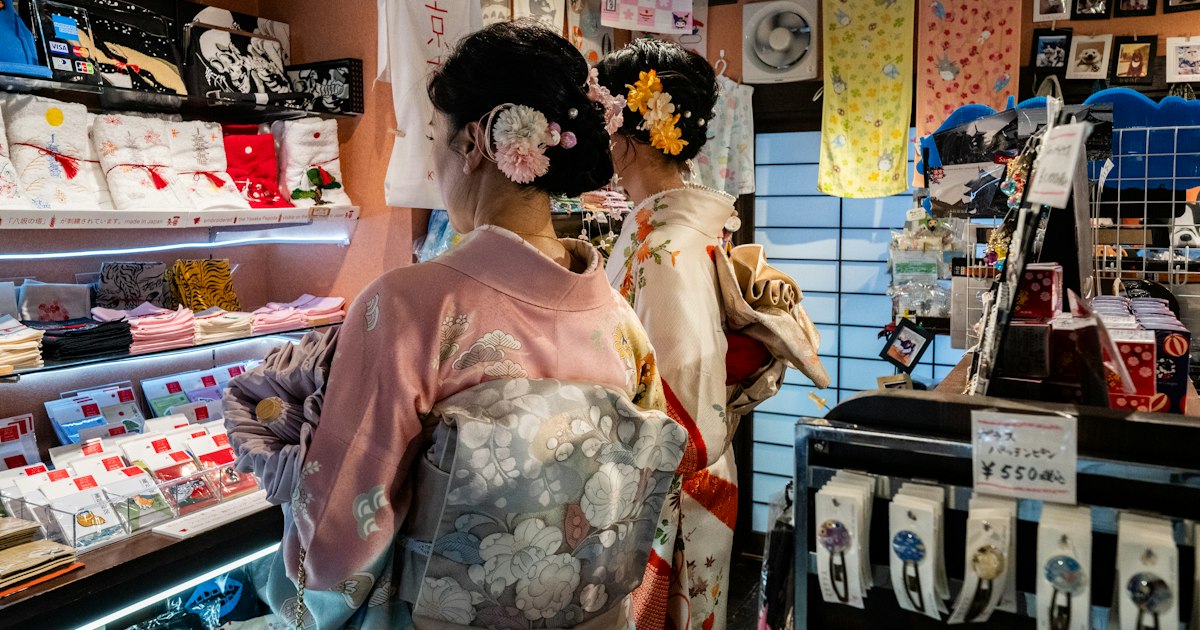
Photo by EMANUELE Ricciardi on Unsplash
If you’ve ever rented a kimono for a day in Kyoto or bought your first one from a recycle shop, there’s a good chance nobody mentioned the layer that actually makes it work. Juban and hadajuban — the underlayers worn beneath a kimono — rarely get a mention in English-language guides, but they’re the reason a silk kimono doesn’t get ruined by sweat, doesn’t cling to your body in odd places, and doesn’t show a bra strap at the collarbone. If you’re buying a kimono to take home rather than just renting one for photos, understanding these layers will save you money and embarrassment.
What Juban and Hadajuban Actually Do
Traditional kimono, especially silk ones, can’t be machine washed and are expensive or impossible to dry-clean quickly. The underlayers exist to protect the kimono fabric from ever touching skin directly. Hadajuban (肌襦袢) is the innermost piece — a simple short top, usually cotton or cotton-gauze, that absorbs sweat and body oil. Juban, more precisely nagajuban (長襦袢) when full-length, sits between the hadajuban and the kimono itself. It smooths the body’s silhouette, stops the kimono’s color from bleeding onto skin (a real risk with cheaply dyed silk), and gives the kimono collar something clean to sit against, since the juban’s decorative collar (han-eri) is the strip you actually see peeking out at the neckline.
Skip these layers and wear a kimono straight over regular clothes, and you’ll notice it within an hour: visible bra lines, a kimono that smells of sweat after one summer outing, and a collar that won’t stay flat.
Hadajuban vs. Juban vs. Susoyoke: Telling the Layers Apart
The full underlayer system has three parts, though you don’t always need all three:
- Hadajuban — a short-sleeved, kimono-shaped undershirt for the upper body, usually gauze cotton. Cheap, washable, and the one piece every kimono wearer should own.
- Susoyoke — a wrap skirt for the lower body, often a silk-cotton blend or polyester, worn with the hadajuban as a two-piece set. It lets your legs move without the kimono dragging against bare skin, and reduces static cling in winter.
- Juban / Nagajuban — the full-length under-robe worn over the hadajuban and susoyoke, directly beneath the kimono. This is the one with the visible collar, and the one that needs to match your kimono’s sleeve length almost exactly.
Many casual wearers skip the nagajuban for yukata or simple cotton kimono and just use a hadajuban/susoyoke combo (sometimes sold together as a “wafuku intimates set”). For formal silk kimono — furisode, tomesode, visiting kimono — all three layers are standard.
Where to Buy Them in Japan
Budget (¥800–¥3,000): Secondhand “recycle kimono” shops are the cheapest and most practical source, since used juban in good condition sell for a fraction of new prices. Tokyo’s Sugamo neighborhood, long associated with clothing for older generations, has several small shops selling traditional underlayers alongside Jizo-dori’s famous “akapan” red undergarments — it’s an easy stop if you’re already riding the Toden Arakawa Line, which has a stop right by the shopping street. Many of these family-run shops are cash-only, so bring yen rather than assuming a card reader will be on hand — foreign cards get rejected more often than you’d expect at older independent retailers (see why foreign credit cards get declined in Japan for why it’s worth carrying cash as backup).
Mid-range (¥3,000–¥15,000): Department store kimono floors (Takashimaya, Isetan, Mitsukoshi) carry new polyester hadajuban and juban sets that are machine-washable and sized for a range of heights. Polyester juban in this range are the practical choice if you plan to actually wear your kimono rather than display it, since silk originals need specialist cleaning after every wear.
Splurge (¥15,000–¥40,000+): Silk nagajuban from specialist kimono shops, often custom-cut to your kimono’s exact sleeve length (sodeyuki) and your height. This is worth it only if you already own or are commissioning a formal silk kimono — pairing an expensive silk kimono with a cheap, mismatched juban undercuts the whole point.
Most independent kimono and recycle shops open around 10:00 and close by 18:00–19:00, and a fair number close one weekday (often Wednesday) — call ahead or check a storefront sign before making a special trip.
Getting the Size and Season Right
The single most common sizing mistake is buying a juban with sleeves that are too short or too long for the kimono going over it. If the juban’s sleeves stick out past the kimono’s cuffs, or don’t reach far enough and leave a gap, it’s visible to anyone looking. When buying, bring the kimono you intend to wear it with (or its sleeve-length measurement, sodeyuki) rather than buying by body size alone.
Season matters too. Juban come in hitoe (unlined, for roughly June–September) and awase (lined, for cooler months) versions, same as kimono themselves. Shops restock heaviest before the two big kimono seasons — spring (ahead of hanami and graduation/coming-of-age ceremonies in March–April) and early summer (ahead of yukata and festival season in June). Buying just after a season ends, in late July or mid-January, is when recycle shops tend to discount leftover stock most aggressively.
Common Mistakes First-Time Kimono Wearers Make
- Wearing a regular bra underneath. Standard bras create lumps and straps that show through the collar. Kimono dressing traditionally flattens the chest with a bandeau-style undergarment or simply skips a structured bra entirely.
- Buying only the kimono and skipping underlayers to save money. This is the fastest way to stain or damage a silk kimono beyond repair, since sweat and oil marks on raw silk are often permanent.
- Ignoring the han-eri (collar). It’s a separate, swappable strip of fabric basted onto the juban’s collar — plain white for formal wear, patterned or embroidered for casual outings. Buying a juban with a collar that clashes with the kimono is an easy, fixable mistake if you check before you leave the shop.
- Assuming “free size” fits everyone. Visitors over about 165cm often need a tall (“L” or “tall”) cut, especially for the nagajuban’s length — otherwise it rides up under the kimono within an hour of walking.
Packing and Caring for Your Underlayers at Home
Polyester hadajuban and juban fold flat and pack easily, but silk pieces should be rolled rather than folded sharply, since silk creases permanently along hard fold lines over time. A set of slim packing cubes keeps the layers separated from the rest of your luggage and stops obi cords and collar strips from tangling with everyday clothes — the kind sold at Don Quijote and Tokyu Hands, covered in this carry-on packing guide, work well for this. At home, wash cotton hadajuban and susoyoke on a gentle cycle and air-dry; silk juban should go to a specialist kimono cleaner (araihari) rather than a standard dry cleaner, since the process is different from Western dry cleaning.
None of this is complicated once you know it exists — it’s just rarely explained to visitors buying their first kimono. Get the underlayers right and the kimono on top will actually look, fit, and last the way it’s supposed to.