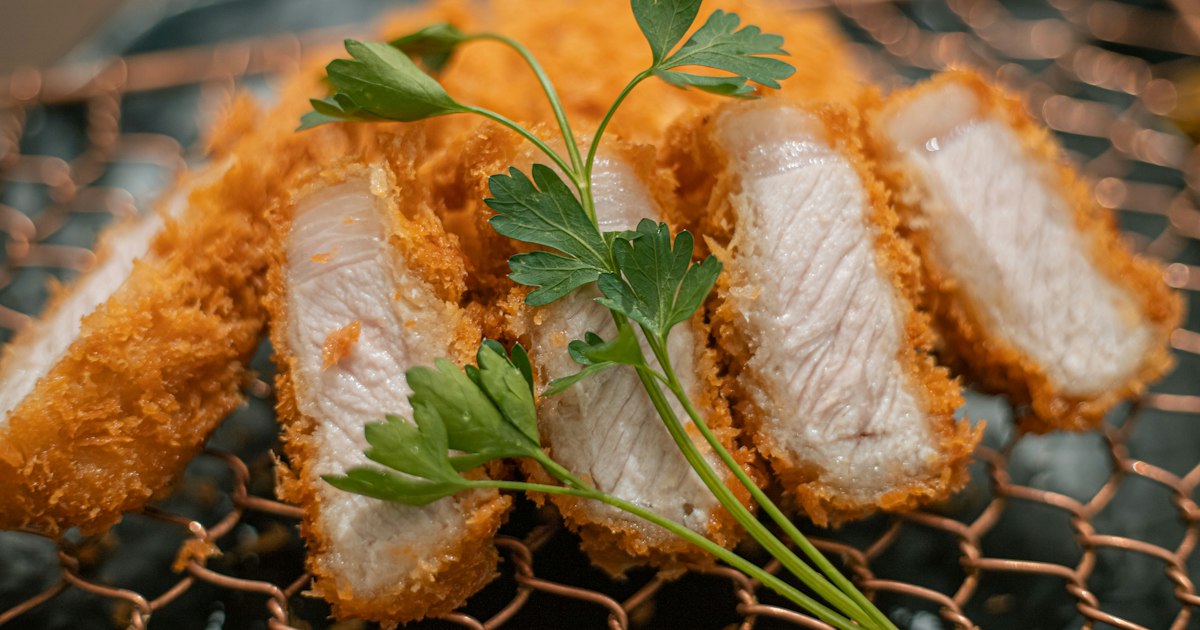
Photo by Ryoo Geon Uk on Unsplash
Walk past any Japanese butcher shop, department store basement food hall, or old-school tonkatsu restaurant and you’ll likely catch the smell of menchi katsu before you see it — a golf-ball-to-fist-sized patty of minced meat, breaded and deep-fried until the panko shell turns deep amber. Bite in, and the contrast is the whole point: a shatteringly crisp crust giving way to a juicy, almost soupy interior of beef, pork, onion, and rendered fat. It’s one of Japan’s great street-food bargains, often sold for under 300 yen, and yet it rarely gets the attention tourists give to ramen or sushi. Here’s how to find the good stuff.
What Exactly Is Menchi Katsu?
Menchi katsu (メンチカツ) is a minced meat cutlet — the name is a corruption of “mince cutlet,” filtered through Japanese pronunciation in the Meiji era. It’s a close cousin of korokke (potato croquette) and tonkatsu (breaded pork cutlet), but made from ground meat mixed with finely chopped onion, sometimes cabbage, panko breadcrumbs, egg, and seasoning, formed into a patty, coated in flour-egg-panko, and deep-fried.
Two main styles dominate:
- Gyuniku menchi (beef) or gyu-buta (beef-pork mix) — richer, fattier, the classic butcher-shop version.
- Buta menchi (pork) — lighter and slightly cheaper, common in Kyushu and at supermarkets.
Good menchi katsu should audibly crunch on the outside and release a small rush of hot juice on the first bite — if it’s dry or dense, the shop either over-mixed the meat or let it sit too long after frying.
Where to Eat It: Butcher Shops vs. Restaurants vs. Department Stores
Menchi katsu lives in three different habitats, each with a different experience:
- Machiniku (neighborhood butcher shops) — the classic way to eat it. Many old butchers fry a batch fresh in the late morning and sell it from a glass case right at the counter, meant to be eaten standing up on the street, wrapped in wax paper. This is the cheapest and arguably most authentic format, common in Tokyo neighborhoods like Yanaka, Sugamo, and Tsukiji outer market.
- Tonkatsu and yoshoku (Western-style) restaurants — menchi katsu served as a set meal (teishoku) with rice, cabbage, miso soup, and tonkatsu sauce, usually 1,200–1,800 yen.
- Depachika (department store basement food halls) — prepared-food counters sell menchi katsu by the piece to take home, often from well-known specialty shops with a cult following.
Notable Shops Worth Seeking Out
Budget (street-side, 150–350 yen):
- Sato Shoten and similar old butcher shops in Tokyo’s Yanaka and Sugamo areas sell menchi katsu fresh from the fryer for around 200–280 yen, meant to eat on the spot — a good stop while exploring the retro shotengai shopping streets there.
- Niku no Osaka-ya (various branches, Kansai) is a well-known butcher-deli chain where menchi katsu runs roughly 150–250 yen a piece.
Mid-range (sit-down sets, 1,200–1,800 yen):
- Tonkatsu chains like Saboten and Katsukura include menchi katsu teishoku on their menus nationwide, a reliable option if you want to sit down and compare it directly against tonkatsu in the same meal.
Splurge (wagyu or specialty, 500–1,000+ yen per piece):
- Some high-end butchers in Tokyo’s Ginza and Nihonbashi make menchi katsu with blended wagyu offcuts — richer, almost custard-soft inside, and priced closer to a dessert than a snack. Look for these in depachika basements at stores like Mitsukoshi or Isetan, where premium butcher counters often sell a single “special” menchi katsu alongside the regular one.
Best Time to Go
Street-side butcher shops typically fry their first batch mid-morning (around 10–11am) and sell out of the fresh batch by early afternoon — arriving right at opening gives you the crispest version. Many of these shops close by 6 or 7pm and are shut on Sundays or Mondays, so this isn’t a late-night food. Depachika counters run on department store hours (typically 10am–8pm) and are busiest in the early evening as commuters pick up dinner, so going right when the basement opens means shorter lines and the first fry of the day rather than one that’s been sitting under a heat lamp.
There’s no strong seasonal angle to menchi katsu — it’s eaten year-round — but it’s especially satisfying in colder months, and it pairs naturally with a walk through old shopping streets the way negiyaki or other griddled snacks do in Osaka; if you’re already planning a day around Negiyaki: Osaka’s Scallion-Packed Cousin of Okonomiyaki and Where to Try It, a butcher-shop menchi katsu makes an easy second stop in the same neighborhood.
How to Order and Eat It Without Looking Lost
At a butcher-shop counter, the process is simple and doesn’t require much Japanese:
- Point at the menchi katsu in the case and say the number you want (e.g., “futatsu” for two) — most shops have a small sign with the price per piece.
- Pay at the counter; staff will hand it to you wrapped in paper, sometimes with a small paper tray.
- Eat it immediately and carefully — the inside is scalding hot straight from the fryer, hotter than it looks given the crust insulates the steam inside.
- Some shops offer a dab of karashi (hot mustard) or tonkatsu sauce on request; others serve it plain, expecting you to taste the meat itself.
Common mistakes:
- Biting in too fast. The juice inside can be near-boiling. Let it rest 30–60 seconds, or bite from the side first to vent steam.
- Buying from a case that’s been sitting for hours. If a butcher shop looks empty and the menchi katsu look dark or shrunken, they’re probably from an earlier batch. Ask “atarashii no arimasu ka?” (do you have a fresh one?) or simply come back at a different time.
- Confusing it with korokke. They look similar in the case — korokke is lighter in color and made mostly from potato, menchi katsu is darker, denser, and meat-based. If you’re not sure, ask “kore wa menchi desu ka?” (is this a menchi?).
- Expecting it hot after transit. If you buy it to bring back to a hotel room, it loses its crunch within 30–40 minutes. Eat it on the spot whenever possible.
Pairing and Taking It Further
Menchi katsu makes an excellent cheap-eats anchor for a walking day: grab one from a butcher shop, then continue to a market or shotengai for other snacks. In Tokyo, Tsukiji outer market and Yanaka’s old shopping street both have menchi katsu stops within a few minutes’ walk of other street food. If you’re assembling a broader Japan food-shopping list for the trip, it’s worth noting that unlike packaged regional specialties such as Kokuto: Okinawa’s Black Sugar Candy and Where to Buy It, menchi katsu doesn’t travel or keep — it’s strictly an eat-it-now food, so don’t plan on bringing any home in your suitcase.
If you’re traveling with a tight itinerary and building out food stops around other regional specialties — ekiben on a train journey north, for instance, like Ikameshi: Hokkaido’s Squid-Stuffed Rice Ekiben and Where to Find It — menchi katsu is a good last-minute addition since it requires no reservation, no wait, and barely a detour from wherever you already are.