Photo by Cem Ersozlu on Unsplash
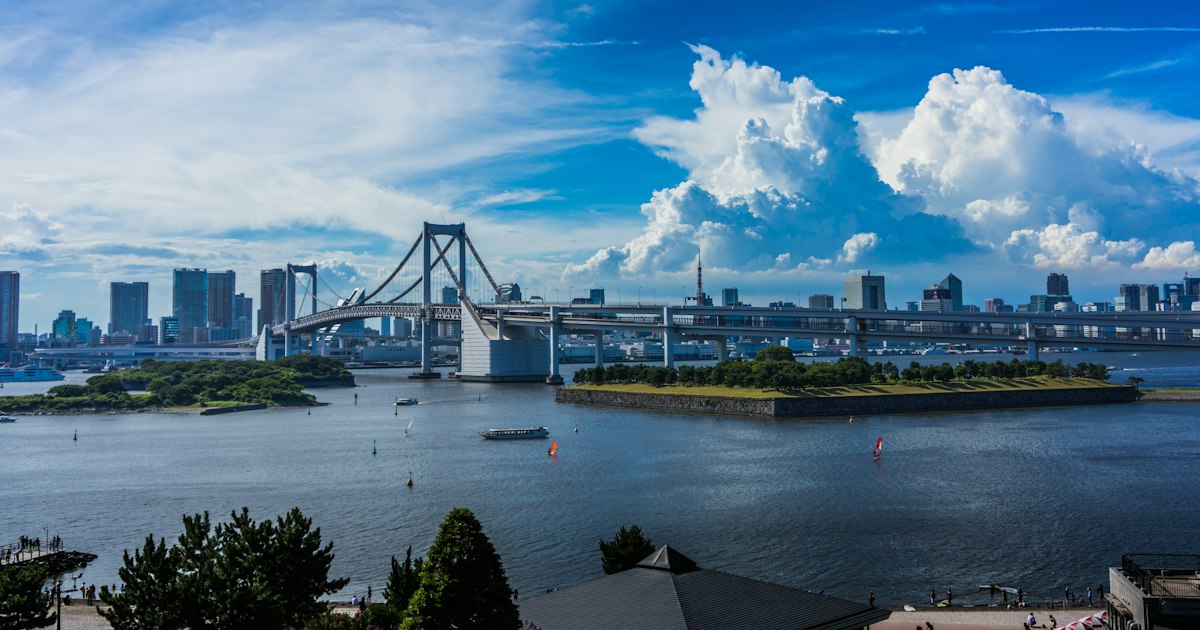
Most first-time visitors to Tokyo ride the Yurikamome by accident — they’re heading to Odaiba for the views or to Toyosu for sushi, and suddenly realize there’s no driver up front. That’s the whole point. The Yurikamome is one of Tokyo’s few fully automated trains, and the ride itself, gliding on rubber tires over Tokyo Bay with nothing but glass between you and the Rainbow Bridge, is as much a reason to board as whatever’s waiting at the other end.
What Is the Yurikamome, Exactly?
Yurikamome (“black-headed gull”) is an Automated Guideway Transit (AGT) line — a rubber-tired train that runs on an elevated concrete track with no driver’s cab, guided automatically and monitored remotely. It’s been running since 1995, extended to Toyosu in 2006, and it remains a genuine novelty even for Tokyoites: short trains, platform screen doors, and a front window that anyone can claim since there’s no cab blocking it.
It connects Shimbashi, a major JR and subway hub in central Tokyo, to the reclaimed-land districts of Odaiba and Toyosu out in Tokyo Bay — covering about 14.7 km in roughly 15 minutes if you ride it end to end.
The Route and Key Stations
The line runs Shimbashi → Shiodome → Takeshiba → Hinode → Odaiba-Kaihinkoen → Daiba → Fune-no-Kagakukan → Telecom Center → Aomi → Tokyo Kokusai-Tenjijo-Seimon (for Tokyo Big Sight) → Ariake → Ariake-Tennis-no-Mori → Shin-Toyosu → Toyosu. The stops that matter most for visitors:
- Odaiba-Kaihinkoen — the artificial beach, the Fuji TV Building, and Aqua City/DiverCity shopping, all walkable from the platform.
- Daiba — close to the Statue of Liberty replica and more Rainbow Bridge photo spots.
- Tokyo Kokusai-Tenjijo-Seimon — the station for Tokyo Big Sight, Tokyo’s biggest convention center (and the one you’ll use for Comiket).
- Shin-Toyosu / Toyosu — Toyosu Market and teamLab Planets TOKYO are both out here.
Fares, Passes, and IC Cards
Suica and Pasmo work fine on the Yurikamome, and fares are distance-based — roughly 190 yen for a short hop up to around 420 yen for the full Shimbashi–Toyosu run. If you’re planning to hop on and off more than once in a day (say, Shimbashi → Odaiba in the morning, then Odaiba → Toyosu Market for lunch), the Yurikamome 1-Day Pass at 820 yen for adults (410 yen for children) pays for itself quickly, since a single round trip already costs close to that.
One important note: the Yurikamome is a private line, not JR. It is not covered by the Japan Rail Pass, and it’s not included in Tokyo subway day passes either — it has its own separate ticketing, sold at machines in Shimbashi and Toyosu stations.
Grab a Front-Row Seat
Because there’s no driver, the very front of the lead car is open seating — the single best “free” view in Tokyo’s train network. The catch is that everyone knows this, so on weekends and holiday afternoons those seats fill within one or two stops. Your best shot is boarding at one of the two terminal stations, Shimbashi or Toyosu, where the train starts empty and you can walk straight to the front.
The visual highlight of the ride is the sweeping curve over the Rainbow Bridge between the Shiodome/Hinode area and Odaiba — the train banks around a loop ramp to gain height before crossing, giving you a full view of the bridge’s suspension cables with Tokyo Tower often visible behind it. This is worth timing deliberately: ride it just before sunset on a clear evening and you’ll catch the bridge’s white, then rainbow-colored, lights switching on as the sky goes orange over the bay. Winter days tend to have the clearest air for this; summer evenings are hazier but warmer for lingering at Odaiba-Kaihinkoen afterward.
What to See Along the Line
Odaiba itself is built for an unhurried half-day: the man-made beach at Odaiba-Kaihinkoen (no swimming, but a nice boardwalk and bridge views), the Fuji TV Building’s observation deck, and DiverCity Tokyo Plaza, home to a life-size Gundam statue and the Pokémon Center TOKYO BAY — a useful stop if you’re hunting the regional-exclusive merchandise Pokémon Center branches are known for.
Further down the line at Toyosu, the big draw is Toyosu Market, which took over Tsukiji’s wholesale fish trade in 2018. The public observation decks overlooking the tuna auction floor open early (check the current schedule before you go, as auction viewing is capacity-limited and sometimes requires advance reservation), and the market’s sushi restaurants serve breakfast well before most of Tokyo is awake. It’s also where some of the country’s most expensive bluefin tuna changes hands — the same prized catch that put small fishing towns like Oma in Aomori on the map. Nearby, teamLab Planets TOKYO is a shoes-off, wade-through-water digital art museum that’s genuinely different from anything else in the city — book tickets online in advance, as same-day entry often sells out.
If you’d rather sit back and let someone else narrate the sights, the Hato Bus and Sky Bus guided tours cover some of the same bay-front scenery from an open-top bus, which is a nice contrast to the Yurikamome’s elevated, hands-free ride.
Common Mistakes to Avoid
- Assuming it’s covered by your rail pass. It isn’t — buy a ticket or tap your IC card like any other private line.
- Not checking the last train. The Yurikamome’s last departures run close to midnight but noticeably earlier than many JR lines; if you’re out late in Odaiba after dinner or an evening teamLab session, confirm the return time before you lose track of it.
- Underestimating the walking. Odaiba’s attractions look close together on a map but are spread across reclaimed land with long block distances — budget more walking time than you’d expect, especially in summer humidity.
- Skipping the front seat because the train “looks full.” Cars often look fuller near the doors than they are up front; it’s worth walking forward before giving up on the view.
- Forgetting Toyosu Market’s observation hours and closure days. The market closes on Sundays, some Wednesdays, and public holidays on a rotating schedule — check the current calendar before building a morning around it.
Budget, Mid-Range, and Splurge Options
On a tight budget, a single IC-card fare plus free sights — the beach, the Statue of Liberty replica, the Gundam statue — makes for a no-cost afternoon beyond the train ticket itself. For a mid-range day, the 820-yen day pass plus a teamLab Planets ticket (around 3,800 yen) or a Toyosu Market sushi breakfast (roughly 3,000–5,000 yen) rounds things out nicely. For a splurge, pair the ride with a high-floor hotel room in Odaiba facing the bridge, or an evening dinner cruise on Tokyo Bay departing near Hinode — both turn the same Rainbow Bridge view you glimpsed from the train into the main event.