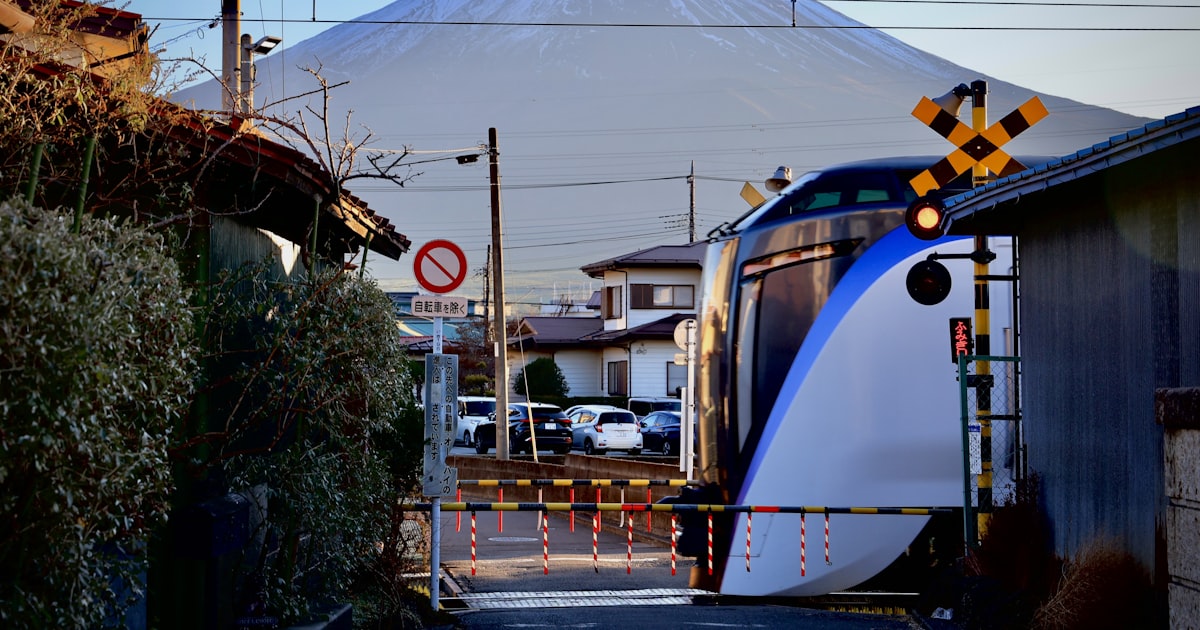
Photo by Jiachen Lin on Unsplash
The national Japan Rail Pass gets all the attention, but for most trips it’s actually the wrong tool. If you’re staying in one region—Tokyo and its day-trip radius, or Kansai and its neighbors—a regional JR pass is usually cheaper and covers exactly the trains you’ll actually ride. The catch is that JR East, JR West, and JR Central each sell their own overlapping lineup of area passes, with different coverage maps, validity windows, and rules about which seats you can reserve. Here’s how to tell them apart and pick the right one.
Why a Regional Pass Instead of the National JR Pass
The nationwide JR Pass (7/14/21 days, ¥50,000/¥80,000/¥100,000 for the ordinary 7-day tier as of recent pricing) only pays off if you’re covering long distances across multiple regions—say, Tokyo to Hiroshima and back. If your itinerary is Tokyo plus Nikko, Kawaguchiko, and Karuizawa, or Osaka plus Kyoto, Kobe, and Himeji, a regional pass covering just that zone almost always costs less than half as much and includes local lines the national pass doesn’t bother optimizing for. Regional passes also tend to be usable the same day you buy them, without the advance exchange-voucher hassle some travelers still associate with the national pass.
JR East Regional Passes: Tokyo and Beyond
JR East’s most useful pass for short trips is the JR Tokyo Wide Pass: ¥15,000 for adults, ¥7,500 for children, valid 3 consecutive days. It covers unlimited rides on JR East lines within the greater Tokyo area plus reserved seats on the Narita Express, the Joetsu Shinkansen out to GALA Yuzawa, and the Nagano/Hokuriku Shinkansen as far as Karuizawa and Nagano. It also includes the Fujikyu Railway line, making it one of the few passes that gets you to the Kawaguchiko/Mt. Fuji area on rails without paying separately. Buy it at JR East Travel Service Centers at Narita or Haneda airports, or major stations like Shinjuku and Tokyo.
If you’re going further north, the JR East Pass (Nagano, Niigata area) and the JR East Pass (Tohoku area) are 5-day flexible passes (you pick 5 non-consecutive days within a 14-day window) priced around ¥18,000–¥20,000 for adults. These make sense if you’re chasing snow country onsen towns or the Tohoku coast rather than staying Tokyo-centric.
JR West Regional Passes: Kyoto, Osaka, and the San’in Coast
JR West sells a tiered set of passes depending on how far you’re ranging. The Kansai Area Pass is the simplest: unlimited JR West trains (not the Shinkansen) between Kyoto, Osaka, Kobe, Nara, and Kansai Airport. Pricing runs roughly ¥2,800 for 1 day up to ¥6,800 for 4 days for adults—buy it if you’re doing day trips between those cities and want to skip juggling individual tickets.
Step up to the Kansai WIDE Area Pass (around ¥5,000–¥6,000, 4 consecutive days) and you get the San’in Kaigan coast, Himeji, Okayama, and reserved seats on limited express trains and select Shinkansen segments within the zone. This is the one that makes sense if Kinosaki Onsen is on your list—the pass covers the JR limited express that runs straight there from Kyoto or Osaka, which otherwise costs around ¥5,000–¥6,000 each way. For trips extending toward Hiroshima and the Seto Inland Sea, the Sanyo-San’in Area Pass (7 consecutive days, roughly ¥19,000–¥20,000) adds Shinkansen coverage down to Shimonoseki, useful if you’re also detouring to Onomichi to ride the Shimanami Kaido.
Where “Kansai Passes” Get Confusing
Here’s the trap: not every pass with “Kansai” in the name is a JR pass. The Kansai Thru Pass is sold by a consortium of private railways and subway operators (Osaka Metro, Hankyu, Hanshin, Kintetsu, Keihan) and deliberately excludes JR lines entirely. It’s the better choice if your days are heavy on Kyoto’s Keihan/Hankyu lines, Nara via Kintetsu, or Osaka’s subway—but it will not get you on a JR train, full stop. Mixing this up is the single most common mistake visitors make: they buy the Thru Pass expecting it to cover a JR ride to Kansai Airport, tap in, and get charged in full. If your plan genuinely mixes JR and private lines evenly, it’s often cheaper to just use an IC card (Suica/ICOCA) and pay as you go rather than buying two overlapping passes. For a fuller comparison of area passes including Hokuriku, see our JR Regional Rail Passes guide to Kansai, Hokuriku & other area passes.
How to Buy and Activate Your Pass
Most JR East and JR West regional passes can be purchased in person on the day of travel at designated ticket offices (marked “JR Travel Service Center” or “Midori no Madoguchi”) without advance booking, which is a real advantage over the national pass’s exchange-order system. Some, like the Tokyo Wide Pass, can also be reserved online in advance for slightly faster pickup. You’ll need your passport for foreign-tourist-only passes—these are not available to Japanese residents. Once issued, write your travel dates on the pass if it’s a paper ticket, and keep it until you exit the gate on your last day; station staff do random checks at manned gates.
Common Mistakes to Avoid
Beyond the JR-vs-private-line mix-up, the other frequent error is buying a multi-day pass for a trip that doesn’t need it. If you’re only making one round trip—say, Osaka to Himeji and back—check the individual fare first; a single round-trip ticket is often cheaper than even the 1-day Kansai Area Pass. Also double-check whether your pass includes Shinkansen reserved seats or only local/rapid trains; the cheaper area passes generally exclude the Shinkansen entirely, and trying to board one without the right coverage means paying the fare difference on the spot. Finally, remember these passes don’t cover the Tokaido Shinkansen (Tokyo–Osaka), which is JR Central territory and needs its own ticket or the national JR Pass.
Budget, Mid-Range, and Splurge Picks
On a tight budget, skip passes altogether for short stays and load a Suica or ICOCA IC card instead—no expiration pressure, works everywhere, and refunds unused balance at the end (minus a small fee). Mid-range travelers doing a Kyoto-Osaka-Kobe-Nara loop over 3–4 days get the clearest value from the Kansai Area Pass. If you’re stretching out to Kinosaki Onsen, Himeji, and Okayama in one trip, the Kansai WIDE Area Pass earns its price back in a single limited-express ride. For a genuine splurge itinerary covering Tokyo, Karuizawa, and a Fuji day trip, the Tokyo Wide Pass is worth it even for two rides, since a round trip to Karuizawa alone runs close to the pass price. Whichever route you take, it pairs well with overnight buses for the longer legs outside your pass zone, or with a rental car if you want to reach spots the rail network simply doesn’t touch.