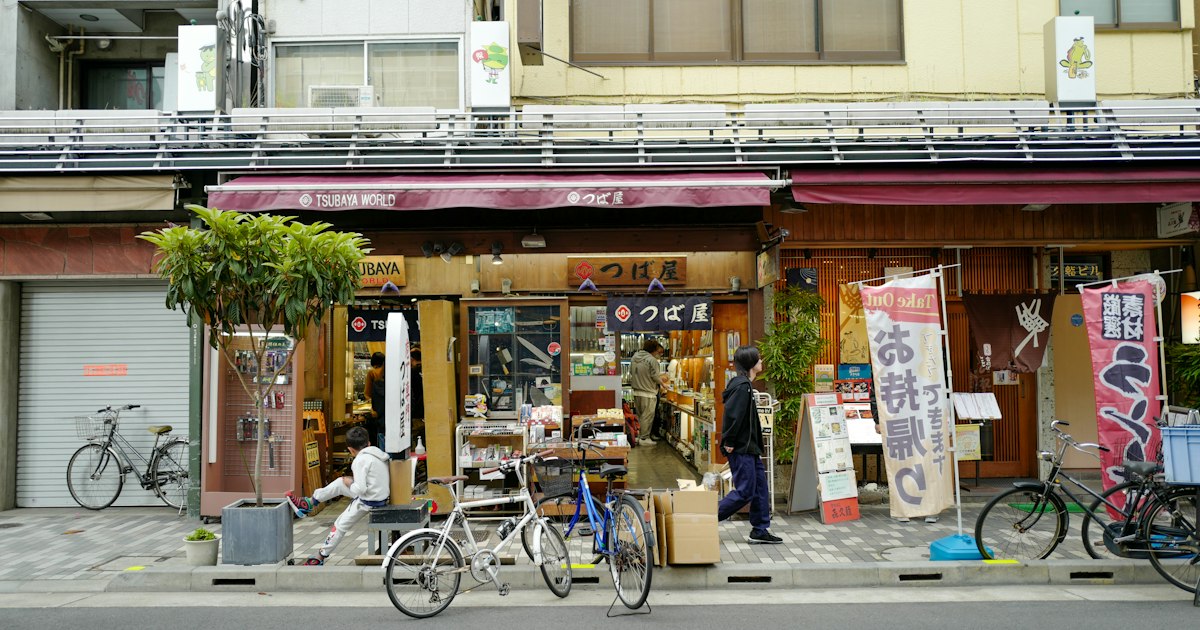
Photo by Dheerna Matsubara on Unsplash
Japan is a paradise for anyone who loves a well-made blade, but it’s a famously right-handed country when it comes to how those blades are designed and sold. If you’re left-handed and hoping to pick up a nice pair of kitchen scissors, a proper can opener, or even just craft scissors as a souvenir, you’ll hit a wall in most ordinary hardware stores. The good news is that a handful of specialist shops — mostly concentrated in Tokyo — do stock left-handed versions, and knowing exactly where to go will save you a frustrating afternoon of pointing and gesturing at shop staff.
Why Left-Handed Tools Are Harder to Find in Japan
Most mass-market scissors and kitchen shears sold in Japan are stamped from a single blank or pivot-assembled the same way Western scissors are, with the blade bevels ground to favor a right-handed grip. Left-handed versions exist but are treated as a specialty item, usually labeled 左利き用 (hidari-kiki-you, “for left-handed use”) and sitting in a separate, smaller section — sometimes a single shelf — rather than mixed in with the regular stock. If a product isn’t labeled this way, assume it’s right-handed or, at best, generic.
One genuinely useful exception: traditional Japanese shear-style scissors (the spring-hinged type used in sewing and ikebana, sometimes called rasha-kiri or hana-kiri) work on a completely different mechanism than Western pivot scissors — two blades closed by spring tension rather than overlapping around a central screw. Because there’s no pivot bias, many left-handed users find these far more comfortable than standard pivot scissors, even in the “right-handed” version. It’s worth testing a pair in-store before assuming you need the labeled left-handed model.
Kappabashi Kitchenware Street: Your Best One-Stop Search
Kappabashi Dougu-gai (合羽橋道具街) in Asakusa is Tokyo’s wholesale kitchenware district — roughly a dozen blocks of shops selling everything from lacquerware to professional knives. It’s the single best place to search, because the density of specialist cutlery shops means someone, somewhere, will carry what you need.
- Getting there: Tawaramachi Station on the Ginza Line, 5-minute walk; Asakusa Station is also about 10 minutes on foot.
- Hours and timing: Most shops open around 9:00–10:00 and close by 17:00–18:00. A lot of independent shops close on Sundays, so visit on a weekday morning if you want full staff availability and the widest selection — Sunday visitors will find roughly half the street shuttered.
- Where to go specifically: Kai House SELECT, the flagship shop for Kai Corporation (the maker behind Shun knives and Kai House Select cookware), is open daily with no regular closing day — handy if your only free day is a Sunday. Kai is one of the few Japanese manufacturers with a dedicated, ongoing left-handed product line, including kitchen scissors and nail clippers, typically priced around ¥1,600–2,500.
If a shop doesn’t have left-handed stock on the shelf, ask whether they do custom or special orders — several knife shops on this street will grind a left-handed bevel on a boning knife or kitchen shears for an extra fee, but expect it to take anywhere from several days to a few weeks, which usually only works if you’re based in Tokyo for an extended stay or can arrange shipping.
Kiya in Nihonbashi: An Old Cutlery Shop With Dedicated Stock
Kiya (キヤ) is a cutlery and scissors shop in Nihonbashi dating back to 1792, and it’s one of the more reliable places in central Tokyo to find left-handed kitchen and craft scissors already on the shelf rather than special-order only. It’s a short walk from Mitsukoshimae Station (Ginza and Hanzomon lines) or Nihonbashi Station. Expect to pay more than at a general store — a quality pair of left-handed kitchen shears here can run ¥3,000–6,000 — but the staff are used to fielding handedness questions and can point you straight to the right shelf, which saves a lot of time compared to hunting through a generalist shop.
Department Stores, Hands, Loft, and Budget 100-Yen Options
If Kappabashi or Nihonbashi isn’t on your route, mid-range chain stores are your next best bet:
- Tokyu Hands (now branded simply “Hands”) and Loft: both have large stationery floors in their Shibuya and Shinjuku flagship stores with a labeled left-handed section — mostly craft and office scissors rather than heavy kitchen shears, priced around ¥500–1,500.
- Department store kitchen floors (depachika-adjacent, not the food basement itself — look for the housewares floor, often mid-building): Isetan Shinjuku and Takashimaya carry imported European brands like Zwilling, whose symmetric handle designs work reasonably well for left-handed users even without a dedicated “lefty” label. Budget ¥4,000–8,000 for a splurge-tier pair.
- 100-yen shops (Daiso, Seria, Can Do): a genuine budget option for craft or kids’ scissors, often priced ¥110–220, and some locations do stock a left-handed pair in the stationery aisle. Don’t expect kitchen-grade durability — these are fine for cutting paper or packaging, not for repeated use on food packaging or bone-in meat.
If you’d rather order ahead and have something waiting at your hotel, Amazon.co.jp and Rakuten both carry Kai’s left-handed line; just confirm the listing ships to a hotel address and arrives within your travel window before relying on it.
Can Openers: Why They’re Less of a Problem Than Scissors
This is genuinely good news: the classic rotary crank-and-wheel can opener that trips up left-handed users elsewhere is uncommon in Japan. Most Japanese can openers are either the butterfly-lever type (kan-kiri, 缶切り) or built into a multi-tool alongside a bottle opener, and both styles operate symmetrically — you squeeze and turn rather than crank a side-mounted handle, so there’s no inherent right-hand bias to design around. Many canned goods sold in Japan also use pull-tab lids, reducing how often you’d need a can opener at all. If you do want one, any hardware store or 100-yen shop model will work regardless of handedness — this is one tool you don’t need to hunt for a specialty version of.
Common Mistakes to Avoid
- Assuming any “kitchen scissors” box is generic: always check for the 左利き用 label before buying; unlabeled stock defaults to right-handed.
- Visiting Kappabashi on a Sunday and finding half the shops closed — go on a weekday morning for the full selection.
- Underestimating custom-order lead times: a hand-ground left-handed blade is not a same-day purchase; plan for days to weeks, not an hour between sightseeing stops.
- Overpaying for a “universal” product that isn’t: some scissors are marketed as ambidextrous but still cut poorly for lefties — ask to test-cut a scrap of paper in the shop before buying.
Quick Reference: Budget, Mid-Range, Splurge
- Budget (¥110–500): Daiso/Seria craft scissors, fine for light paper and packaging use.
- Mid-range (¥1,500–3,000): Kai House SELECT or Hands/Loft dedicated left-handed scissors, suitable for everyday kitchen tasks.
- Splurge (¥4,000–8,000+): Kiya custom or imported symmetric-handle brands at department store kitchen floors, built to last.
While you’re browsing Tokyo’s specialty shopping streets, it’s worth pairing this trip with a stop at the secondhand tableware shops hiding in Tokyo’s backstreets, or, if sewing and craft tools are more your interest, the specialty craft stores covered in our guide to buying secondhand sewing patterns and dressmaking books at Yuzawaya — both scratch the same niche-shopping itch as a left-handed tool hunt, and both are easy to combine with a Kappabashi or Nihonbashi afternoon.