Kanazawa produces roughly 99% of Japan’s gold leaf, a craft perfected here since the Edo period when the Maeda clan, barred from minting their own coins, channeled their wealth into hammering gold into sheets thinner than a human hair. Every tourist photo of the city’s famous gold-flecked soft-serve cone is real, but the ice cream is a gateway drug — the actual shopping, from skincare to sake cups to lacquered chopsticks, is better value and more interesting once you know where to look.
Why Kanazawa Owns Gold Leaf
Kanazawa’s humidity and water quality turned out to be ideal for the final hammering stage, where artisans pound gold between layers of handmade paper until it’s about 1/10,000th of a millimeter thick — thin enough to be translucent. That local monopoly means the city has an entire retail ecosystem built around leaf: dedicated craft shops, a public museum, and two dominant brands, Hakuza (箔座) and Hakuichi (箔一), that compete for your yen with flagship stores a few minutes apart.
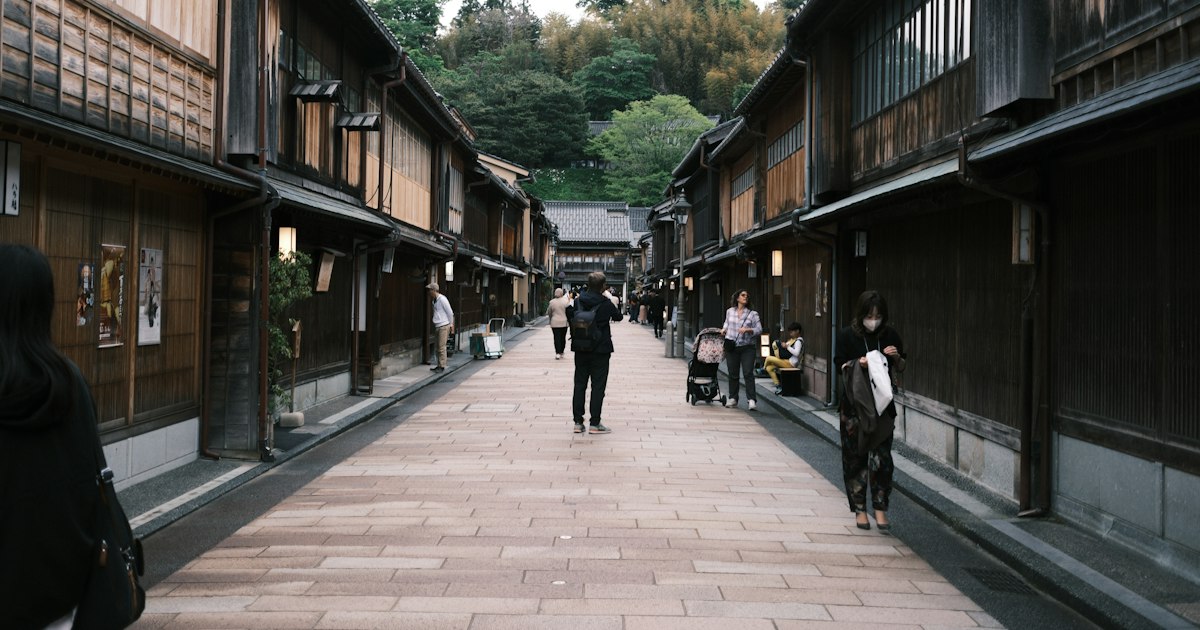
Higashi Chaya District: The Main Shopping Street
Higashi Chaya-gai, the preserved teahouse district, is the center of gold leaf retail. It’s about a 20-25 minute walk from Kanazawa Station, or a short ride on the Kanazawa Loop Bus to the Hashiba-cho stop (roughly ¥200 per ride, or covered by a day pass). Most shops along the lattice-fronted main street open around 9:30-10:00am and close by 17:30-18:00; a few close on Tuesdays or Wednesdays without much warning, so don’t plan your only visit around one specific store.
Hakuza’s flagship here, Hikari Gura, is a small storehouse entirely clad in platinum and gold leaf — free to walk into and photograph, and a good orientation stop before you buy anything. Hakuichi’s nearby shop sells the famous ice cream (around ¥900-1,100 for a cone wrapped in a full sheet of edible gold) alongside a much deeper product range inside, including sake, cosmetics, and tableware that most visitors never make it past the ice cream counter to see.
If you want context on how the leaf is actually made, the Kanazawa Yasue Gold Leaf Museum is a five-minute walk away, with hand-beating demonstrations and an entry fee around ¥300. It’s small — budget 30-40 minutes — but it makes the markup on finished goods make a lot more sense.
Beyond the Ice Cream: Sweets and Drinks
Once you’ve had the cone, look for gold leaf castella (sponge cake) and gold leaf chocolate bars, both sold in gift-box sets from ¥800-2,000, which travel far better than ice cream and make reasonable omiyage for coworkers. Sake is the other classic carrier: small bottles or single-serve cups with gold flakes suspended inside run roughly ¥1,000-3,000, and several Kanazawa breweries sell locally alongside the leaf shops. You’ll also find gold-flecked amazake in the same stores — if you haven’t tried the drink itself, our amazake guide explains what it actually tastes like before you commit to a bottle with gold in it.
Gold Leaf Cosmetics and Skincare
This is the category most visitors miss entirely. Kanazawa’s leaf brands sell facial sheet masks infused with gold leaf flakes (boxes of 3-5 sheets, roughly ¥1,500-3,000), gold leaf-infused creams and serums marketed on collagen and anti-oxidant claims, and even gold leaf bath salts. These are genuinely popular with Japanese shoppers, not just a tourist gimmick, and they pack flat — a better suitcase use of space than a boxed sweet that needs to be eaten within a week.
Souvenirs and Homeware
For something that lasts, look at lacquerware: chopsticks with gold leaf inlay start around ¥2,000-3,000 a pair, and small lacquered dishes or sake sets with gold accents run ¥3,000-8,000. Folding fans, phone cases, and bookmarks finished in gold leaf sit in the ¥500-1,500 range and make easy gifts. At the top end, decorative folding screens, gold leaf-wrapped tea caddies, and large commissioned pieces move into the tens of thousands of yen — these are the kind of items shops will arrange international shipping for, since they’re too fragile and bulky to carry home in a suitcase.
Getting There and Timing Your Visit
From Tokyo, the Hokuriku Shinkansen runs direct to Kanazawa in about 2.5 hours. From Kyoto or Osaka, take the Thunderbird limited express to Tsuruga and transfer to the Hokuriku Shinkansen for the final leg — the whole trip takes roughly 2.5-3 hours since the shinkansen extension opened in 2024. Gold leaf shopping works in any season since it’s almost entirely indoors, which makes it a good anchor activity during Hokuriku’s grayer winter months. If you want to pair it with scenery, spring (early-mid April) and November foliage make Kenrokuen Garden, a 10-minute taxi ride away, worth combining with the same day. Travelers extending further into Ishikawa often continue on to the Noto Peninsula, though check current access conditions before planning that leg.
Common Mistakes and Budgeting
The biggest mistake is assuming anything gold-colored is actual gold leaf. Cheaper souvenirs — stickers, cheap postcards, trinkets sold near the station — are often brass-based imitation foil, not real kinpaku. Genuine products are usually labeled with the gold content or marked “純金箔” (pure gold leaf); if a shop assistant can’t tell you the gold percentage, assume it’s decorative foil, not the real thing, and price it accordingly. Second, don’t buy perishable gold leaf sweets too early in your trip — castella and chocolate have short shelf lives and gold flake sake should be drunk within a reasonable window, not saved for a flight home weeks later. Third, carry some cash: several of the smaller family-run craft shops in Higashi Chaya still prefer it, even though QR code payments are spreading fast elsewhere in the city, and a Japan Post Bank ATM at the station is a reliable backup if you run short.
For budgeting: treat ¥500-1,500 items (fans, bookmarks, small sweets) as the easy, risk-free buy; ¥2,000-5,000 as the mid-range sweet spot for cosmetics boxes and lacquerware you’ll actually use; and anything above ¥10,000 as a considered purchase you should see in person and ask about shipping before committing to. If your gift list is bigger than expected and your suitcase isn’t, it’s worth knowing Kanazawa itself doesn’t have the bag selection that Kyoto or Osaka do — our guide to buying a suitcase in Japan covers where to pick up an extra bag if the gold leaf haul gets out of hand.