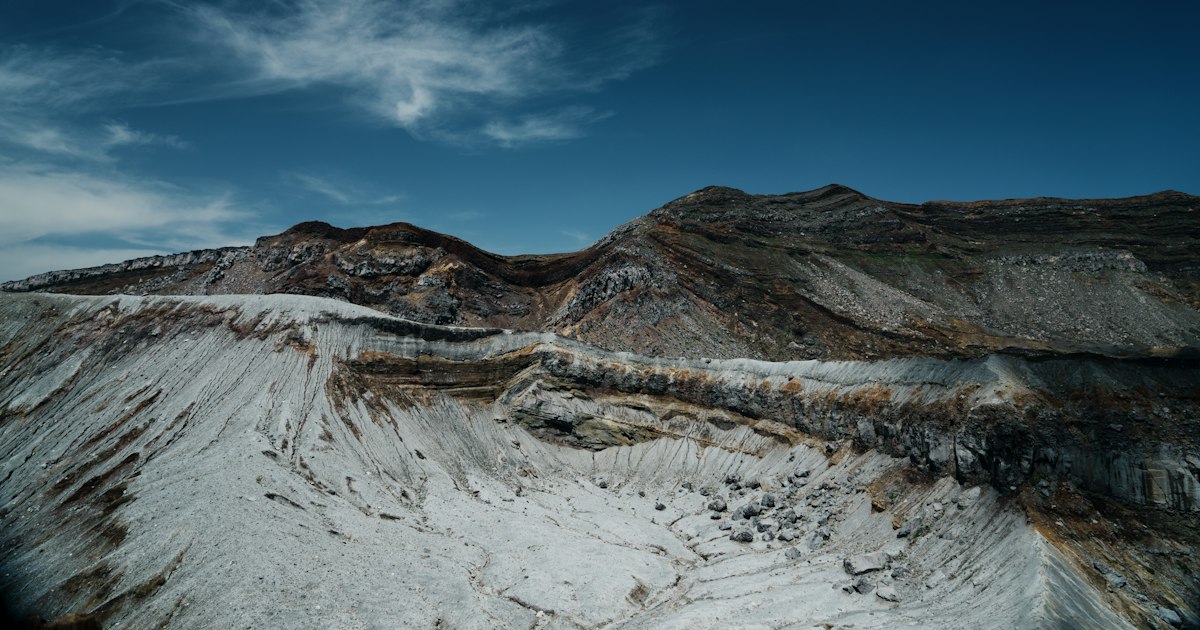
Japan sits on the Pacific Ring of Fire, and three of its most famous peaks — Mount Aso, Mount Fuji, and Sakurajima — are all active volcanoes monitored around the clock by the Japan Meteorological Agency (JMA). That doesn’t mean they’re off-limits; thousands of visitors safely hike, ride, and photograph these mountains every year. But “active” has real consequences for trip planning: trails close with little notice, summit access can be permanently restricted, and the rules differ wildly from one volcano to the next. Here’s what the alert system actually means and how it affects each of these three trips.
How Japan’s Volcanic Alert Level system works
JMA uses a five-level scale for the roughly 50 volcanoes it monitors continuously:
- Level 1 — Potential for change in activity. Normal sightseeing, but not a guarantee of zero risk.
- Level 2 — Crater restriction. Don’t approach the crater itself; areas within roughly 1 km may close.
- Level 3 — Entry restriction. Don’t approach the volcano; closures typically extend 2–4 km from the vent.
- Level 4 — Prepare to evacuate (nearby residents).
- Level 5 — Evacuate.
Levels can change within hours, and local governments — not tour operators or hotels — decide when roads, ropeways, and crater viewpoints actually reopen. Check the current status before you travel at JMA’s English-language site (search “JMA volcanic warnings”), which shows a color-coded map updated several times daily. Local visitor centers and the gates at trailheads also post the day’s status, but that’s the last line of defense, not the first — plan around the online status, not around what you hope is still open.
Mount Aso: Japan’s most unpredictable crater you can actually drive up to
Aso’s Nakadake crater is one of the largest active craters in the world, and it has swung between Level 1 and Level 3 repeatedly over the past decade — a major 2016 eruption closed the crater area for years before it reopened in 2019. On a good day, you can get remarkably close.
From JR Aso Station, take the Sanko Bus to Aso Volcano Museum (around 40 minutes, roughly ¥700 one-way), then transfer to the shuttle bus up to the crater rim (about 10 minutes, roughly ¥1,000–1,500 round trip). The shuttle only runs when the alert level allows access — at Level 2 the crater-edge viewpoint closes, and at Level 3 the whole access road shuts. Opening hours are roughly 9:00 am–5:00 pm, shorter in winter, and gas masks are sometimes handed out free near the rim because of sulfur dioxide levels — don’t skip them if offered. Mornings tend to have calmer wind and lower gas concentration than afternoons, so go early. Spring and autumn give the clearest views; summer brings haze and afternoon cloud buildup over the crater.
Mount Fuji: dormant on paper, strictly regulated in practice
Fuji’s alert level has sat at Level 1 for years, but it’s still classified as active (its last eruption was 1707), and JMA keeps instruments on it year-round. The bigger practical issue for climbers isn’t the alert level — it’s the new entry rules. The official climbing season is roughly July 1 to September 10 on the Yoshida Trail (Shizuoka’s Fujinomiya, Gotemba, and Subashiri trails run a similar window). Since 2024, the Yoshida Trail requires an online reservation plus a mandatory ¥2,000 entry fee, caps daily climbers at 4,000, and locks the gate from 4:00 pm to 3:00 am to stop unprepared “bullet climbers” from pushing straight to the summit overnight without rest. Shizuoka’s trails have since introduced comparable fee-and-reservation systems — check the current requirements for whichever trail you plan to use before booking flights.
Mountain huts near the summit cost roughly ¥8,000–13,000 a night with dinner and breakfast included, and booking months ahead is normal for peak August weekends. Climbing outside the official season is strongly discouraged: huts and rescue stations close, trails ice over, and fatalities among off-season climbers happen most years. If you want the view without the 6–8 hour ascent, a scenic flight is a legitimate alternative — see our guide to booking a sightseeing helicopter flight over Tokyo and Mount Fuji.
Sakurajima: no summit, but one of the most active volcanoes on Earth up close
Sakurajima erupts almost every day — usually small ash puffs rather than anything dangerous to visitors — and its alert level typically sits at Level 3, which permanently restricts approach within a few kilometers of the Minamidake and Showa craters. Unlike Aso, there is no scenario where tourists climb to the summit; it’s simply not offered, regardless of what you may see suggested online.
What you can do is get close on the safe side of the restriction line. Take the Sakurajima Ferry from Kagoshima city — it runs 24 hours a day, every 15–30 minutes, with a 15-minute crossing and a ¥200 one-way fare for foot passengers (paid on arrival, not in advance). From the ferry terminal, the Sakurajima Island View loop bus (about ¥120 per ride, or a ¥500 one-day pass) connects the main sights: the free foot bath at Furusato Onsen, the Arimura Lava Observatory, and Yunohira Observatory at 373 m, the highest point accessible by road. Ash fall is routine here, not a sign of danger — bring a mask and expect to wipe ash off your bag at the end of the day. If you’re flying into Kagoshima on a domestic low-cost carrier, double-check your carry-on dimensions first; see our guide on oversized carry-on enforcement on Japan’s domestic LCCs so your bag doesn’t get gate-checked at the last minute.
Common mistakes to avoid
- Treating Level 1 as “no risk.” It means normal conditions, not a guarantee — conditions can shift to Level 2 or 3 within a day at Aso in particular.
- Checking the alert level once, weeks before the trip. Recheck the morning you plan to go; shuttle buses and crater access at Aso open and close in step with same-day status.
- Assuming Sakurajima’s summit is climbable with the right permit. It isn’t offered to tourists under any circumstances — stick to the observatories.
- Skipping the Fuji reservation system. Trailhead staff turn back climbers without a valid reservation and fee receipt during peak season.
- No cash for buses and entry fees. Aso’s shuttle and Sakurajima’s ferry are often cash-only or cash-preferred at smaller counters.
Budget, mid-range, and splurge options
For Aso: budget travelers can do the bus-and-crater-walk combination for around ¥1,500 total; mid-range visitors rent a car and add a stop at a local onsen; splurge travelers book a private guided day tour from Kumamoto or Fukuoka (roughly ¥15,000–25,000 per person). For Fuji: budget means viewing from the Fifth Station without climbing (free beyond transport); mid-range covers a full summit climb with one hut night, landing around ¥15,000–20,000 all-in; splurge options include a guided climb with a private guide, or skip the climb entirely for the helicopter flight linked above. For Sakurajima: budget is the ¥200 ferry plus a walk around the visitor center; mid-range adds the Island View bus pass and observatory stops for under ¥1,000 total; splurge travelers book a private sunset boat cruise around the island for a view of the crater glowing after dark.