Photo by Matthieu Collin on Unsplash
Japan’s skate scene punches well above its population size, and Tokyo in particular has a deep secondhand market for longboards, surfskates, and cruisers — fed by riders upgrading gear, shops clearing consignment racks, and a culture of keeping used goods in good condition rather than letting them rot in a garage. If you’re visiting and want to ride while you’re here, or just bring home a board that’s genuinely cheaper than buying new at home, here’s where to actually look and what to budget.
Why Japan’s Secondhand Skate Market Is Worth Your Luggage Space
Used sporting goods in Japan tend to be well maintained — bearings greased, decks stored indoors, grip tape intact — because the resale culture here rewards condition. That’s the same dynamic that makes Japan a good place to shop for other secondhand gear; if you’ve read our guide to buying a secondhand road or mountain bike in Tokyo and Osaka’s specialist cyclist shops, the logic is identical for skate gear: specialist shops that know their product tend to only take in boards worth selling, and they’ll usually tell you honestly if a deck is delaminating or trucks are shot.
Shibuya and Jinnan: Tokyo’s Historic Skate Shop Cluster
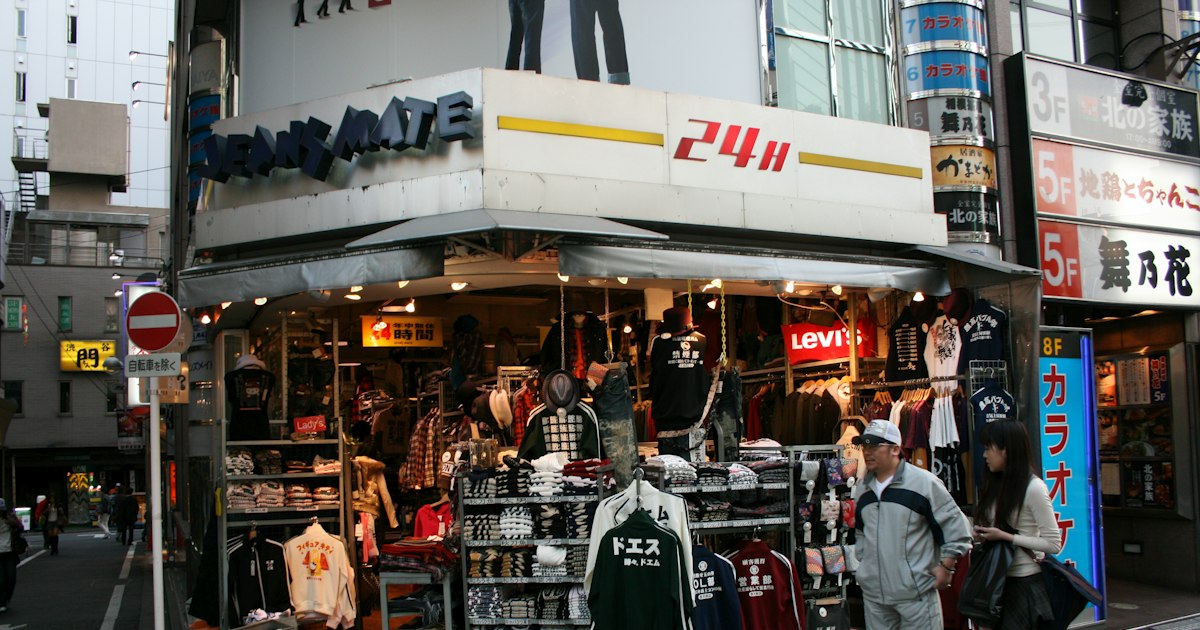
The streets north of Shibuya Station, around the Jinnan and Udagawa-cho blocks (a 5-10 minute walk from the Hachiko exit, past the Parco building), have been a skate and streetwear hub for decades. This is where you’ll find small independent shops stocking both new and consigned decks, often with a rack of used completes near the register at noticeably softer prices than new stock. Stock turns over fast and isn’t centrally listed anywhere, so the approach here is to walk the block rather than hunt for one specific address — most shops open around midday (11:00-12:00) and stay open into the evening (20:00-21:00), which fits a slower, late-starting Tokyo shopping day. Staff in this area are used to foreign customers and many speak enough English to talk through truck geometry, wheel durometer, and whether a deck is a true surfskate (loose, pivoting front truck) versus a standard longboard setup.
The Chain-Store Route: 2nd Street, Hard Off, and Treasure Factory
If you want predictable hours and nationwide coverage rather than a boutique hunt, Japan’s big secondhand chains are the reliable fallback. 2nd Street (セカンドストリート) and the Hard Off group’s sporting-goods arm sell everything from snowboards to skateboards, and most branches are open daily from around 10:00 or 11:00 to 20:00 or 21:00. Treasure Factory is a similar nationwide chain worth checking if there’s a branch near where you’re staying. Stock is hit-or-miss — a given branch might have zero boards one week and three the next — so check a couple of locations rather than relying on just one. Typical pricing at these chains:
- Budget (¥3,000-8,000): generic or off-brand plastic cruisers and basic longboards, sometimes with worn bushings or scuffed decks — fine for casual riding, not for serious surfskating.
- Mid-range (¥10,000-20,000): recognizable brands like Globe, Sector 9, or Element in decent condition, and occasionally entry-level surfskate trucks.
- Splurge (¥25,000-45,000): secondhand Carver, YOW, or Smoothstar setups — brands that retail new in Japan for roughly ¥35,000-55,000, so a clean used one can be real savings.
Buying Online: Mercari and Yahoo Auctions for Visitors
Mercari and Yahoo Auctions (Yahuoku) are where most of the serious secondhand surfskate trading actually happens in Japan — far more volume than any physical shop. The catch for visitors is that both platforms generally require a Japanese phone number and, for Yahoo Auctions, often a Japanese bank account or a Yahoo! Japan premium membership, which makes them awkward to use on a short trip unless you’re staying with a Japanese resident or already have a local SIM and payment method set up. If you can get access, search terms like “サーフスケート 中古” (surfskate, used) or the brand name plus “中古” will surface listings, and sellers almost always photograph the trucks and wheels closely enough to judge wear before buying. If platform access isn’t realistic for your trip length, treat Mercari/Yahuoku browsing as price research — it’ll tell you what a fair secondhand price looks like before you negotiate in person at a shop.
What to Inspect Before You Buy a Used Deck
A few minutes of inspection saves you from flying home with a board you can’t actually ride:
- Deck delamination — press along the edges and nose/tail; any soft, flexing, or separating layers is a hard pass, especially after a humid Japanese summer.
- Truck pivot wear on surfskates — the front truck’s pivot cup and spring are the parts that actually wear out with surf-style carving; wiggle the front truck side to side and feel for excess play beyond normal pumping action.
- Wheel and bearing condition — spin each wheel; grinding or catching means the bearings need replacing, which is a fair reason to ask for a lower price.
- Grip tape and hardware — missing grip tape or mismatched screws aren’t dealbreakers but are useful bargaining chips.
Best Season to Shop, and Getting Your Board Home
Stock is generally fullest in early autumn (September-October), right after Japan’s humid rainy season and typhoon season wind down and riders who put gear away for summer start trading up again; spring (April-May) is the second good window, before the rains start. If you’re flying out with your board, check your airline’s oversized baggage policy before you buy — a full-size longboard or surfskate (typically 95-150cm) usually exceeds standard carry-on and checked-bag dimension limits and needs to be declared as oversized or sports equipment. If your plan involves carrying it on a Shinkansen to the airport, Japan’s oversized luggage rules on the bullet train use the same kind of dimension-and-reservation system covered in our guide to taking a cello, guitar, or large instrument on the Shinkansen — worth checking those size thresholds even though a board isn’t an instrument, since the oversized-baggage reservation requirement kicks in at the same 160cm total-dimension mark.
Common Mistakes to Avoid
- Assuming “longboard” and “surfskate” are interchangeable in Japanese shop listings. Shops and sellers do distinguish them (サーフスケート vs ロングボード), and a shop that’s light on surfskate stock may still have plenty of standard longboards — ask specifically if you want the carving front-truck setup.
- Skipping the bearing and bushing check because the deck looks cosmetically clean. Graphics and grip tape age slowly; moving parts don’t.
- Not budgeting for a travel bag. A beat-up secondhand board won’t survive a flight loose in a suitcase; padded board bags are sold new at most of the same shops for roughly ¥3,000-6,000 and are worth the add-on cost.
- Relying on just one neighborhood. Shibuya/Jinnan is the obvious first stop, but checking a 2nd Street or Hard Off near your hotel costs nothing and occasionally turns up the best price of the trip.