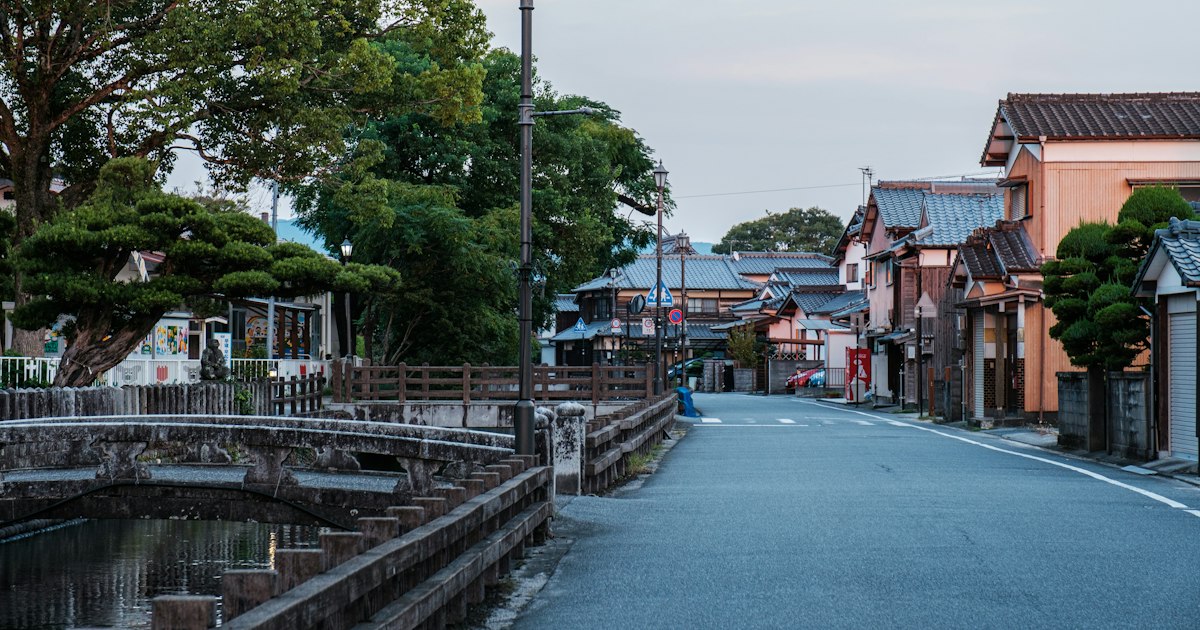
Photo by Nichika Sakurai on Unsplash
An hour from Kyoto by train sits a town most foreign visitors skip entirely: Omihachiman, a canal-laced merchant settlement on the eastern shore of Lake Biwa that was once home to some of Japan’s most powerful traveling traders. The willow-lined moat, white-plastered warehouses, and a cable car up to shrine ruins overlooking the lake make it an easy, uncrowded day trip — and one of the better antidotes to Kyoto’s tour-bus crowds.
Getting to Omihachiman
Omihachiman Station sits on the JR Biwako Line (the Kyoto–Shiga stretch of the Tokaido Main Line), which makes it simple to reach without a transfer from several major cities:
- From Kyoto Station: around 45–50 minutes on a rapid train, roughly ¥990 one-way.
- From Osaka Station: about 70–80 minutes, roughly ¥1,520 one-way.
- From Nagoya: around 70–90 minutes via the Tokaido Main Line, roughly ¥2,300 one-way.
The historic canal district isn’t at the station, though — it’s about 2.5km away. Take the local community bus (the “Akanbe” bus or Omi Railway bus, around ¥200), grab a taxi (roughly ¥900), or rent a bicycle from one of the shops just outside the station (typically ¥500–800 for a half day). Cycling is genuinely the nicest way to see the town, since the canal and merchant streets are flat and bike-friendly.
Walking the Hachiman-bori Canal and Merchant District
The Hachiman-bori canal was dug in 1585 as both a moat and a trade route for the castle town built by Toyotomi Hidetsugu, nephew of Toyotomi Hideyoshi. The castle itself is long gone, but the canal survives, lined with willow trees, stone steps, and the white-walled storehouses of the “Omi shonin” — merchant families who built trading networks across Japan and are considered forerunners of several companies still operating today.
Wandering the Shin-machi and Nagahara-machi merchant streets costs nothing, and several former merchant residences are open to the public for a few hundred yen each. A slow boat cruise along the canal is the signature activity: expect to pay around ¥1,500 for adults and ¥750 for children for a roughly 35-minute ride. Boats run most reliably from spring through autumn, with a reduced schedule in winter, so it’s worth checking locally on the day rather than assuming it will be running.
If you enjoy this kind of preserved Edo-period streetscape, it’s worth comparing to Ouchi-juku in Fukushima — a very different region but a similar sense of stepping into a trading-era townscape frozen in place.
La Collina Omihachiman and Local Sweets
A 10–15 minute walk (or short taxi ride) from the canal is La Collina Omihachiman, the thatched-roof confectionery complex built by Taneya, one of the region’s most famous sweet-makers. The grass-roofed main building and surrounding rice paddies have made it a minor pilgrimage site for Japanese visitors, especially for its baumkuchen and matcha-flavored treats. It’s generally open daily, roughly 9am to 6pm, though hours can shift seasonally, so it’s worth a quick check before planning your visit around it.
Near the canal itself, look for Club Harie’s Nihonbashi-tei, a renovated merchant building that sells the brand’s signature baumkuchen cakes — a nice, lower-key alternative if La Collina’s weekend crowds put you off.
Mount Hachiman Ropeway and Lake Biwa Views
From the base near Himure Hachimangu Shrine, a short ropeway climbs Mount Hachiman to the ruins of the old castle and Zuiryuji Temple, with a clear lookout over the canal district, the merchant town rooftops, and Lake Biwa in the distance. Round-trip tickets run roughly ¥890 for adults. The ride up takes only a few minutes, but the viewpoint at the top is the best single photo spot in town — plan for a queue on weekends during cherry blossom or autumn foliage season.
A Boat to Chikubushima Island
Less well known to foreign visitors: Omi-Hachiman Port, on the lake side of town, runs sightseeing boats out to Chikubushima, a small sacred island in Lake Biwa home to Hogonji Temple and a shrine complex built into the cliffside. It’s a different outing from the canal district — budget most of a half-day for the round trip plus time on the island — but it’s a good way to combine Omihachiman with an actual lake crossing rather than just a canal stroll.
Best Time to Visit and Common Mistakes
Late March to early April (cherry blossoms along the canal) and November (autumn color on Mount Hachiman) are the best windows. The town also hosts two major festivals worth knowing about: the Sagicho Fire Festival in mid-March and the Hachiman Matsuri in mid-April, both of which draw large local crowds and can make accommodation and bus schedules tighter than usual.
A few mistakes visitors commonly make:
- Assuming the canal is walkable from the station. It’s not — budget time and a few hundred yen for the bus or taxi.
- Not carrying cash. Several of the smaller merchant-house museums and the boat ticket counter don’t take cards.
- Planning a tight schedule around the boat ride. It can be cancelled for weather or low water levels, especially off-season — treat it as a bonus, not the anchor of your day.
- Skipping lunch planning. Omihachiman is in Omi beef country, and restaurants serving it (steak, sukiyaki, or a simple beef bowl) can get busy around midday.
Budget, Mid-Range, and Splurge Options
On a tight budget, walking the canal and merchant streets, browsing the free sections of the historic houses, and grabbing an Omi-beef croquette from a street stall (around ¥300–400) makes for a satisfying half-day for well under ¥2,000. Mid-range visitors should add the canal boat ride (~¥1,500) and a beef-bowl lunch (~¥2,500–4,000). For a splurge, a proper Omi beef steak or sukiyaki course at one of the town’s established restaurants runs roughly ¥8,000–15,000 per person, and a gift box of Taneya or Club Harie baumkuchen makes a far more memorable souvenir than most mass-produced options.
Omihachiman pairs naturally with a Lake Biwa-focused day from Kyoto or Osaka, but if you’re based in Nagoya and want a similarly low-key, food-and-scenery day trip in the other direction, it’s worth comparing against Nagashima and Kuwana’s outlet-and-spa combo. And if the appeal of Omihachiman is really the old merchant streets, Osaka’s Tenjinbashi-suji shopping arcade offers a completely different, livelier take on Japan’s merchant history that’s worth experiencing for contrast.