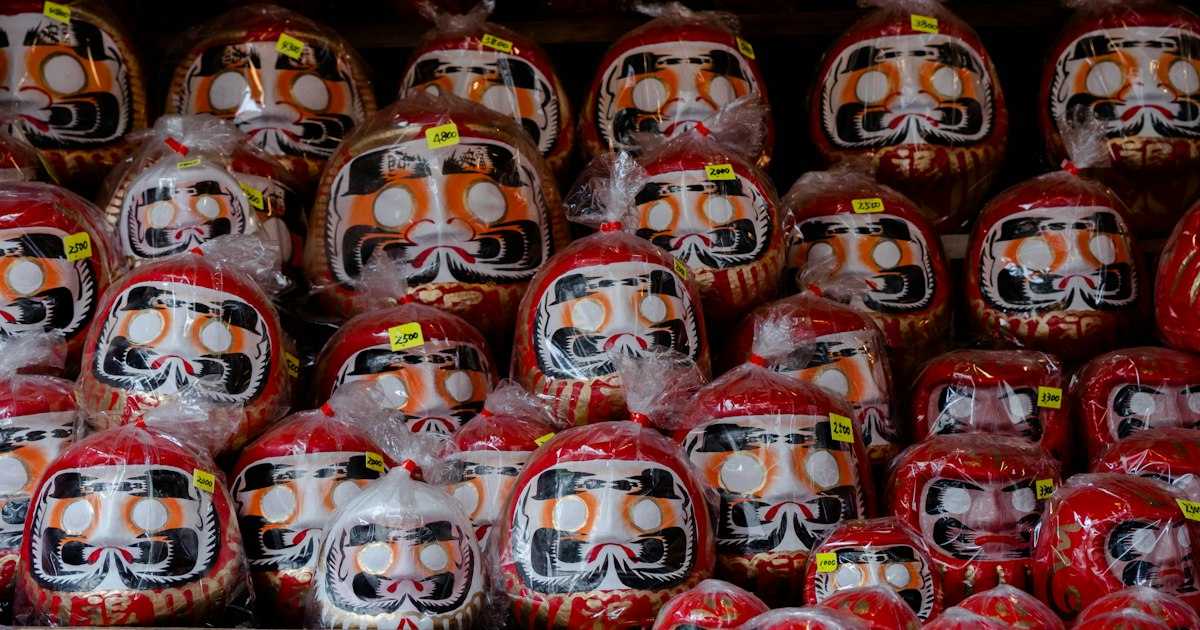
If you’ve ever seen a stack of brightly colored wooden discs topped with a round, mustachioed face get whacked sideways with a tiny mallet — and watched the whole tower settle back down in perfect balance — you’ve seen daruma otoshi. It’s one of Japan’s oldest tabletop toys, still sold in toy shops, shrine markets, and souvenir stands across the country, and it makes a genuinely fun (and very packable) souvenir if you know where to look for a well-made one.
What Exactly Is a Daruma Otoshi?
Daruma otoshi (だるま落とし, literally “daruma dropping”) is a stacking-and-striking toy made of five or six lacquered wooden discs in different colors, stacked in a tower with a round daruma head — modeled on the legless, weighted dolls associated with the Zen monk Bodhidharma — balanced on top. Using a small flat-sided wooden hammer, the player strikes each disc horizontally, starting from the bottom, knocking it out sideways without toppling the discs above it. Hit it clean and the stack drops neatly onto the table; hit it wrong and the whole tower goes flying. It’s a dexterity game in the same family as Jenga, but older — most accounts trace it to the Edo or early Meiji period, and it’s long been sold alongside daruma dolls as a New Year’s good-luck item, since a toy that “never falls over” plays on the same resilience symbolism as the dolls themselves.
Where to Buy One in Tokyo: Budget, Mid-Range and Splurge
You don’t need to leave Tokyo to find a decent one, and the price range is wide enough that it’s worth knowing what you’re paying for.
- Budget (¥300–¥1,000): Daiso, Seria, and other 100-yen-and-up shops occasionally stock simplified plastic or lightweight wooden versions, usually in the toy or seasonal-goods aisle around New Year. Don Quijote stores also carry inexpensive traditional-toy sets in their souvenir sections year-round. These are fine as a cheap, fun gift for a kid, but the balance and finish are noticeably rougher than a proper wooden set.
- Mid-range (¥1,500–¥4,000): Hakuhinkan Toy Park in Ginza (close to Shimbashi and Yurakucho stations) and Yamashiroya near Ueno Station both stock traditional Japanese toy sections with wooden daruma otoshi from established toy makers — better-balanced discs, properly weighted hammers, and sturdier paint. Kiddy Land in Harajuku is more character-goods focused but is worth a look for novelty versions. Traditional toy and craft shops along Asakusa’s Nakamise-dori and the side streets near Sensoji also carry wooden sets alongside kokeshi dolls and other folk toys, and the shopkeepers can usually tell you which ones are made for play versus display.
- Splurge (¥5,000–¥15,000+): Hand-painted, artisan-made daruma otoshi — often sold as collectible pieces rather than toys for rough play — turn up at craft fairs, specialty folk-art stores, and directly from workshops in Gunma Prefecture. These use denser wood, hand-lacquered finishes, and sometimes gold-leaf detailing on the daruma face. If you’re already the kind of traveler who hunts down well-made Japanese collectibles, the mindset is similar to tracking down a good piece on the vintage watch-hunting circuit — condition and provenance matter more than the sticker price.
The Real Home of Daruma: Takasaki, Gunma
If you want the toy with real context, make the trip to Takasaki, a city about 50 minutes north of Tokyo on the Joetsu Shinkansen from Tokyo Station (around ¥5,000–¥6,500 one-way depending on seat class and train). Takasaki produces the large majority of Japan’s daruma dolls, and daruma otoshi is sold everywhere as a companion item to the dolls themselves — in souvenir stalls near Takasaki Station, in local craft shops, and at the city’s temple most closely tied to the tradition, Shorinzan Daruma-ji, reachable by a short taxi or local bus ride from the station.
The best time to visit is early January: Shorinzan Daruma-ji holds its famous Daruma Market (Daruma-ichi) on January 6th and 7th each year, when the temple grounds fill with stalls selling daruma dolls of every size alongside toys, food stands, and New Year’s decorations. It’s crowded, cold, and completely worth it if your trip timing lines up — outside those two days, the temple is quieter and more of a standard visit, so check current-year dates before planning around it since they’re fixed by the calendar but worth confirming closer to travel. Similar to other craft-town day trips from Tokyo like Kasama’s pottery scene in Ibaraki, Takasaki rewards travelers who want to see where a souvenir actually comes from rather than just buying it in a Tokyo shopping district.
How to Actually Play It (So You Don’t Break Yours)
If you’re buying one to actually use rather than display, it helps to know the basic technique before you get home and everyone’s disappointed:
- Stack the discs so each one sits flush and level — a crooked stack is the single biggest reason towers topple on the first hit.
- Hold the hammer loosely and strike fast and flat, parallel to the table, aiming at the center of the bottom disc. A slow or angled hit pushes the disc instead of popping it out cleanly.
- Work from the bottom disc up, one at a time. Trying to skip to a middle disc is a common beginner mistake and almost always sends the daruma head flying.
- Play on a hard, flat surface — a tablecloth or soft mat absorbs the hit and makes clean knocks much harder to pull off.
Common Mistakes When Buying One
A few things trip up first-time buyers specifically:
- Buying a display-only piece expecting it to be playable. Some of the nicer lacquered sets sold as folk-craft pieces have a tighter fit between discs meant for shelf display, not repeated hammering — ask the shop if it’s “asobu you” (play-use) versus a decorative set if you’re not sure.
- Underestimating the packing size. A full-size set with its stand and hammer can be bulkier and more fragile than it looks in photos — wrap each disc individually if it’s going in a checked bag.
- Not checking the hammer is included. Some cheaper sets sold loose at souvenir counters are missing the mallet, which makes the whole toy pointless — check the box contents before paying.
Getting It Home
For a single boxed set, it travels fine as carry-on or packed carefully in checked luggage — it’s light and the pieces are small. If you’ve gone splurge-shopping in Takasaki and ended up with several larger artisan pieces or full daruma dolls alongside your otoshi set, and you’re worried about fragile wooden goods surviving the flight home, the same logistics that apply to bulkier Japanese purchases are worth knowing — see our guide on shipping larger purchases home from Japan by sea freight or air for a sense of cost and timing if you’d rather not risk it in a suitcase.