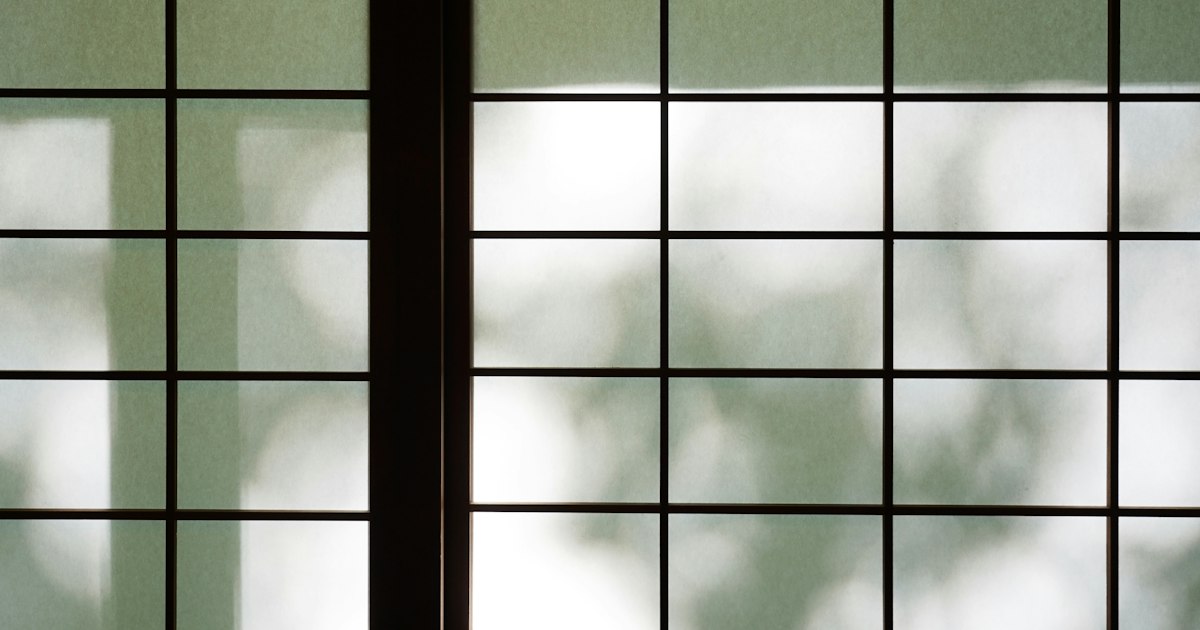
Photo by Hiroshige Fukuhara on Unsplash
It’s a familiar moment for anyone renting an older apartment in Japan: a cat jumps through the sliding door, a kid pokes a finger through the lattice, or a decade of sun finally catches up with a yellowed, brittle panel — and suddenly you’re staring at a hole in your shoji screen. The good news is that re-papering a shoji panel is one of the most beginner-friendly DIY repairs in a Japanese home, the materials are cheap, and you don’t need to speak fluent Japanese to find what you need at a home center. Here’s where to buy the paper and tools, what things cost, and how to avoid turning a ¥400 fix into a move-out deduction.
Why Renters Should Care About This Repair
Under standard Japanese rental norms (the Ministry of Land, Infrastructure, Transport and Tourism’s genjō kaifuku guidelines that most landlords follow), ordinary yellowing or sun-fading of shoji paper from normal aging is generally the landlord’s cost to restore at move-out. A tear, puncture, or stain caused by the tenant — kids, pets, a dropped suitcase — is typically billed to you. That distinction matters because shoji damage is one of the most common line items disputed at move-out inspections. Fixing it yourself before you hand back the keys is almost always cheaper than letting the management company call in a contractor and deduct it from your deposit. If you’re a longer-term resident still setting up the basics of life here, it’s worth having a Japanese bank account sorted early, since rent, deposits, and any restoration charges usually move through automatic transfer rather than cash.
Know What You’re Buying: Paper Types Explained
Shoji paper (shōji-gami) isn’t one product — it comes in a few grades, and picking the wrong one is the most common beginner mistake:
- Plain machine-made washi — the cheapest option, thin, translucent, easily torn again. Fine for a quiet room with no kids or pets.
- Tear-resistant paper (yabure nikui) — a washi/polyester or washi/plastic-fiber blend that looks almost identical but resists finger-pokes and claws dramatically better. Worth the small premium if you have children, cats, or a dog that likes doors.
- Pre-glued (nori-tsuki) rolls — the adhesive is already on the paper; you just dampen it with a wet sponge to activate the glue, no separate paste needed. This is the version most renters without tools should buy.
- Stick-on patch type — small peel-and-stick squares or circles for covering one hole without re-papering the whole panel.
Rolls are sold in a standard width of roughly 94–95cm (enough to cover one full panel with trim allowance) and about 2.3–2.5m long. Measure your panel’s width before buying — most sliding panels are around 90cm, but older houses can vary.
Where to Buy: Home Centers, 100-Yen Shops, and Specialty Shops
For full-panel replacement, Japan’s suburban home center chains are the go-to: Cainz, Komeri, DCM, Kahma, and Joyful Honda all stock shoji paper, shoji paste (shōji-nori), cutting tools, and staple removers in their DIY/”reform” aisle. These stores are typically open around 9am to 8pm or 9pm, 365 days a year, and are usually located on the edge of town with large parking lots — a car or bus makes the trip much easier, though some branches are reachable on foot from suburban train stations. Expect to pay cash or card; most accept IC cards and credit cards without issue, but it’s still worth reading up on why foreign credit cards sometimes get declined in Japan so a rejected card at the register doesn’t derail your trip.
If you only need to patch a small tear rather than replace an entire panel, Daiso, Seria, and Can Do (the major 100-yen shop chains) sell small decorative and plain shoji patch kits for ¥100–¥220, usually in the household repair or stationery section. These are everywhere — a huge advantage if you don’t have a car.
Tokyu Hands and Don Quijote are worth checking too, especially if you’re based in a city center without easy home-center access. Tokyu Hands carries washi craft paper and small repair goods in its DIY corner, while larger Don Quijote branches sometimes stock basic patch tape. Our guide to shopping at Don Quijote and Tokyu Hands has useful pointers on navigating these stores if you haven’t been before. For genuine handmade kozo washi with real texture and longevity — more than most renters need, but lovely if you want it — specialty paper shops like Haibara or Ozu Washi in Tokyo’s Nihonbashi district, or Kamiji Kakimoto in Kyoto, sell artisan sheets, though at several times the home-center price.
Step-by-Step: Doing the Repair Yourself
The job takes 30–60 minutes per panel once you’ve done it once:
- Remove the panel from its track and lay it flat on a table or the floor.
- Lightly mist the old paper with water from a spray bottle to soften the existing glue, then peel it off the wooden lattice (kumiko). If the paper was stapled rather than glued, pull the staples gently instead — don’t yank, the thin wooden strips crack easily.
- Wipe the frame dry and lay the new paper over the lattice, pattern-side as instructed on the roll.
- Trim with a utility knife along a straightedge, running the blade exactly along each wooden strip rather than sawing through the paper freehand.
- If using pre-glued paper, dampen it evenly with a wet sponge; if using plain paper with separate shoji-nori paste, apply the paste to the frame first.
- Let it dry flat, away from direct heater airflow, for several hours. As it dries, the washi shrinks slightly and pulls drum-tight — this is normal and desired.
Budget, Mid-Range, and Splurge Options
Budget (~¥100–¥600): A 100-yen shop patch for a single small hole, or a basic plain washi roll from a home center for a full panel. Fine for a quick, cheap fix before a move-out inspection.
Mid-range (~¥1,000–¥2,500 per panel): Pre-glued, tear-resistant washi blend rolls. The best value for most renters, especially households with kids or pets, since they hold up noticeably longer than plain paper.
Splurge (¥3,000–¥8,000+ per sheet): Handmade artisan washi from a specialty shop, or hiring a local shoji craftsman (tategu-ya) to re-paper it for you, which typically runs ¥1,500–¥3,000 in labor per panel on top of paper costs. Worth it if you love the room and want it to look genuinely traditional — if you’re that invested in the woodworking side of the room, it’s also worth reading about Edo sashimono nail-less joinery, the same craft tradition behind well-made kumiko lattice frames.
Timing It Right
Avoid re-papering during the rainy season (tsuyu, roughly mid-June to mid-July) or on a humid summer day — damp air stops the paper from drying taut, leaving it loose and wrinkled. The ideal window is autumn through winter, when low humidity helps the paper shrink evenly as it dries. This also happens to be when most households traditionally redo their shoji anyway, as part of year-end cleaning (ōsoji) before New Year — so home centers tend to run sales on shoji paper and paste through November and December, making it a genuinely good time to stock up.
Common Mistakes to Avoid
Don’t reach for clear tape or a glue stick as a “temporary” fix — it looks obvious under light, often doesn’t satisfy a landlord’s move-out inspection, and can leave residue that makes a proper repair harder later. Don’t buy paper without measuring your panel first, since roll widths are standardized but panel sizes in older buildings aren’t always. And when removing old paper, go slowly and keep the lattice damp rather than scraping dry — the thin wooden kumiko strips are brittle and surprisingly expensive to replace if you crack one. Get those three things right and a torn shoji screen is a ¥1,000 afternoon project, not a deposit deduction.