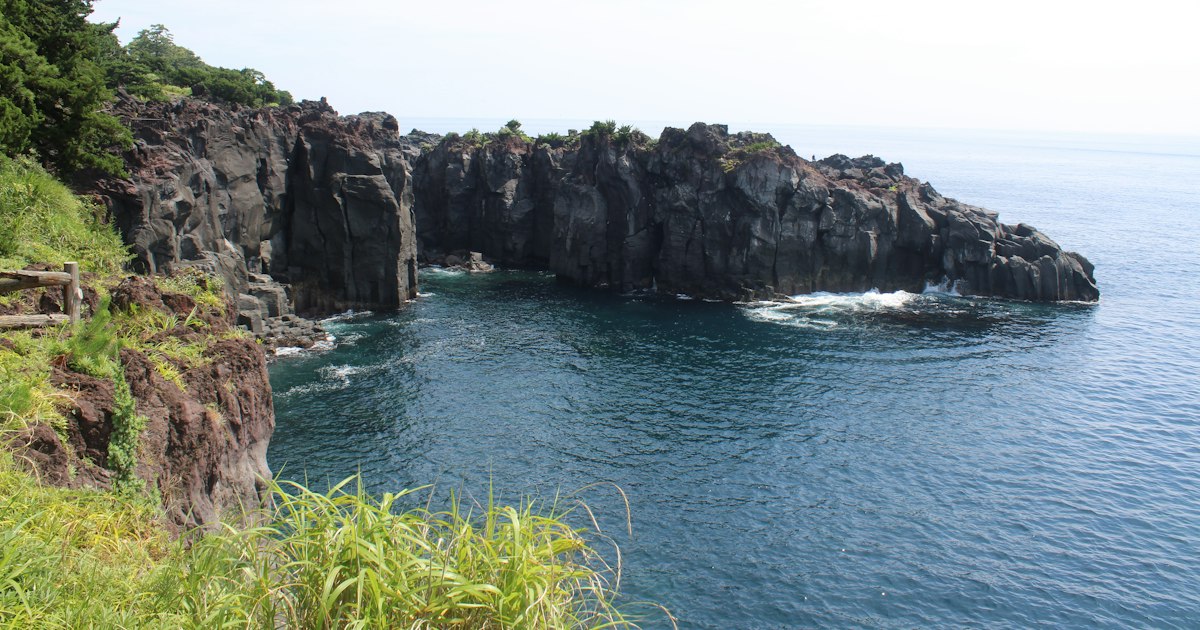
Photo by Ramesh Arangott on Unsplash
Long before Dejima became Japan’s famous (and famously tiny) foreign enclave in Nagasaki city, there was Hirado — an island off the northwest coast of Nagasaki Prefecture where Portuguese, Dutch, and English traders set up shop starting in the mid-1500s. Today it’s one of Kyushu’s most rewarding day-trip-or-overnight destinations: a reconstructed castle on a hill, a rebuilt Dutch trading warehouse by the harbor, and a cluster of hidden Christian villages that are part of a UNESCO World Heritage listing. It gets a fraction of the visitors that Nagasaki city does, which is exactly the point.
Why Hirado Matters: Japan’s First Foreign Trading Post
Portuguese ships began calling at Hirado in the 1550s, and the Dutch East India Company (VOC) opened an official trading post here in 1609, with the English following in 1613. For over three decades, Hirado — not Nagasaki — was Japan’s main window to European trade: silk, porcelain, spices, and sugar flowed through its harbor. The Tokugawa shogunate shut the Dutch post down in 1641 and forced the trade to relocate to the artificial island of Dejima, which is why most tourists today associate “Dutch trading post” with Nagasaki city rather than Hirado. That history is also the root of Japan’s castella sponge cake tradition — if you’re curious how that Portuguese import became a Nagasaki specialty, the factory outlet guide to Fukusaya and Bunmeido castella picks up that thread on the mainland.
Getting to Hirado
Hirado is a real island, but you won’t need a boat — the free Hirado Bridge (a red suspension bridge, toll-free since 2010) connects it to the mainland. The most common approach for travelers without a car is bus via Sasebo: take the JR line to Sasebo Station, then transfer to a Saikō Bus bound for Hirado Bus Terminal. The ride is roughly 90 minutes and costs in the ¥1,400–1,700 range one-way. From Fukuoka, there’s a direct highway bus from Hakata Bus Terminal to Hirado, taking around 3 hours. From Nagasaki city, there’s no direct train or bus — you’ll connect through Sasebo, so budget half a day each way if you’re not driving.
Driving is genuinely the better option if your itinerary allows it: renting a car in Fukuoka or Nagasaki and driving via the expressway to Sasebo, then local roads to Hirado, gives you the flexibility to reach the outlying Christian villages and Ikitsuki Island, which are poorly served by public transport. Plan on 2–2.5 hours of driving from Fukuoka, less from Sasebo.
Hirado Castle and the Matsura Clan
Hirado Castle (Kameoka Castle) sits on a hill overlooking the harbor and the old Dutch trading post site, with the main keep reconstructed in concrete in 1962. It was the seat of the Matsura clan, who ruled Hirado domain for nearly 400 years and personally profited from the early European trade. Admission is a modest ¥520 for adults, and it’s typically open from around 8:30 or 9:00 to 17:30, with last entry around 30 minutes before closing — check locally, as hours shift slightly by season. The adjacent Matsura Historical Museum (the former clan residence) is worth the small combined-ticket add-on if you want more depth on the family’s history. The view from the top floor, looking down at the harbor where European ships once anchored, is the single best photo in town.
The Dutch Trading House and Waterfront
Down by the harbor, the Hirado Dutch Trading House (Hirado Oranda Shokan) is a faithful reconstruction of the VOC’s warehouse, built on the original foundations and opened as a museum in 2011. It walks through the trade goods, ship models, and daily life of the Dutch merchants who lived here before 1641. It’s a compact visit — 30–45 minutes is plenty — and makes a natural pairing with a walk along the old stone-walled waterfront streets nearby, which still carry the layout of the old trading district.
Hidden Christian Heritage
Hirado’s Christian history is deeper than the trading post story and considerably more poignant. The Church of St. Francis Xavier, a Gothic-style building completed in 1931, is Hirado’s most photographed sight because of a single frame: the church spire rising above the rooftops of a Buddhist temple district, Buddhist and Christian architecture sharing the same hillside view — a visual shorthand for Japan’s complicated religious history. The church grounds and exterior are free to visit daily; stepping inside outside of mass times is usually fine, but dress modestly and keep your voice down.
Further out, Kasuga Village and the slopes of Mt. Yasumandake are part of the UNESCO World Heritage listing “Hidden Christian Sites in the Nagasaki Region,” recognizing communities that secretly preserved their faith through more than two centuries of prohibition. These sites have minimal infrastructure and almost no public transport, so a rental car (or a local tour) is the realistic way to see them. Nearby Ikitsuki Island, connected by its own free bridge, has the Shima no Yakata museum covering the island’s “Kakure Kirishitan” (hidden Christian) folk traditions, some of which survived in modified form into the 20th century.
Best Time to Visit and Common Mistakes
Spring (April) and autumn (October–November) give you the clearest skies for castle and harbor photos without the summer haze. Summer brings warm water and beach weather at Senrigahama Beach, but Kyushu summers are brutally hot and humid; if you’re visiting in July or August, read up on how to plan sightseeing around Japan’s extreme heat warnings before you commit to a full day of walking between the castle, the harbor, and the church.
The most common mistake is treating Hirado as a quick stop on the way to somewhere else. Public transport connections are infrequent, and the best sites — the hidden Christian villages especially — are spread out enough that rushing defeats the purpose. The second mistake is assuming cards work everywhere; small restaurants, the castle ticket counter, and rural shops are frequently cash-only, and Hirado doesn’t have the convenience store density of a big city. Withdraw what you need before you leave Sasebo or Nagasaki — if you’re unsure how much a Japanese convenience store ATM will actually let you take out per transaction, it’s worth checking the per-transaction withdrawal limits in advance.
Eating, Shopping, and Where to Stay
Hirado beef, a regional wagyu brand, is the local splurge — expect ¥3,000–5,000 for a steak lunch set at restaurants near the castle or harbor. Budget travelers can do well with seafood-focused teishoku (set meals) for ¥1,000–1,500 at harborside diners. For souvenirs, look for Hirado-area ceramics with roots in the old Mikawachi kilns, and castella-style sweets sold by local confectioners that trace the same Portuguese-Dutch influence as their better-known Nagasaki-city cousins.
Accommodation on Hirado itself is limited to a handful of business hotels and ryokan, generally in the ¥7,000–15,000 per night range — comfortable but not resort-level. Many visitors base themselves in Sasebo instead and do Hirado as a long day trip. If what you’re really after is a quieter, more remote island escape and Hirado has you in that mood, it’s worth comparing notes with Yoron Island further south — a very different kind of island, but a similar philosophy of trading convenience for a slower pace.