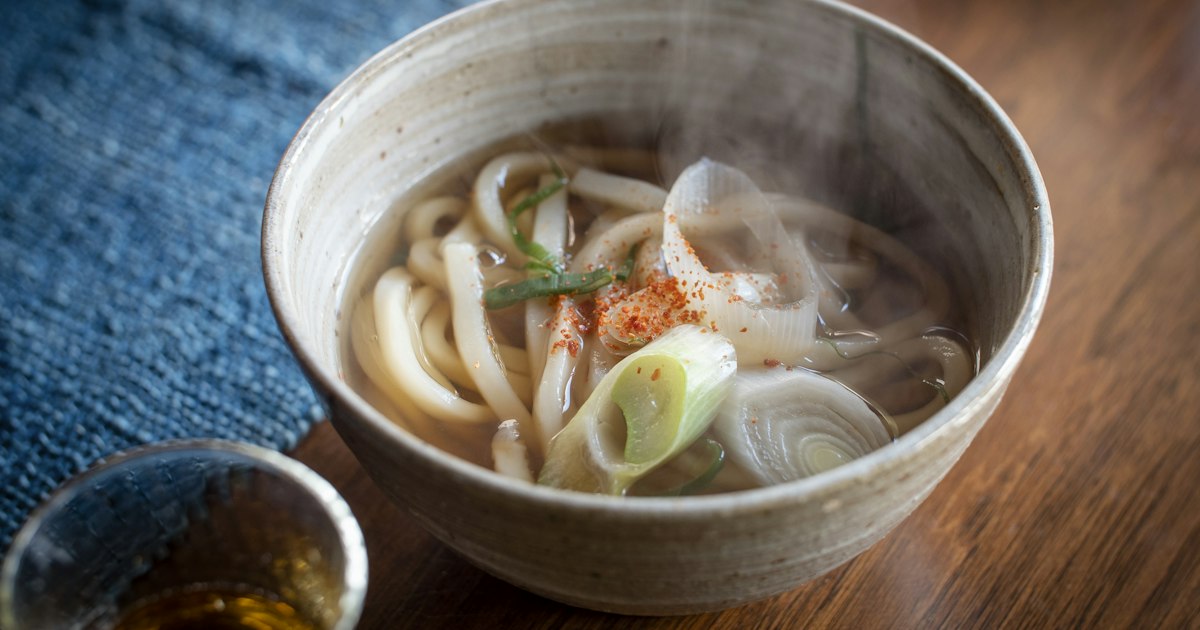
Photo by Jinomono Media on Unsplash
Kagawa Prefecture, on the island of Shikoku, calls itself “Udon Prefecture” without a trace of irony, and once you’ve eaten there for a day or two, you’ll understand why. Sanuki udon — thick, chewy wheat noodles named for the old provincial name Sanuki — is less a dish here than a civic identity, with over 600 udon shops packed into a prefecture smaller than many single cities. For visitors who want more than just a bowl, several shops and dedicated studios around Takamatsu and the surrounding countryside run hands-on workshops where you knead, stomp, stretch, and cut your own noodles, then eat what you made. It’s one of the more genuinely hands-on food experiences in Japan, and it’s far less expensive than it sounds.
Why Kagawa, and why Sanuki udon specifically
Sanuki udon’s reputation comes down to three local advantages: good wheat-growing conditions historically, salt from the Seto Inland Sea’s old salt flats, and soft water with mineral content well-suited to dough. The result is a noodle that’s springy and dense, with a bite locals call “koshi,” served simply — often just with dashi broth, grated ginger, and green onion, or completely bare with a dipping sauce (tsukemen style) so the noodle itself is the point. Classes here teach you to feel for that specific texture, which is a different skill than making the thinner, softer udon found elsewhere in Japan.
What a typical class actually involves
Most tourist-facing workshops run 60–90 minutes and follow a similar arc: you mix flour, water, and salted brine into a dough, then the famous part — kneading it with your feet inside a plastic bag (this is traditional, not a gimmick; the dough is too stiff to knead well by hand alone). After resting, you roll it flat with a long wooden rolling pin, fold it, and cut it into noodles with a large knife, guided by a wooden slat that keeps the width even. The noodles then go straight into boiling water, and you eat your own batch — usually with broth, toppings, and sometimes tempura — right after.
- Nakano Udon School (Takamatsu, near Ritsurin Garden): The most tourist-oriented option, with English-speaking staff and multiple daily sessions. Around 1,700–1,900 yen per adult, roughly 30–40 minutes of hands-on work plus eating time. No reservation required for small groups, though booking ahead is safer in peak season.
- Nakano Udon School (Kotohira branch): Same format, located near Kotohira’s famous shrine steps, convenient if you’re combining udon-making with a visit to Kotohira-gu.
- Shikoku Mura Udon Experience and smaller local shops: Some neighborhood udon shops in and around Takamatsu and Marugame offer informal lessons for walk-ins or by request, often cheaper (1,000–1,500 yen) but with less English support — a phrasebook or translation app helps.
A splurge version exists too: a few shops near Kotohira and in the Shodoshima area pair the noodle-making lesson with a longer multi-course udon lunch and local sansho pepper or soy sauce tasting, running 3,500–5,000 yen per person.
Opening hours, booking, and timing your visit
Most workshops run sessions between roughly 9:00 and 16:00, with the last session often starting by 15:00 to leave time for eating and cleanup. Nakano Udon School in Takamatsu typically holds sessions several times a day, seven days a week, but groups and tour buses can fill a time slot fast — arriving by late morning or just after the lunch rush (so after 13:30) tends to be easiest for walk-ins. Weekdays are noticeably quieter than weekends. If you’re traveling in a small group of 2–4 people, you can usually just show up; groups of 10 or more should call or book ahead, especially in spring (cherry blossom season) and autumn, Kagawa’s two busiest tourist stretches.
Avoid midsummer midday heat if you’re doing the foot-kneading version outdoors or in a non-air-conditioned space — some rural locations are rustic. Winter is actually a pleasant time for this activity since the kitchen areas are warm and crowds are thinner.
Getting there from Takamatsu or Okayama
Takamatsu is the practical base for most udon classes. From Okayama on Honshu, it’s about an hour by JR Marine Liner train across the Seto-Ohashi Bridge, making Kagawa an easy day trip or overnight stop if you’re routing through the Setouchi region. From Takamatsu Station, Nakano Udon School’s main location is a short taxi ride or about a 25–30 minute walk; many visitors combine it with Ritsurin Garden, one of Japan’s great Edo-period landscape gardens, which is nearby. The Kotohira branch is reachable via a roughly one-hour JR train ride from Takamatsu Station, and pairs naturally with the long shrine-stair climb at Kotohira-gu. If you’re renting a car to explore rural Kagawa’s famous standalone udon shops (many of which are cash-only, open odd hours, and sometimes sell out of noodles before noon), a car is genuinely useful — public transit to the smaller shops is limited.
Common mistakes first-timers make
- Underestimating the foot-kneading step. It feels silly, but you need real body weight behind it — treat it like a workout, not a dainty tiptoe, or your dough won’t develop the right chew.
- Cutting noodles unevenly. The wooden guide slat is there for a reason; resist the urge to freehand it even if your instructor isn’t watching closely — uneven noodles cook unevenly.
- Showing up on an empty stomach expecting a full meal. Basic classes include a modest bowl, not a feast. If you want a bigger lunch, ask about add-on sets or plan to eat again afterward — Kagawa has excellent cheap self-service udon shops everywhere for topping up.
- Not bringing cash. Smaller studios and rural shops often don’t take cards. For how much you can realistically withdraw per ATM run in Japan, see this guide to convenience store ATM withdrawal limits.
- Skipping the practice round. Most schools let you try cutting a few practice noodles before the “real” batch — take it, since dough feel varies with humidity and temperature each day.
Making the most of a Kagawa noodle day
Many visitors treat the workshop as the anchor for a half-day udon crawl, since Kagawa’s shop density means you can realistically eat at two or three places plus do a class in one day without feeling absurd about it — portions at the no-frills self-service shops are small and cheap (often 300–500 yen a bowl). If you’re road-tripping across Shikoku or back toward Honshu afterward, it’s worth knowing that Japan’s expressway rest stops are a culture of their own, with regional food stalls worth stopping for — see this guide to expressway service areas if you’re driving. And if noodle culture has you curious about regional variations elsewhere in Japan, Niigata’s seaweed-bound hegi soba and Fukushima’s Kitakata ramen are worth comparing — see Hegi Soba in Niigata and Kitakata Ramen in Fukushima for context on how different each regional noodle tradition really is.
However you plan the day, bring a change of socks if you’re doing the foot-kneading (plastic bags protect your feet, but things get warm and damp), bring small bills, and go in hungry. Few souvenir-food experiences in Japan are this cheap, this short, and this memorable — you leave with noodle-making muscle memory and, usually, a full stomach.