Photo by Perry Merrity II on Unsplash
Japan is one of the easiest countries in the world to eat vegetarian, vegan, or gluten-free with a little research — but it is genuinely one of the harder places to keep kosher. There is no national kosher certification body, almost no kosher restaurants outside two cities, and the dashi (fish stock) that flavors everything from miso soup to supposedly “vegetable” tempura dipping sauce isn’t produced under rabbinic supervision. None of this means a kosher trip to Japan is impractical — it just means you plan differently than you would for Paris or Tel Aviv. Here’s what actually works on the ground.
Chabad Houses: Your Most Reliable Kosher Meals
The backbone of kosher travel in Japan is the Chabad network, which runs houses in both Tokyo and Kyoto specifically geared toward serving travelers, students, and businesspeople. Both operate on the same model: email or use their online booking form in advance (ideally several days ahead, longer around Jewish holidays), and you’ll receive the exact address only after you register — standard Chabad security practice worldwide, not something unique to Japan. Shabbat dinners and festival meals are typically donation-based, in the ¥3,000–¥5,000 range per person, and weekday kosher meals can sometimes be arranged separately if you contact them ahead.
Chabad of Kyoto is especially well known among backpackers for squeezing in last-minute Shabbat guests, while Chabad Tokyo (in the Hiroo/Shibuya area, home to much of Tokyo’s small Jewish community) runs a fuller weekly schedule and occasionally sells basic kosher pantry items on-site. Neither location is a walk-in restaurant — treat them as a hosted meal you need to book, not a place you can show up to on a whim. If you’re visiting Kyoto’s temple district around the same trip, note that yudofu (simmered tofu) shops in Arashiyama and Nanzen-ji can make a reasonable pareve lunch if you ask the shop to leave off the bonito-based dashi broth — more on that caveat below.
Grocery Shopping for Kosher and Kosher-Style Staples
Outside Chabad, your grocery strategy in Japan is mostly about reading labels carefully and leaning on import supermarkets. Tokyo’s National Azabu, in Hiroo near the Chabad and Jewish Community of Japan buildings, is the long-running go-to for the city’s Jewish expat community — it’s not a kosher-certified store, but it stocks imported kosher-labeled products (matzah and kosher wine around Passover, for instance) that you won’t find in a standard Japanese supermarket. Kaldi Coffee Farm and Seijo Ishii, both national chains, occasionally carry imported kosher-certified snacks and sauces, but stock is inconsistent store to store, so don’t rely on a specific branch having what you need.
For packaged items you can trust without hunting for English labels, plain bottled water, unflavored rice, and basic ion/sports drinks are safe defaults. If you’re stocking up for a long train day or a hike, our guide to Pocari Sweat, Aquarius, and OS-1 covers which of Japan’s ubiquitous ion drinks have the simplest ingredient lists — useful since flavored versions sometimes add dairy derivatives or alcohol-based flavoring that plain versions don’t.
The Mistakes That Catch Kosher Travelers Off Guard
The single biggest trap in Japan is dashi. It’s the savory backbone of nearly every broth, sauce, and simmered dish, and it’s almost always made from katsuobushi (dried bonito flakes) or niboshi (dried sardines) — fine from a kosher-species standpoint, but processed and blended without any kashrut supervision, often alongside other stock bases. “Vegetable” udon, “vegan” miso soup, and even some tempura dipping sauces at restaurants marketed to vegetarians frequently still use bonito dashi, because the restaurant is solving for vegetarian diners, not kosher ones. Always ask directly — “Kore wa katsuobushi ga haitte imasu ka?” (“Does this contain bonito flakes?”) — rather than assuming a vegetarian label covers you.
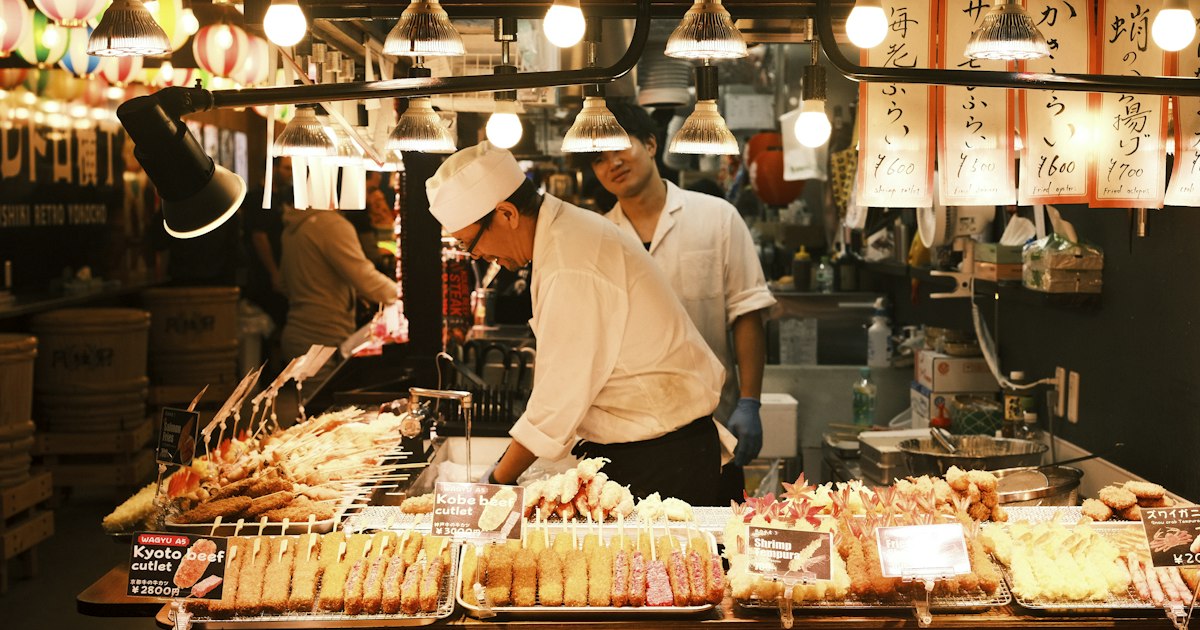
The second trap is beef hype. Wagyu and Kobe beef are everywhere in Japan’s food marketing, and travelers sometimes assume a certification mark on the menu implies some kind of food-safety or dietary guarantee — it doesn’t. Those marks verify breed and region, not kosher slaughter, and none of Japan’s celebrated beef is kosher. If you want to understand what those certification stamps actually mean (useful for any traveler, kosher or not), see our breakdown of Kobe beef certification marks. The same logic applies to convenience store cases: the fried chicken, oden, and hot snacks sold at the register — covered in our guide to Japan’s convenience store hot case — are convenient and cheap (often ¥150–¥300 per item) but almost never kosher, since fryers and broths are shared across pork, seafood, and meat items with no separation.
What to Pack and What to Pre-Order Before You Fly
If you keep a strict standard, pack more shelf-stable kosher food than you think you’ll need — protein bars, kosher-certified tuna or salmon pouches, nut butter, dried fruit, and instant oatmeal all travel well and don’t raise customs issues for personal consumption quantities. For the flight itself, most major carriers serving Japan (ANA, JAL, and connecting international airlines) allow you to pre-order a kosher meal (listed as “KSML”) through your booking, typically up to 24–72 hours before departure — do this as soon as you book your ticket rather than waiting until check-in, since it often can’t be added at the airport.
Once in Japan, cash still matters more than in most developed countries, especially for Chabad donations and smaller grocers that don’t take foreign cards. If you’re withdrawing yen for a Shabbat donation or grocery run, convenience store ATMs are the most reliable option nationwide — our guide to convenience store ATM withdrawal limits explains how much you can actually pull per transaction, which matters if you’re budgeting a week’s worth of meals in cash.
Budget, Mid-Range, and Splurge Realities
Budget: self-catering from import grocers plus packed shelf-stable food, roughly ¥1,500–¥2,500 a day in groceries if you’re careful. Mid-range: a Chabad Shabbat dinner donation (¥3,000–¥5,000) once or twice a week, supplemented by self-catered weekdays. Splurge: there isn’t really a kosher fine-dining tier in Japan the way there is in New York or London — the “splurge” here is really about timing your trip around a major holiday meal at Chabad, which tends to be the most elaborate kosher food you’ll find in the country, or arranging a private catered meal in advance through the Jewish Community of Japan in Tokyo, which can sometimes accommodate requests with enough lead time.
Timing Your Trip
Book Chabad meals well before Rosh Hashanah, Passover, and Sukkot — both the Tokyo and Kyoto houses see a noticeable spike in traveler requests around these dates and space is limited. Outside the holidays, give at least a few days’ notice for a Shabbat dinner, since both locations are run by small families, not restaurant staff. If your itinerary includes Kyoto over a Friday, it’s worth building your temple-district sightseeing day around the Shabbat meal rather than the reverse — Chabad Kyoto’s schedule is fixed, but your sightseeing day isn’t.