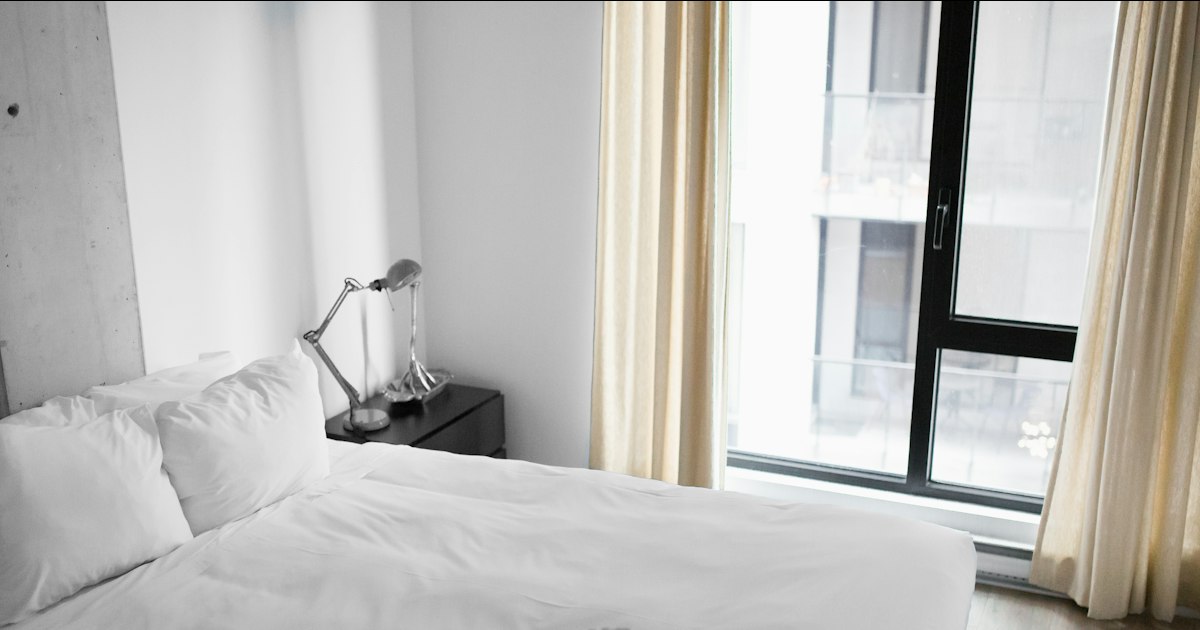
Photo by Andrew Neel on Unsplash
If you’ve ever woken up at 3am in a Tokyo business hotel with a scratchy throat and lips like sandpaper, you’re not imagining it. Japanese hotel rooms in winter — especially December through February — run drier than almost anywhere else travelers commonly stay, and most rooms are not equipped to fix that on their own. This guide explains why it happens, what’s actually sitting in your room versus what you think is there, and the exact words to use at the front desk to get real relief.
Why Japanese Hotel Rooms Get So Dry in Winter
Outdoor winter humidity in cities like Tokyo, Osaka, and Nagoya regularly sits in the 30-40% range, and that’s before a heater gets involved. Most hotel rooms — from capsule-style business hotels to mid-range chains — use a wall-mounted heat pump unit (the same unit that provides air conditioning in summer) to heat the room. Heat pumps don’t add moisture; they just warm existing dry air, and warmer air can hold more moisture relative to its volume, which drops the relative humidity further. It’s common for a sealed hotel room running its heater overnight to fall to 20-25% relative humidity, well below the 40-60% range generally considered comfortable. Thick curtains, tight window seals (especially in newer buildings), and no fresh-air exchange make it worse.
The Air Conditioner Is Not a Humidifier — Even If the Remote Says “Dry”
This is the single biggest point of confusion. The in-room remote often has a mode labeled something like 除湿 (dehumidify) — this removes moisture, the opposite of what you want — and sometimes a 暖房 (heating) mode with a humidity readout on the display. That readout is just a sensor reading, not a function; the unit is not injecting moisture into the room no matter what the display shows. If your room’s remote doesn’t have an actual 加湿 (humidify) setting with a water tank attached to the unit, there is no humidifier built into your air conditioner. True in-room humidifiers are a separate, free-standing appliance — usually a small tabletop ultrasonic or steam unit — and plenty of rooms simply don’t have one as standard equipment.
How to Ask the Front Desk for a Humidifier
Many hotels keep a limited number of loaner humidifiers in storage precisely because not every room has one built in. They’re often free of charge but first-come, first-served, so ask when you check in rather than at 11pm when the front desk closes or switches to a skeleton night-shift. Useful phrases:
- 加湿器はありますか? (Kashitsuki wa arimasu ka?) — “Do you have a humidifier?”
- 部屋が乾燥しているので、加湿器を貸してもらえますか? (Heya ga kansō shite iru node, kashitsuki o kashite moraemasu ka?) — “The room is dry, could I borrow a humidifier?”
- 濡れタオルをもう一枚いただけますか? (Nureta taoru o mō ichimai itadakemasu ka?) — “Could I get one more wet towel?” — a reasonable fallback if humidifiers are out of stock (see below).
If the front-desk staff speak limited English, showing the written Japanese on your phone works well, since this is a common enough request that staff recognize it instantly even if they don’t catch the spoken version.
Which Properties Are More Likely to Have One
Business hotel chains that lean into traveler comfort — several Dormy Inn, Toyoko Inn, and Super Hotel locations among them — are the ones most likely to keep a stock of loaner humidifiers, along with other small lending items like hair irons or extra pajamas, at the front desk. Higher-end city hotels and business hotels built or renovated in the last several years are also more likely to have a built-in humidifying air conditioner as standard equipment, since it’s a known differentiator in winter reviews. Older, budget-tier properties and capsule hotels are the least likely to have either — don’t assume one will be in the room and don’t assume the front desk will have spares if you arrive on a fully booked night in peak winter (late December and January, especially around New Year and ski season). If you’re also dealing with a hotel’s in-room amenities more broadly, it’s worth knowing what else is and isn’t typically stocked — our guide to hotel minibar pricing and in-room stock covers a similar pattern of “assume less than you’d expect, ask explicitly.”
Budget Fixes You Can Buy or Bring
If no loaner is available, Japan makes it cheap to solve this yourself:
- USB desktop humidifiers — sold at Don Quijote, Bic Camera, and Yodobashi Camera for roughly ¥1,000–¥3,000. Small ultrasonic models run off a USB power bank or laptop and are genuinely effective in a room under about 20㎡.
- The wet-towel trick — hang a damp bath towel on a hanger or chair back near (not on) the heater. It’s low-tech but noticeably raises humidity in a small sealed room overnight, and it’s free.
- Saline nasal spray and lip balm — any drugstore (Matsumoto Kiyoshi, Sundrug) stocks these for a few hundred yen, and they address the symptom directly if you can’t fix the room air itself.
- A pocket hygrometer — a ¥500–¥1,000 digital humidity gauge from a drugstore or 100-yen shop takes the guesswork out of whether the room is actually dry or you’re just imagining it.
If you’re traveling on to a ski trip after your city stay, the same dry-air issue is often worse at altitude; our guide to shipping skis and suitcases ahead to ski resorts is useful for planning that leg, and mountain lodges there have the exact same humidifier-or-no-humidifier variability as city hotels.
Ryokan and Onsen Hotels: A Different Kind of Air
Traditional ryokan and onsen hotels often feel less dry than city business hotels, partly because many still use kerosene or gas stoves (ストーブ) rather than heat-pump air conditioners, and stove heat tends to leave more ambient moisture in the room, plus tatami and paper shoji doors breathe differently than sealed modern walls. That said, humidifiers are just as unevenly stocked at ryokan as anywhere else, so the same front-desk request applies. If you’re staying somewhere that also has accessibility needs to plan around, our list of onsen towns with wheelchair-accessible baths is a good starting point for picking a property.
Common Mistakes to Avoid
- Running the AC on “heat” all night with windows sealed. This is the single biggest cause of a dry morning. If outdoor air isn’t frigid, cracking a window for even 10 minutes before bed exchanges some of the stale, bone-dry indoor air.
- Assuming a humidity readout means active humidification. As above, it’s a sensor, not a function.
- Waiting until midnight to ask. Loaner stock runs out and night staff may be unable to access storage. Ask at check-in.
- Overcorrecting with a full-size steam humidifier you don’t need. Small Japanese hotel rooms (often 15-20㎡) only need a compact desktop unit — a large humidifier will oversaturate the room and fog the windows.
None of this requires elaborate planning — just knowing that the “humidity” setting on your remote isn’t doing what you think, and that asking a simple question at check-in solves the problem for free more often than not.