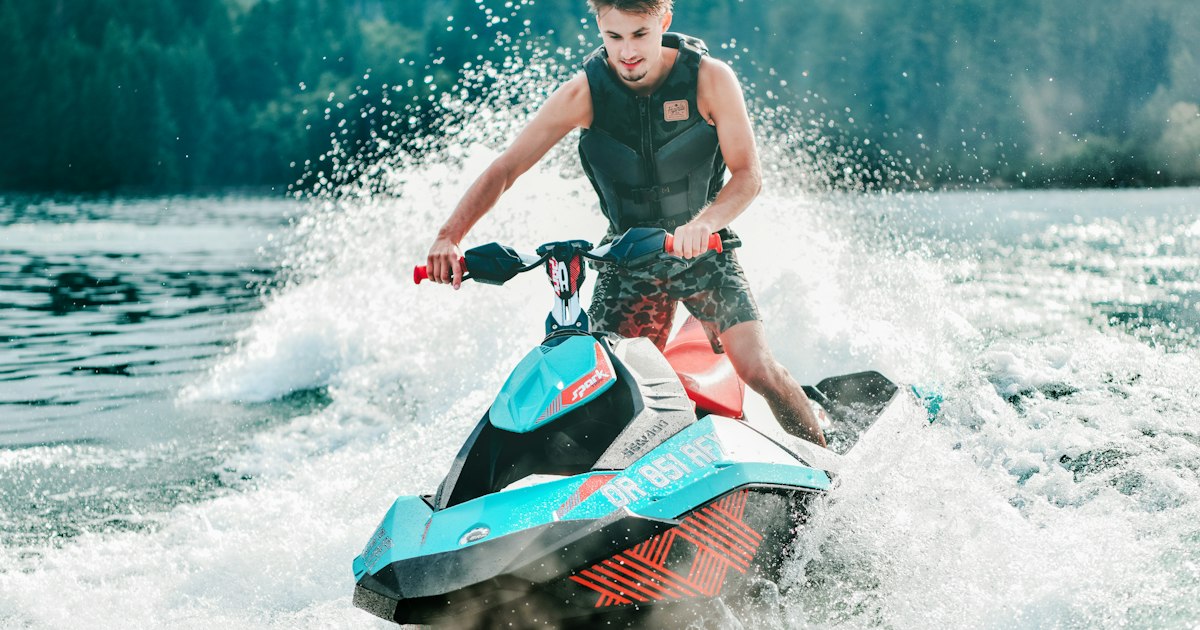
Photo by Yuriy Bogdanov on Unsplash
Jet skis look like a grab-a-key-and-go rental everywhere else, but Japan treats them as regulated watercraft, not beach toys. Before you book anything, it helps to know exactly what the law allows a visitor to do, because the answer changes which beach, which season, and which price bracket you should be looking at.
Why You Can’t Just Hop On
Operating a personal watercraft (PWC) in Japan legally requires a 特殊小型船舶操縦士 (Specified Small Craft Operator’s License), a license category separate from a regular car license and separate even from Japan’s standard boat license. An International Driving Permit does not cover it, and a foreign driver’s license — even a Japanese-recognized one for cars — does not transfer. If you walk up to a rental counter in Okinawa or Chiba and ask to drive off solo with no paperwork, a properly run operator will turn you down.
This is the single biggest point of confusion for foreign visitors, and it’s worth internalizing before you build a day around “renting a jet ski” the way you might in Thailand or Florida.
How Tourists Actually Ride
Almost every tourist-facing jet ski experience in Japan is built around this license rule rather than against it, using one of two legal workarounds:
- Tandem/guided riding: You ride as a passenger behind a licensed guide, or the guide leads a small convoy of PWCs on open water while staying in radio contact. Since the licensed guide is the legal operator (or is supervising within sight), you don’t need your own license. This is the most common format at beach resorts.
- Enclosed “license-free” courses: Some operators run short beginner sessions inside a roped-off lagoon or bay at low, regulated speed. Japanese maritime rules exempt certain low-speed, enclosed-area operation from the full license requirement, which is why you’ll see “ライセンス不要” (no license needed) advertised for 15–20 minute taster sessions.
Neither format lets you take a jet ski out alone into open ocean at full throttle — that only happens once you hold the actual license.
Where to Book
Okinawa and its outer islands (Ishigaki, Miyakojima, the Kerama Islands reachable as a day trip from Naha) have the densest cluster of operators, thanks to clear, calm, reef-protected water. On the mainland, the Izu Peninsula in Shizuoka and Wakayama’s Shirahama coast run seasonal operations, and Kujukuri Beach in Chiba is the most realistic option if you’re based in Tokyo and don’t want to fly anywhere — several beach huts along the coast rent PWCs and jet-powered boards alongside their surf gear, roughly 60–90 minutes from central Tokyo by car or bus. Further south, Tanegashima has a handful of small marine-sports outfitters near its quieter beaches, though booking ahead is essential since operators there are small and weather-dependent.
Prices and Timing
Expect roughly:
- Budget (¥5,000–8,000): A 15–20 minute enclosed lagoon taster course, common in Okinawa resort areas, aimed at complete beginners and often bundled with other beach activities.
- Mid-range (¥10,000–18,000): A 45–60 minute guided open-water ride along a scenic coastline, usually tandem behind an instructor, the most popular format for first-timers who want real speed and real views.
- Splurge (¥25,000–40,000): Half-day multi-point tours combining jet ski legs with snorkeling stops or island hopping — the Kerama Islands day tours from Naha are the best-known version of this.
Most operators run from around 9:00 to 17:00, with the last session departing by 15:00–16:00 so they can return gear and debrief before closing. Book your slot a day or two ahead in shoulder season and at least a week ahead in Okinawa’s August peak, when slots fill fast. The best window is May through October for warm water and stable conditions; July–September brings the warmest water but also typhoon risk, so build a buffer day into your itinerary if a jet ski tour is a trip highlight rather than a nice-to-have.
If You Want to Drive Solo: The One-Day License Route
A small number of marine schools, mostly in Okinawa, offer an accelerated course that combines classroom instruction and the practical exam for the Specified Small Craft license in a single intensive day (occasionally spread over two half-days). You’ll need your passport as ID, pass a basic eyesight check, and budget roughly ¥40,000–60,000 for the course plus exam fees. It’s a genuine option if you’re spending a week or more in one place and want unrestricted open-water riding for the rest of your trip, but it’s rarely worth the time investment for a short vacation — the guided-tour route gets you 90% of the experience for a fraction of the cost and zero paperwork.
Common Mistakes
- Assuming any driver’s license works. It doesn’t — this trips up more visitors than any other issue. Confirm with the operator in advance whether their tour is tandem/guided (no license needed) before you show up expecting to drive solo.
- Not planning for weather cancellations. Operators cancel for wind and swell, not just rain, and refund or rescheduling policies vary by shop — ask before paying a deposit, especially if you’re booking a tour as the centerpiece of a single beach day.
- Forgetting ID. Even for license-free tandem experiences, most operators log a copy of your passport or residence card for insurance purposes. Bring it.
- Underestimating locker costs. Wetsuit rental and locker fees are sometimes quoted separately from the headline tour price — ask for the all-in total before booking.
- Booking the only slot of the day. If this is a splurge activity, build in a spare afternoon later in your trip in case the first attempt gets weathered out, particularly during typhoon season.
Treat the license rule as the starting point for planning rather than an obstacle to work around at the counter, and a jet ski session in Japan’s clear coastal water is straightforward to book — just not quite as walk-up-and-go as it is elsewhere.