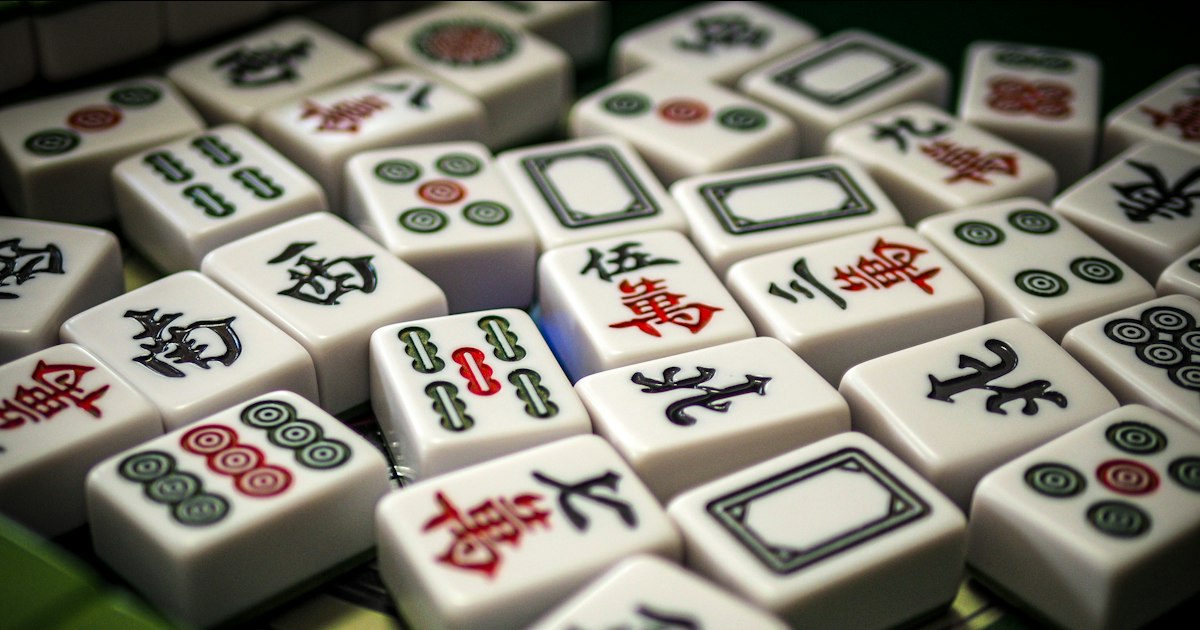
Photo by Jing Bo Wang on Unsplash
Riichi mahjong looks like the mahjong you may have played elsewhere, but the tiles, the rules, and even the shops that sell them are distinctly Japanese. If you’ve picked up the game at an izakaya back room, a manga, or a late-night session with friends in Tokyo and want to bring a proper set home, it’s worth knowing what separates a real riichi set from the generic “Chinese tile” boxes sold at souvenir counters — and where in Japan to actually find a good one at a fair price.
What Makes a Riichi Set Different
Riichi mahjong is played with 136 tiles, not the 144 used in Chinese, Hong Kong, or American mahjong. There are no flower or season tiles — just the four suits (man, pin, sou), winds, dragons, and, crucially, three red five tiles called akadora (one red 5-man, one red 5-pin, one red 5-sou). These red fives are a defining feature of riichi rules and score bonus points; a set without them technically isn’t a riichi set, even if it looks similar.
Standard competition tile size is 28mm wide, though sets also come in 25mm (compact, good for travel) and 30–33mm (easier to read, heavier to pack). Tile faces use Arabic numerals alongside the suit symbols, which makes riichi sets noticeably easier for beginners to read than traditional Chinese tiles with brush-stroke characters only. Most modern sets are melamine resin; pricier ones use cast acrylic for a heavier, more “clicky” feel at the table, which serious players actually care about.
Budget Option: Don Quijote and Toy Floors
The fastest, cheapest way to buy a set is Don Quijote. Most branches, including the big “MEGA” stores, stock simple 136-tile riichi sets with a travel case for roughly ¥1,500–¥3,000 in the toy or hobby aisle. Many central Tokyo locations run very late hours or 24 hours, so this is a realistic last-day purchase on your way back to the airport. The catch: quality is basic plastic, tile engraving can be shallow, and the included rulebook (if any) is in Japanese only. Fine for a casual set to teach friends back home, not what a serious player wants on their table.
Mid-Range and Specialty Shops
For a noticeably better set — thicker tiles, cleaner engraving, a proper wooden or hard-shell case — look at hobby and game specialty retailers rather than general stores. Yodobashi Camera and Bic Camera both run game corners in their larger stores (Yodobashi Akiba in Tokyo is open 9:30am–10pm daily) that occasionally stock mid-range riichi sets in the ¥5,000–¥15,000 range. Amazon.co.jp and Rakuten have the widest selection by far, including sets from Japanese mahjong-equipment makers aimed at home players rather than tourists; if you’re staying at a hotel for a few more nights, ordering ahead and picking up at the front desk or a nearby convenience store locker is often easier than hunting in person.
For a traditional-craft touch, some boutique game shops sell tile sets housed in lacquered wooden boxes rather than molded plastic cases — similar in spirit to the regional lacquerware traditions covered in our guide to Kiso Shikki: Nagano’s Lacquerware Tradition and Where to Buy It. A nicely lacquered case turns a game set into something worth displaying at home, not just stuffing in a drawer.
Vintage and Secondhand Finds
Older riichi sets made from bone-backed bamboo — the material used before melamine took over in the 1960s–70s — show up regularly at secondhand chains like Hard Off and 2nd Street (most branches open around 10am–8pm) and at Tokyo’s flea markets. The Oedo Antique Market at Tokyo International Forum, held on the first and third Sunday of most months from around 9am to 4pm, is a good bet for stumbling on a complete vintage set with its original wooden case, usually priced anywhere from ¥8,000 to ¥40,000 depending on completeness and tile count. Always count the tiles before buying secondhand — a set missing even a couple of pieces is effectively unusable, and sellers at flea markets won’t always know if theirs is complete.
The Automatic Table: The Real Splurge
If you’ve played in a Japanese mahjong parlor (雀荘), you’ve likely used a zensoku-taku — a fully automatic table that shuffles, washes, and builds the wall for you at the push of a button. These are made by companies like Amos and Daiko and are a genuine splurge souvenir: new tables generally run ¥150,000–¥400,000, while used units sell on Yahoo Auctions and Mercari from around ¥50,000. They’re large, heavy (often 40–60kg), and require disassembly and freight shipping — not something you carry home in a suitcase. If you’re tempted but still mid-trip, our guide on renting a storage unit (trunk room) in Japan for extended stays is worth a look, since a bulky purchase like this is exactly the kind of thing that needs somewhere to sit while you arrange shipping. The logistics are honestly closer to what we describe in our piece on buying a used gachapon capsule toy machine to take home — oversized, novelty, and worth it only if you’ve already budgeted for freight.
Common Mistakes to Avoid
- Buying a 144-tile Chinese or American set by accident. Tourist shops sometimes stock generic “mahjong” sets with flower tiles and no red fives — fine for other mahjong variants, wrong for riichi.
- Ignoring tile size until it’s in your suitcase. A 33mm set with a solid case can weigh 3–4kg; if you’re already tight on luggage weight, a 25mm travel set is the more realistic buy.
- Assuming the rulebook is in English. Almost none are. Learn the scoring (han, fu, yaku) before you travel, or buy from a retailer whose listing explicitly mentions English instructions.
- Not counting tiles on a secondhand set. 136 tiles plus the dice and wind markers — count before you pay, especially at flea markets with no returns.
Getting It Home
A standard travel-case set fits in checked luggage without issue and isn’t restricted by customs on either end for personal use. If you’ve bought a vintage bone-and-bamboo set, wrap it well — old bamboo backing can be brittle after decades of use. For anything bulkier than a standard set, ask the shop about domestic takkyubin courier shipping to your hotel or to the airport for pickup before departure; it’s inexpensive within Japan and saves you from carrying a heavy box through train stations on travel day.